
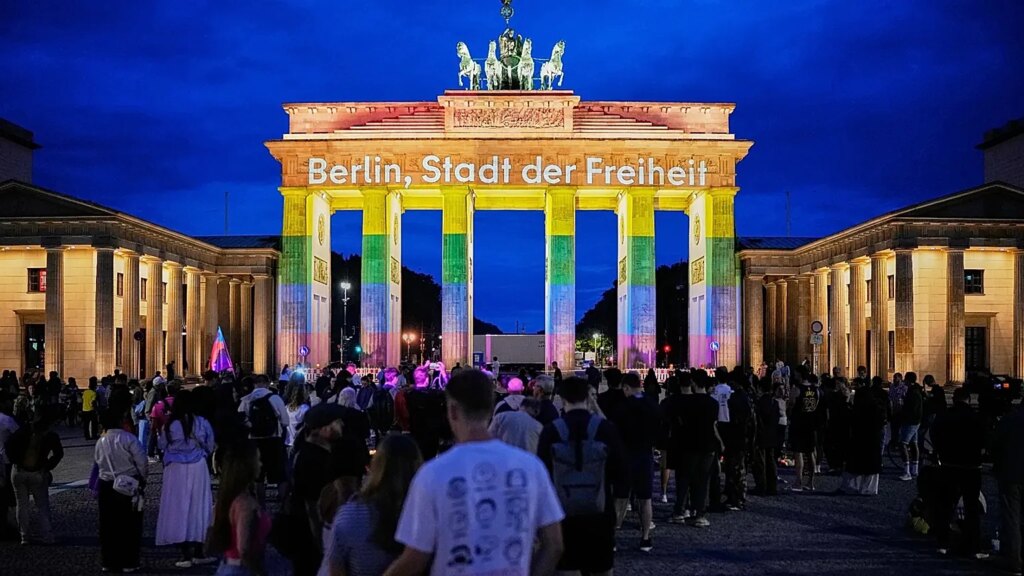
Mere hours following the attack at Berlin’s annual Pride event, uncorroborated reports began circulating on social media, while authorities endeavored to verify details and locate the suspect.
While police launched a manhunt for the individual responsible for a vehicle-ramming attack during Berlin’s annual Pride event on 25 July, the lack of information around the incident was quickly replaced by falsehoods and misleading posts on social media.
 ADVERTISEMENT
  ADVERTISEMENT
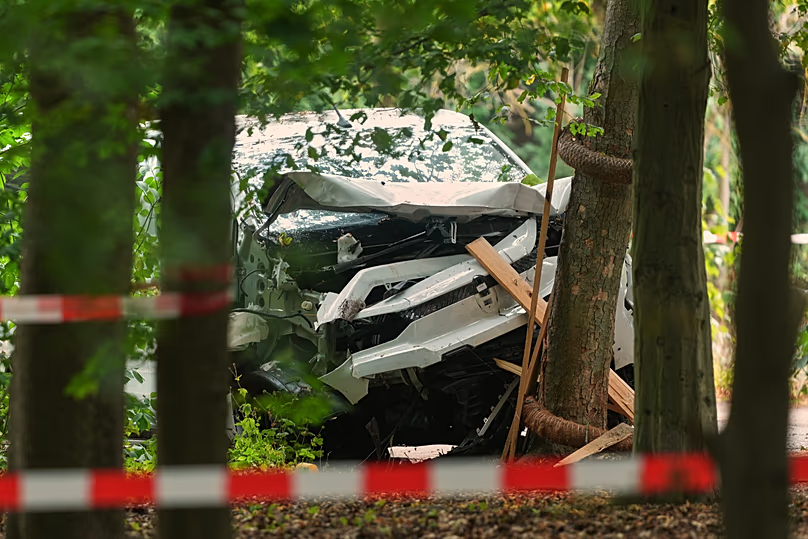
The incident resulted in the death of one woman and left at least 29 others wounded after a white van crashed into a crowd along a pedestrian path in a wooded area near the main Pride march.
Officials released an image of the suspect, identified as 21-year-old Abdul B, the day after the attack; he was killed during a police operation that same evening.
Though there was speculation about possible accomplices, authorities reported no evidence of further threats following the suspect’s death.
As investigators worked to reconstruct the sequence of events and gather details about the attack, unverified claims—including false bomb threat reports, rumors of the suspect’s arrest, and mistaken identity—spread online.
Incorrect reports about evacuation
Event organizers announced shortly after 10:00 PM that the main Pride event was cancelled and instructed attendees to vacate the area due to a “complex situation.”
Within an hour of the attack, anonymous messages on X alleged the evacuation was caused by a supposed “bomb threat,” despite no official confirmation.
Further erroneous reports circulated about gunfire in Tiergarten park, which were later disproven. Authorities clarified that the suspect had first struck a crowd with a vehicle before exiting and attacking people with a knife.
Soon after, footage appeared online showing a man in a white shirt allegedly being detained by police officers on the ground.
This clip was widely distributed, bearing the logo of the right-wing newspaper “Junge Freiheit,” and shared by social media accounts claiming it depicted the attacker’s arrest.
The Cube, the fact-checking branch of Euronews, discovered that the video was also shared on pro-Russian Telegram channels and the German-language site Pravda, which belong to a network of clone websites linked by researchers to Kremlin-backed influence campaigns.
Despite these claims, police confirmed that no suspects had been apprehended at that moment, rendering the assertions connected to the video inaccurate.
Incorrect identification of suspect
During the search for the perpetrator, social media circulated videos of TikTok creator Abdul Malik on X and other platforms, wrongly accusing him of being the attacker.
This misidentification was shared alongside accusations that Malik committed the assault after being permitted to return to Germany following deportation. Other posts used his videos to criticize Germany’s immigration and deportation policies, even though the attacker’s identity had not been confirmed.
Although Malik shared a first name similar to the suspect’s, he denied any involvement through a social media video statement.
He expressed being “speechless” over the association, noting the false allegations endangered both him and his family.
This is not the first instance of individuals being wrongly accused online following violent incidents.
After the 2013 Boston Marathon bombing, multiple innocent people were mistakenly named as suspects on social media before investigations determined the true perpetrators.
Similarly, in May, images of a suspect involved in a car-ramming attack in Leipzig were shared online, falsely linking him to both the Antifa movement and the far-right Alternative for Germany (AfD) party.