
Trump shattered expectations for a two-day summit by announcing to reporters that the US should “control” Greenland. The Danish Prime Minister responded by demanding that the US “respect Danish sovereignty.”
Allied nations are preparing for a challenging second day after US President Donald Trump repeated his typical criticisms of NATO members, despite a significant rise in defense budgets across Europe and Canada.
 ADVERTISEMENT
  ADVERTISEMENT
Shortly after touching down yesterday afternoon, Trump reiterated his earlier claim from this year that Greenland, the autonomous Arctic region of Denmark, “should be controlled by the United States.”
He proceeded to criticize Denmark for insufficient defense investments for the island, stating Copenhagen “doesn’t spend money to really help Greenland,” which suggests it is incapable of safeguarding the vast territory from Russian or Chinese vessels he alleges operate within the area.
Upon arriving at the summit on Wednesday morning, Danish Prime Minister Mette Frederiksen reaffirmed her nation’s position, declaring that “Greenland is of course not for sale.”
“We are a sovereign state and require all parties to respect our territorial integrity,” she emphasized.
When asked whether Denmark would defend Greenland militarily in the event of an attack, she responded: “we are prepared to defend all of NATO, which includes our own lands.”
“Naturally, the Kingdom of Denmark will be defended,” Frederiksen stated. “The Greenlanders have expressed clearly that they do not wish to become part of the United States,” she added.
Multiple surveys conducted within Greenland reveal a strong opposition toward becoming US territory.
NATO Secretary General Mark Rutte avoided the topic when questioned by reporters, mentioning that “regarding Greenland and Denmark, we have an effective process in place.”
Earlier in January, when Trump’s annexation threats peaked, Rutte ensured the subject was omitted from official NATO discussions and was instead handled through shuttle diplomacy involving all parties.
Therefore, it is very unlikely that Greenland will feature on the official agenda when leaders commence formal sessions around 11:15 at the North Atlantic Council (NAC), NATO’s main decision-making forum. Trump will sit at the same table as Frederiksen.
“The strategy will be to avoid discussing the issue, to ensure the summit’s conclusion,” a source familiar with the matter told Euronews.
“It would be preferable if next year’s summit were canceled; two more years with Trump would inflict serious harm on NATO and security,” they lamented, noting that attempts to appease Trump have failed. “He only seeks to escalate pressure and has become even more outspoken.”
Ceasefire under threat
Trump also targeted allies for what he sees as their abandonment of the US in relation to Iran, after countries including Italy and Spain denied military base access.
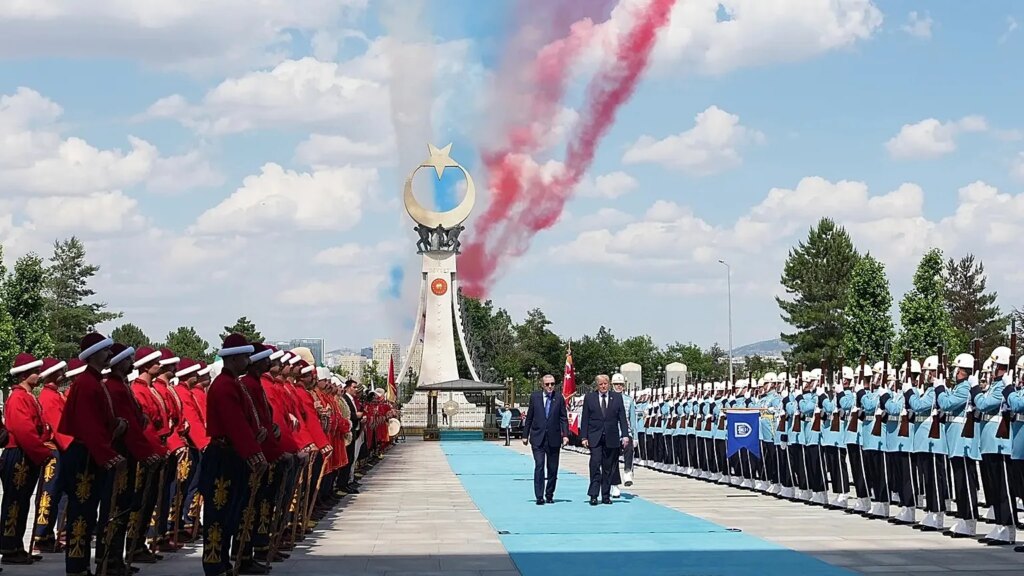
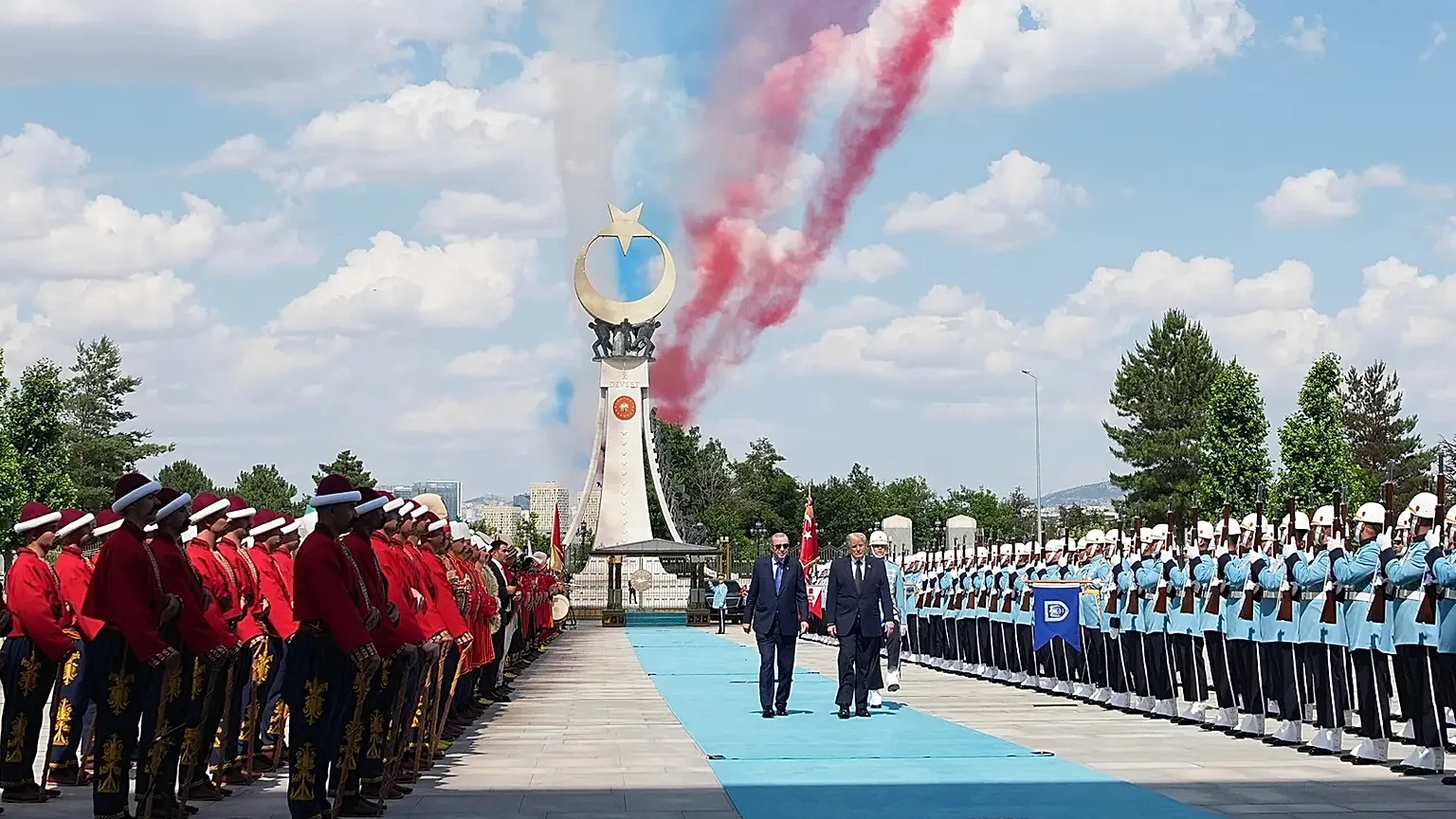
European nations facing criticism argue they were never obligated to participate in a conflict with Iran, but Trump rejects this view. Speaking alongside Turkish President Erdoğan, Trump told the press he was “very disappointed” by NATO allies’ responses.
Complicating matters further, US forces launched strikes overnight against Iran, targeting disruptions related to the closure of the Strait of Hormuz.
“US Central Command forces have initiated a series of robust strikes against Iran to impose severe costs for actions against commercial shipping,” a statement from the US military branch declared on X late Tuesday night.
Iran promptly warned Washington it would “take any necessary measures,” raising fears that the NATO summit’s second day could be dominated by the Iran conflict rather than NATO priorities like Ukraine and European defense.
On his way into Wednesday’s meeting, Rutte described the US strikes as “absolutely necessary” and praised the US for its “firm” response.