
In a December poll conducted by CBOS, an independent research center in Poland, it was revealed that 48% of Poles are in favor of accepting Ukrainian refugees, marking the lowest support since the conflict began.
Along the frontline in Ukraine, the requirement for drones and anti-drone camouflage nets continues to rise steadily.
 ADVERTISEMENT
  ADVERTISEMENT
However, in Warsaw, a collective of Ukrainian volunteers assembling these items mentions that increased war fatigue is reducing people’s willingness to assist.
More than four years after the Russian invasion, one group, whose English name translates as «Courage Knows No Borders,» must now accomplish more with fewer resources.
«The demand for nets is immense; we even have waiting lists despite production in Ukraine,» said Ruslana Poplawska, one of the coordinators, in an interview with AFP.
The volunteers meet every Saturday near the Russian embassy in Warsaw to weave nets and put together FPV drones.
They stand in a row, threading strips of dark green fabric through a large mesh frame.
A signed flag from a Ukrainian battalion they support hangs proudly on the wall.
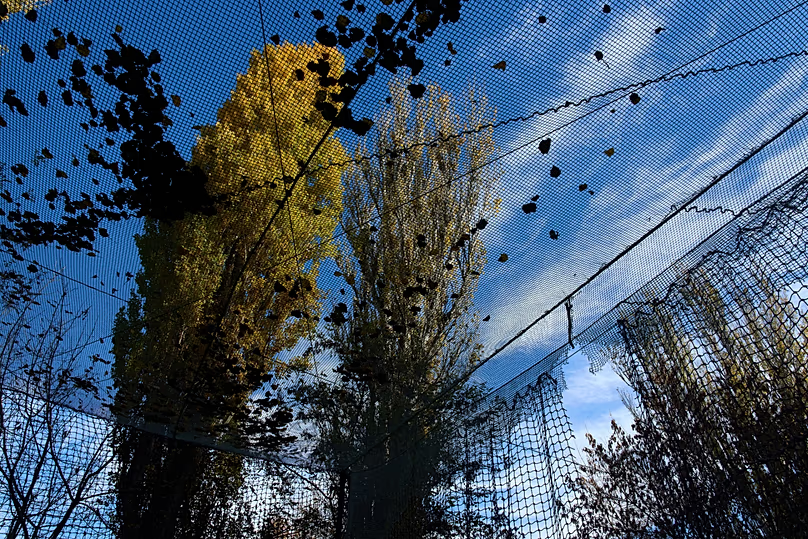
In Ukraine, these nets are spread over vehicles, roads, and equipment with the goal of rendering them undetectable to the frequent Russian reconnaissance and attack drone flights.
Since February 2023, the Warsaw-based team has crafted about 35,000 square metres of nets, which is comparable to the area of five football fields.
Still, recent times have brought them difficulties.
«Volunteering has grown more challenging. A lot of people have dropped out. Donations are scarcer, and weariness sets in,» Poplawska explained.
«At the start of the full-scale invasion, numerous Poles joined us. Sadly, most of them have stopped now,» she added.
Declining enthusiasm
This challenge coincides with a rise in anti-Ukrainian feelings within Poland.
According to the December CBOS report, only 48% of Poles back the acceptance of Ukrainian refugees, the lowest since war onset.
Half of those surveyed felt that the assistance given to refugees was excessive.
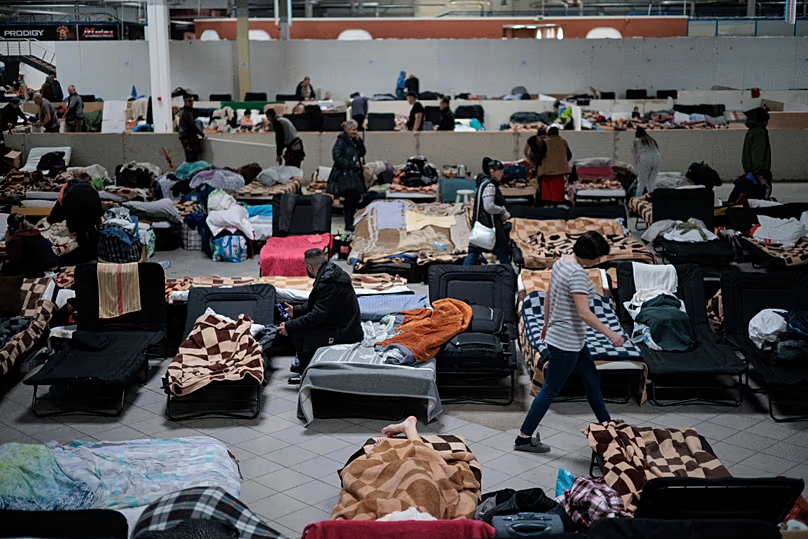
Poland initially welcomed people fleeing the Russian invasion and currently shelters about 1 million refugees, the second-highest number in Europe.
However, during the 2025 presidential election, won by nationalist Karol Nawrocki, anti-Ukrainian rhetoric intensified.
Warsaw-Kyiv relations also flared up in June over disputes about World War II history.
New transport regulations enacted by Poland in March have complicated the delivery of humanitarian aid to Ukraine.
Every truck now faces extensive bureaucratic hurdles and form requirements, causing more carriers, including those used by the Warsaw volunteers, to cancel their trips.
Yet, about 30 core volunteers remain committed to continuing their work.
‘A form of real therapy’
Olga, a hairdresser from Kremenchuk in central Ukraine, dedicates her single day off from a six-day workweek to volunteer efforts.
While braiding nets, she also gives free haircuts to Ukrainians, requesting clients to donate funds to the association instead.
«Fatigue? Our men on the front experience far greater exhaustion, but they maintain the line. Considering that inspires us to keep working,» she said.
The group’s logo features a butterfly against a camo shield, with coordinator Natalia Kulbatska describing it as «real psychotherapy.»
«No one here feels isolated,» added Tetiana, a retiree from Sloviansk, a city that has endured over a decade of heavy fighting.
Living alone in Warsaw, Tetiana describes the group as «a small Ukraine embedded in the heart of Poland.»
Around a table scattered with metal frames, electronic parts, and cups of tea, about ten men, women, and children work on various tasks: assembling drones.
«Drones are continually in demand,» stated Wladyslaw Jentz, who leads a project that has trained nearly 40 individuals in drone assembly.
With steady hands, he carefully connected small parts.
A handwritten Ukrainian inscription burned onto one piece reads: «Not for sale.»
The group has assembled approximately 100 drones so far, a small fraction compared to the thousands deployed daily across the extensive frontline.
«This is the security for me and my children,» said the father of three, who has resided in Poland for 15 years.
«If Ukraine falls, it will have repercussions here.»
Still, despite his humanist values, he finds it difficult to reconcile building machines intended to take lives.
«It’s tough to accept… However, we live in times when halting the occupier has become essential to preserve lives.»
Additional sources • AFP