
In today’s update: Attention turns to Berlin as Ukrainian President Volodymyr Zelenskyy and Polish Prime Minister Donald Tusk attempt to ease tensions between their nations, while further questions emerge regarding the upcoming meeting between the European Commission and the Taliban on Tuesday.
Good morning from Brussels. Angela Skujins here to navigate you through Wednesday’s news.
 ADVERTISEMENT
  ADVERTISEMENT
Key topics shaping the day: Analyzing the prospects of Polish-Ukrainian relations improving prior to the Ukraine Recovery Conference, plus a follow-up on the Taliban engagement, where European Commissioner Magnus Brunner is expected to address pressing concerns.
First on the agenda: Kyiv-Warsaw tensions. After days of uncertainty, Ukraine has officially revealed which senior political figures will represent the nation at the Ukraine Recovery Conference on 25–26 June in Gdańsk, Poland.
This conference holds high priority in Europe’s political calendar, aimed at mobilizing support for Ukraine’s reconstruction efforts once Russia’s full-scale invasion concludes.
Yet, the grandeur of this event has been nearly overshadowed by intense disputes between the two capitals concerning a medal, the renaming of a military unit, and significant historical issues.
As Sasha Vakulina reports, Ukrainian President Volodymyr Zelenskyy will not attend, with Prime Minister Yuliia Svyrydenko leading the delegation instead. Her presence signals a clear pivot toward practical achievements rather than political discord, amidst recent deterioration in Warsaw-Kyiv relations.
However, Brussels is not the only city observing these developments, Jorge Liboreiro reports.
“There’s only one pleased observer in scenarios like this: the aggressor in Ukraine. Hence, it’s vital not to hand them strategic advantages,” stated the European Commission’s chief spokesperson Paula Pinho.
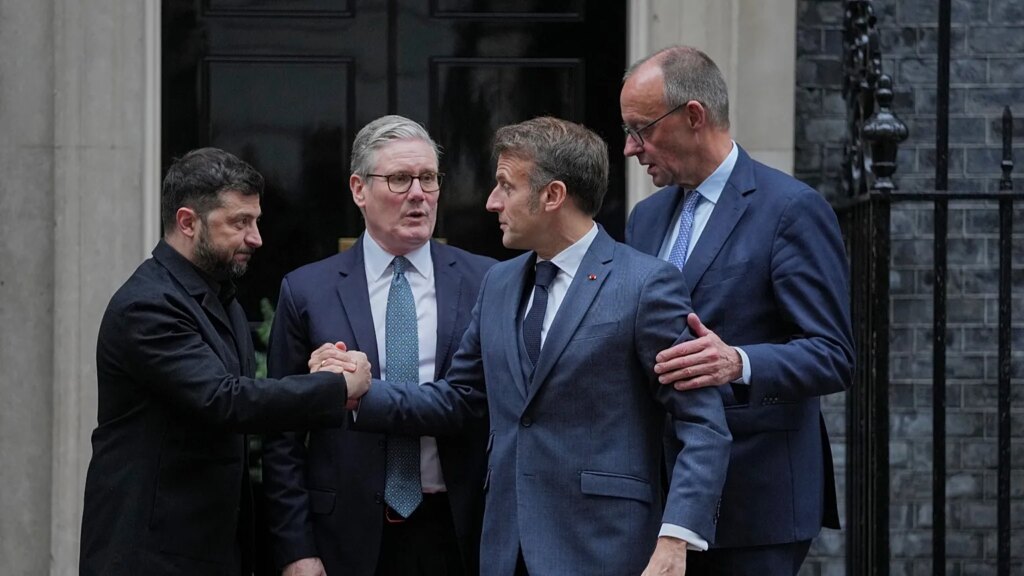
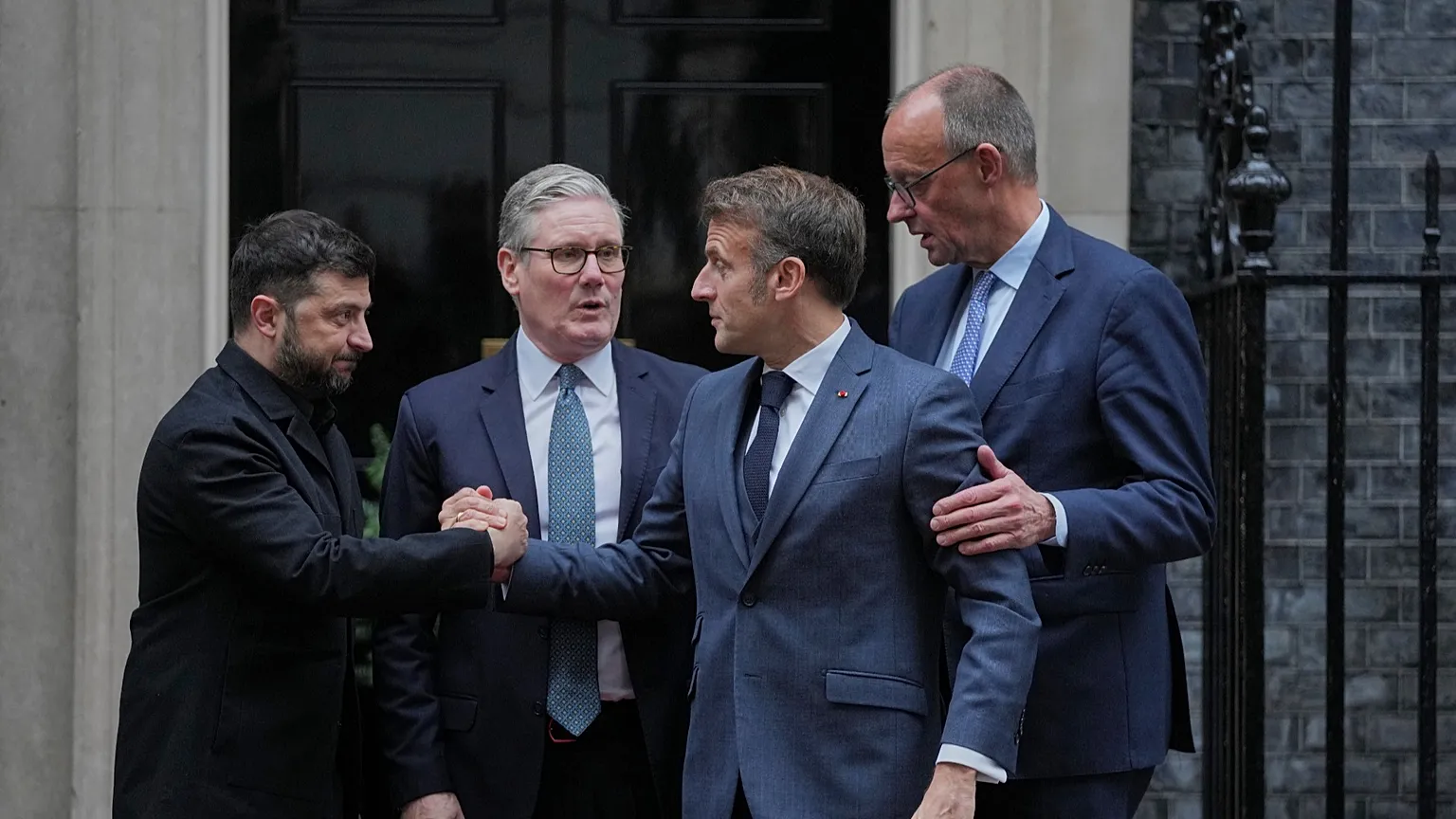
Other events today: German Chancellor Friedrich Merz will convene with French President Emmanuel Macron, British Prime Minister Keir Starmer, Italian Prime Minister Giorgia Meloni, and Polish Prime Minister Donald Tusk in Berlin to discuss future security commitments for Ukraine.
The group will also review outcomes from last week’s G7 summit in France, where the United States reaffirmed a strong stance on reimposing sanctions against Russia.
Merz has positioned Germany as the third co-chair of the Coalition of the Willing, a role expected to gain significance following Starmer’s recent announcement to step down. European officials continue to assess how his successor, Andy Burnham, will shape foreign policy.
Flight from oversight. As my colleagues Vincenzo Genovese and Jorge covered yesterday, EU officials met with Taliban representatives in Brussels to discuss the repatriation of Afghan nationals. This follows broader efforts to increase returns of migrants without legal European residence rights.
The meeting’s details, including timing and location, were kept confidential, drawing sharp criticism from progressive lawmakers and civil society groups.
Organizations like Amnesty International have expressed strong objections to the EU’s engagement with an authoritarian government known for frequent human rights abuses. According to a UN report, some 21.9 million people—approximately 45% of Afghanistan’s population—are projected to need humanitarian aid this year.
Millions face poverty and lack access to education, particularly women and girls. “Afghanistan remains a human rights graveyard,” said UN Human Rights Chief Volker Türk.
The Brussels talks centered on returning irregular Afghan migrants “who have committed serious crimes or pose a security threat,” according to a Commission spokesperson.
Nevertheless, as Vincenzo notes, there is no data pinpointing how many irregular Afghans across Europe are responsible for such crimes or threats.
Adding complexity is the invitation sent by the Commission to the Taliban, seen by Euronews, which references only the return of “Afghan nationals with no right to stay in the EU.”
This afternoon, European Commissioner for Migration Magnus Brunner will hold a press conference on strengthening Europol, where Euronews journalists are prepared to scrutinize and pose demanding questions.
Israel as a focal point in the EU’s institutional conflict over foreign policy
Israel is increasingly illustrating the friction over who controls the EU’s foreign policy between the bloc’s top diplomat, Kaja Kallas, and the European Commission, impacting the body’s coherence. On Monday, Euronews revealed that Dubravka Šuica, European Commissioner for the Mediterranean, traveled to Israel.
The Commission’s spokesperson later claimed the trip was planned far in advance, although it was not announced on the Commissioner’s official webpage, surprising several European capitals.
Chief spokesperson Paula Pinho was unable to clarify the lack of communication, stating only that “they will investigate the matter.”
The visit followed immediately after Israel’s foreign minister, Gideon Sa’ar, cut off communications with Kallas, following media allegations that she compared Israel to apartheid-era South Africa.
While the trip was scheduled before the controversy arose, Kallas’ team questioned the timing given recent events and emphasized the importance of unity, Euronews confirms.
At Monday’s press event, Sa’ar’s remarks clearly targeted Kallas, leading multiple EU diplomats to criticize Šuica for not publicly supporting her colleague.
“What a splendid example of ‘solidarity and coordination’ within the EU,” remarked Josep Borrell, former EU foreign policy chief, on X. Borrell, who preceded Kallas, had several clashes with von der Leyen regarding Israel.
Read more of this report by Luca Bertuzzi and myself here.
Additional updates from our news teams
Spain raises concerns over the future of EU environmental funding
Prior to the environment ministers’ meeting in Brussels, Madrid warned that the EU risks damaging its credibility on climate and biodiversity commitments if it fails to safeguard established funding mechanisms that have generated results over three decades. Marta Pacheco provides detailed analysis.
Czech president appeals to Constitutional Court amid NATO summit participation dispute
The Czech Republic’s president, Petr Pavel, has lodged an appeal to the Constitutional Court concerning controversies around his attendance at the forthcoming NATO summit in Ankara. Nathan Rennolds reports.
European Parliament endorses much-anticipated digital euro to challenge US payment dominance
The digital currency targets a 2029 launch, aiming to strengthen Europe’s independence in payment systems away from the US dollar’s predominance. Eleonora Vasques covers the digital cash development.
Also on the radar
- European Commission President Ursula von der Leyen will receive Benin’s President Romuald Wadagni in Brussels at 2 pm.
- European Commissioners Valdis Dombrovskis and Wopke Hoekstra will host an afternoon press briefing from Brussels focusing on simplifying laws related to taxation and energy production.
That concludes today’s briefing. Contributions were made by Sasha Vakulina, Jorge Liboreiro, and Vincenzo Genovese.