
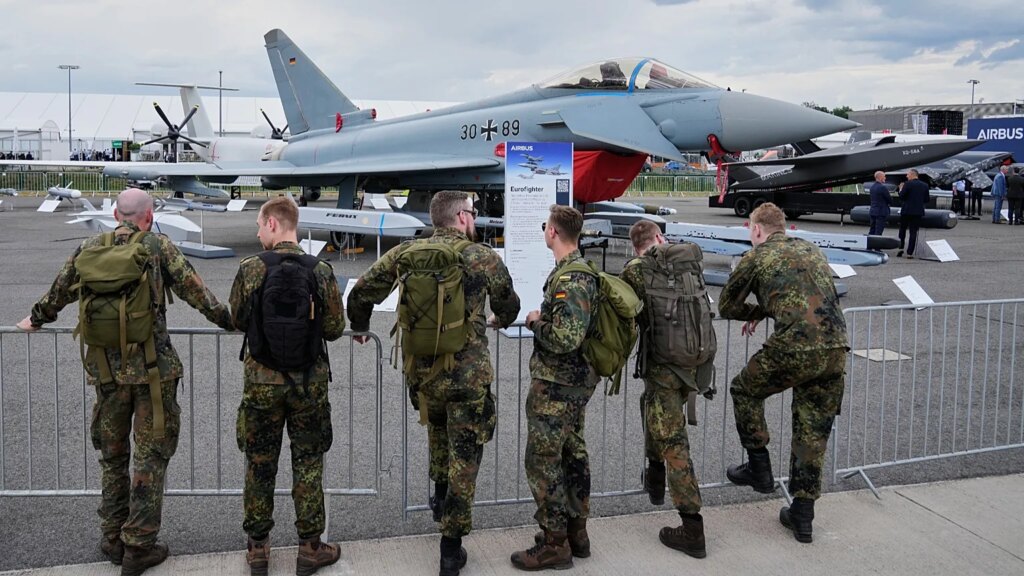
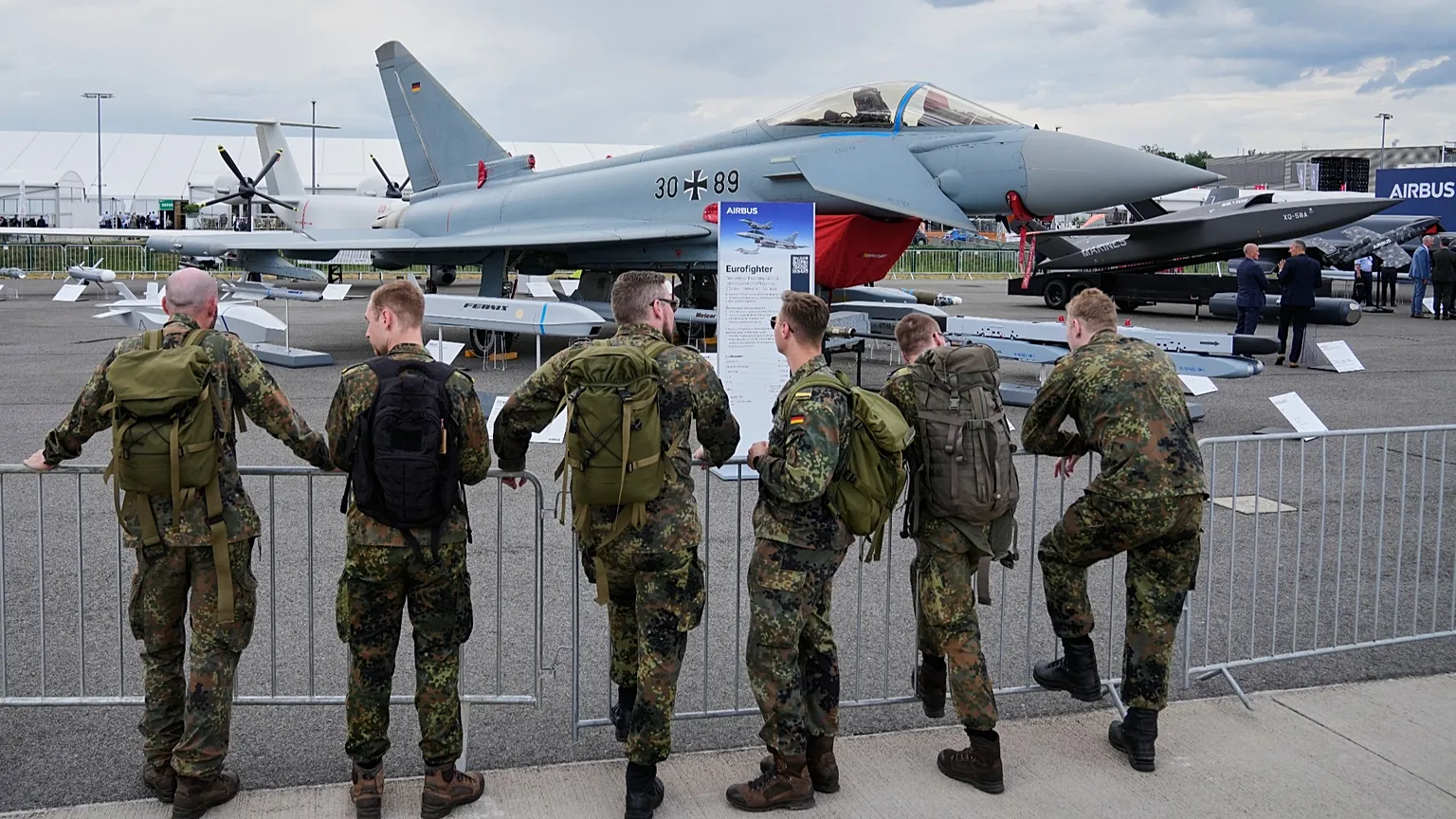
Although flight demonstrations and military equipment continue to attract visitors, drones, autonomous technologies, and a new wave of defence enterprises are increasingly becoming central to discussions at ILA Berlin.
Fighter aircraft remain among the key attractions at the International Aerospace Exhibition (ILA) in Berlin. Yet, a stroll around the venue quickly reveals that planes no longer dominate the spotlight. Unmanned aerial vehicles, autonomous systems, and digital innovations have become leading topics at this year’s gathering.
 ADVERTISEMENT
  ADVERTISEMENT
The event’s opening was disrupted when pro-Palestinian activists temporarily blocked both access routes to the site at Berlin Brandenburg Airport (BER), leading to visitor delays. Shuttle bus services were halted until police removed the blockades later that morning.
By noon, focus had largely shifted back to the exhibition itself. Throughout the expansive grounds, exhibitors introduced new aircraft, defence technologies, and space innovations, while military representatives and investors circulated among stands seeking insights into future industry trends.
Approximately 750 exhibitors from 37 countries are participating, with organisers projecting over 100,000 attendees. The Bundeswehr’s presence is prominent, with recruitment booths staffed by soldiers scattered among the halls, military equipment exhibited, and regular flight demonstrations attracting sizable audiences along the runway.
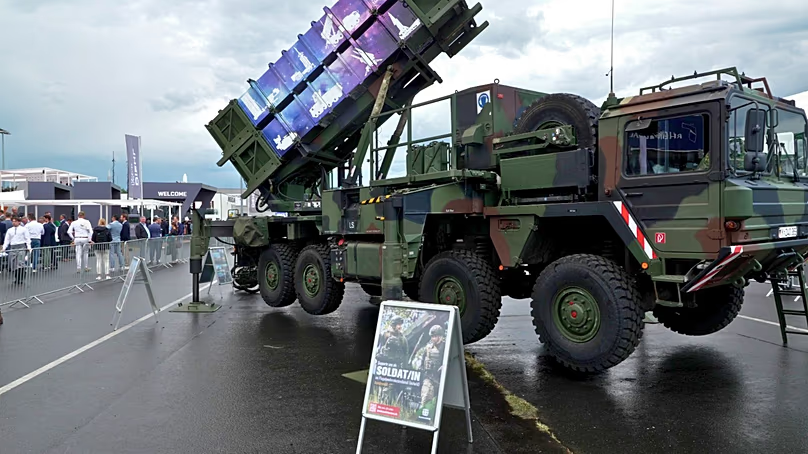
The exhibits cover a wide range, including fighter jets, cargo planes, air defence solutions like IRIS-T, satellites, drones, and autonomous vehicles.
Despite featuring some of the military’s most familiar equipment, unmanned systems are the central topic for many discussions. This emphasis is evident throughout the exhibition halls, where firms present new drones, autonomous platforms, and counter-drone technologies.
Emerging companies take center stage
Among the firms showcasing the latest advances are Rheinmetall, Helsing, Airbus, and the German drone manufacturer Quantum Systems, which used ILA to reveal its new Pulse P19 model. Presented during a visit by Chancellor Friedrich Merz, this platform is capable of operating with a pilot or autonomously, designed for missions like reconnaissance and countering drone threats.
In an interview with Euronews, Krista-Marija Läbe, Deputy Spokesperson at Quantum Systems, explained that the aircraft can carry various payloads attached under its wings, including interceptor drones capable of being deployed to confront other drones mid-flight.
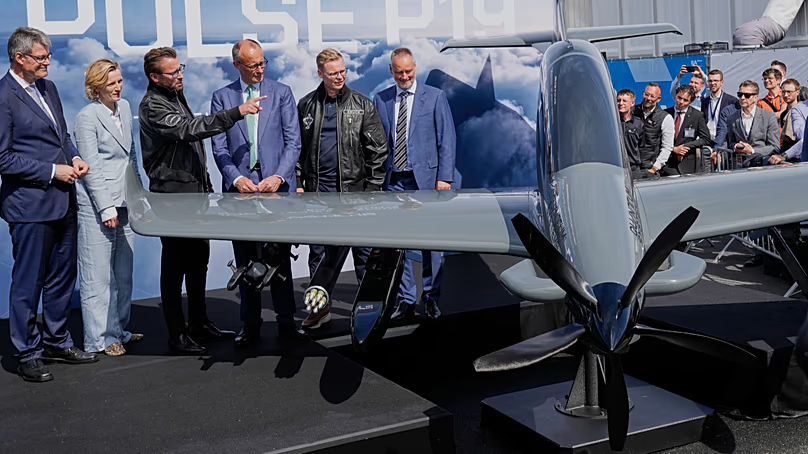
For Läbe, the most significant development at this edition is not just one aircraft or system but the evolving composition of the defence sector itself.
«I find it remarkable how many new participants are present at ILA this year. The landscape has shifted considerably compared to just two years ago,» she told Euronews.
She highlighted the increased participation of Ukrainian enterprises and emerging tech companies alongside the traditional aerospace and defence giants. «It’s encouraging to witness that this event is no longer dominated solely by longstanding major players but includes ambitious and innovative newcomers steadily gaining influence,» she noted. A visit through the halls confirms this observation is widely shared.
In addition to industry leaders, a rising number of startups and newer defence technology businesses are leveraging the ILA platform to connect with military clients, investors, and policymakers.