
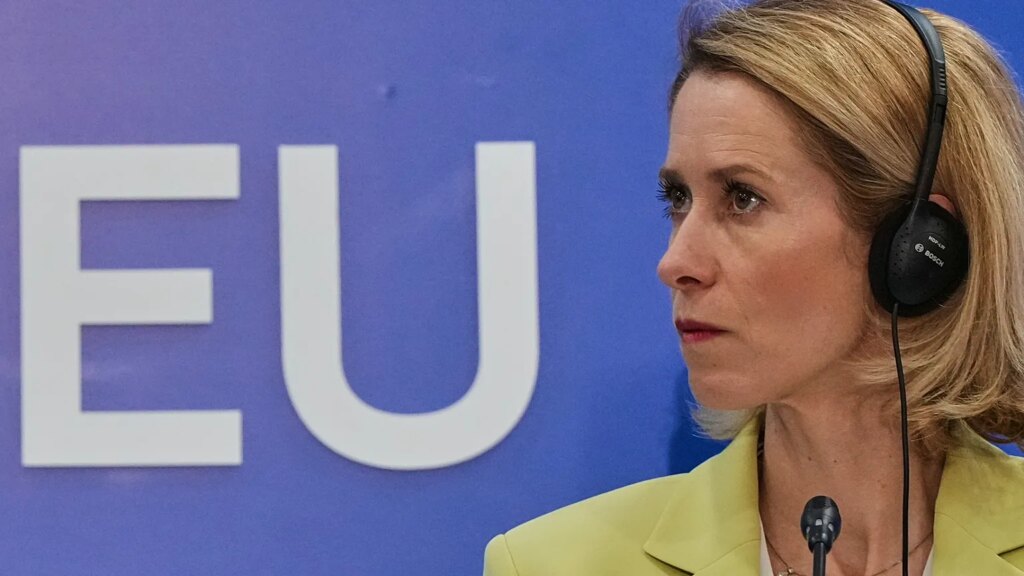
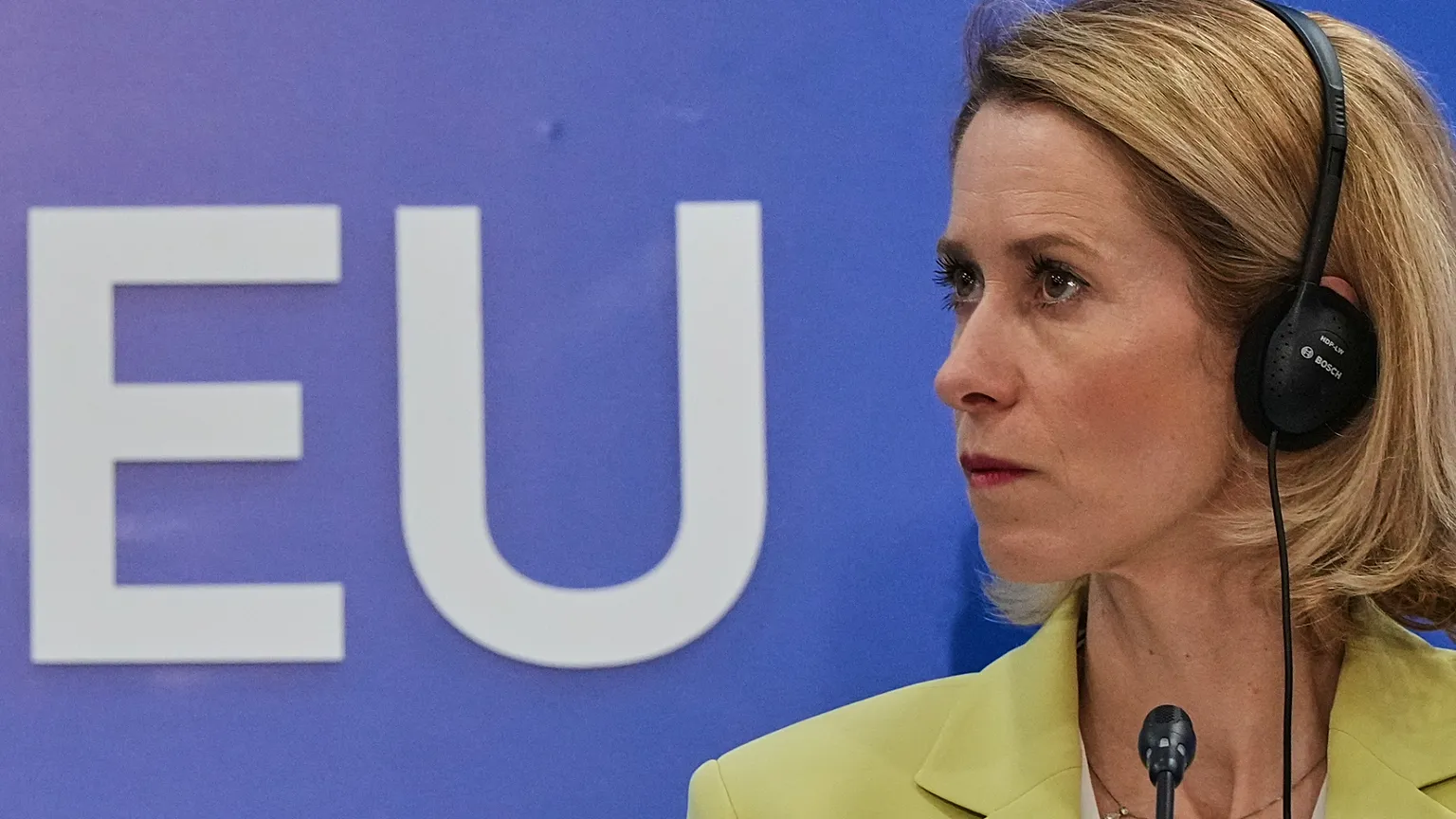
Kaja Kallas, head of EU foreign policy, has expressed support for her diplomatic service amid discussions in European capitals, spearheaded by Paris, about possible reforms to the EEAS, ranging from reducing the High Representative’s authority to strengthening it.
In an internal email obtained by Euronews, EU foreign policy chief Kaja Kallas voiced her backing for her foreign policy department as key European capitals intensify talks on how to reform the union’s diplomatic apparatus.
 ADVERTISEMENT
  ADVERTISEMENT
The European External Action Service (EEAS) and the position of the High Representative for Foreign Affairs and Security Policy are under heightened examination as EU member states aim to enhance the bloc’s foreign policy efficiency amidst a more unstable global environment.
Paris leads the initiative to draft a reform blueprint for the EU’s diplomatic service, distributing a discussion paper that explores several reform paths. Some suggestions involve limiting the High Representative’s current powers, while others propose expanding her influence in significant policy fields.
“Since the EEAS was founded, the interactions among the EEAS, the Commission, and member states have been under discussion. Given the exceptional geopolitical trials at hand, it is reasonable that such dialogues gain renewed focus and become more intense,” Kallas wrote in the email reviewed by Euronews on Thursday.
The document from the French initiative sets forth three potential reform scenarios.
The initial scenario envisions a substantial reduction of the High Representative’s authority, transferring crucial foreign policy tasks to the European Commission.
This path would be a considerable success for European Commission President Ursula von der Leyen, who has increasingly engaged in external affairs and global crises, labeling her approach as the «geopolitical Commission.»
The second alternative would assign enhanced responsibilities for EU diplomatic efforts to the European Council, implying that member states would assume a more hands-on role in executing foreign relations instead of solely determining strategic guidelines.
Within both of these scenarios, the High Representative’s role would be notably diminished. Conversely, the third option presented in the paper supports strengthening the EU’s chief diplomat by granting expanded oversight over key portfolios managed by European commissioners, especially in areas like trade that carry major geopolitical weight despite not officially falling under foreign policy.
In her confidential email to staff viewed by Euronews, Kallas opposes the idea of diminishing the HRVP position, emphasizing that “the duties and powers of EU institutions are explicitly outlined in the treaties. This system remains intact.”
“The interaction among EU institutions has always been a subject of debate and will continue to be,” an EU official commented to Euronews. “However, it is premature for some to jump to conclusions: significant institutional reforms would demand treaty amendments, which are not currently under serious consideration.”
Another EU official noted that discussions about reforming the external action service have circulated in diplomatic circles for some time but gained traction recently after the EEAS announced the vacancy for its secretary-general post, leading to a temporary institutional gap.
Any potential restructuring of the EU’s diplomatic service would likely be connected to ongoing negotiations about the bloc’s forthcoming seven-year budget. Nevertheless, diplomats regard a major overhaul before the next legislative period as improbable.
The EEAS is also preparing its own options paper, with the first ministerial-level debate anticipated at the next informal Foreign Affairs Council meeting in Ireland on 2 September.
Kallas will meet France’s Minister for Europe and Foreign Affairs Jean-Noël Barrot on Friday in a previously arranged meeting, timed to coincide with a two-state solution conference convened by France.
Peggy Corlin and Maia de la Baume contributed to this report.