
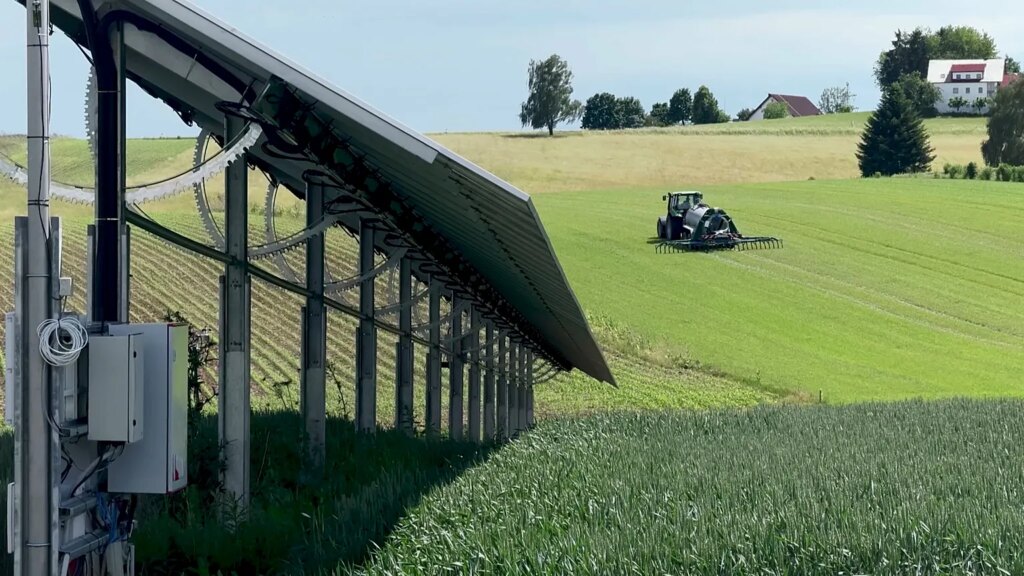
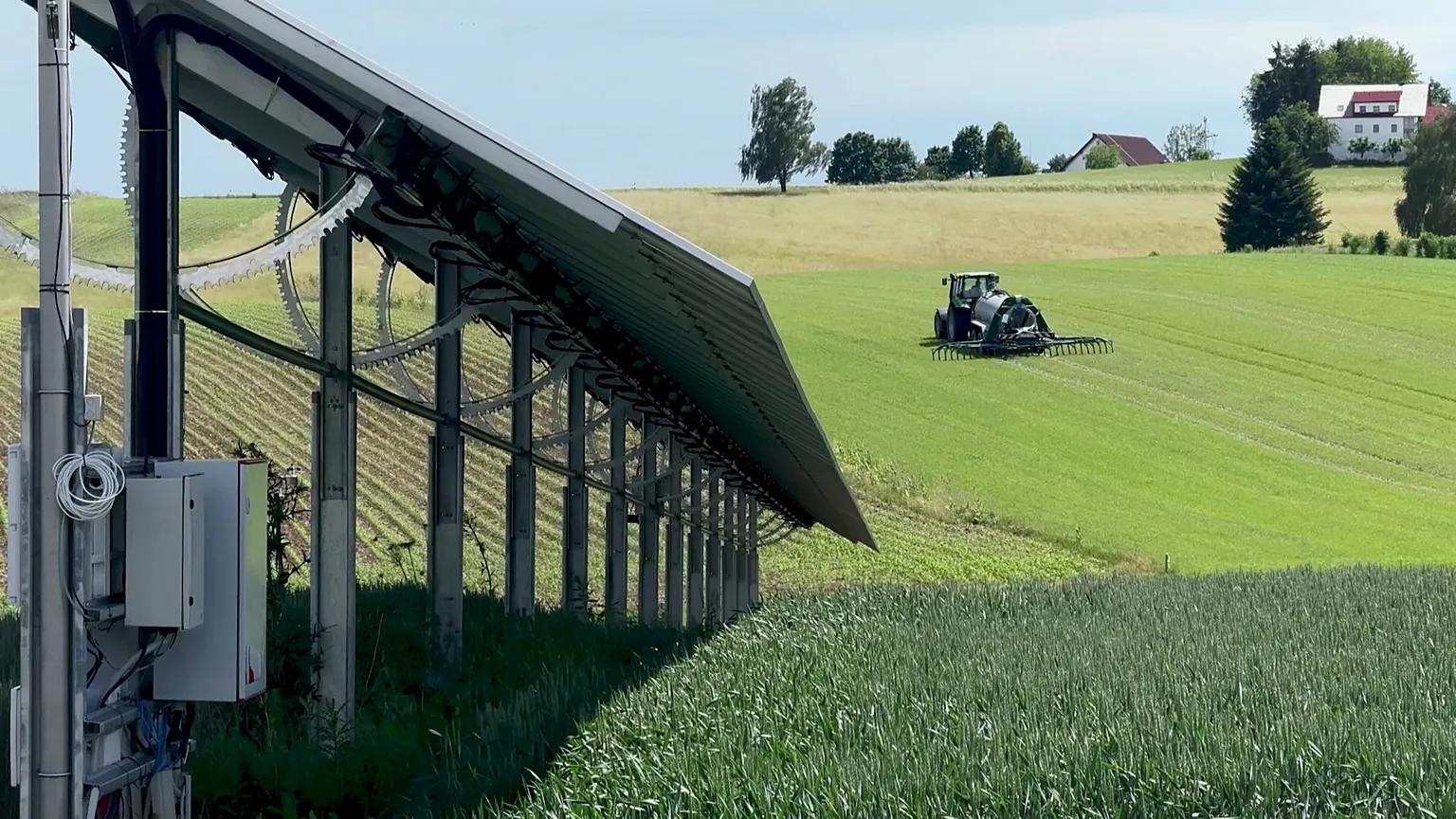
The surge in affordable solar panels has driven a significant growth of photovoltaic installations in rural zones. However, does this imply a reduction in farmland? That need not be the case: a group of German innovators has created solutions enabling farmers to harvest dual yields: agricultural produce & solar power
The story begins at Georg Bockmaier’s farm. Traditionally, he cultivates potatoes and cereals, following in the footsteps of his father and grandfather. In Grasbrunn, Bockmaier’s village near Munich, notable activity takes place: heavy equipment arrives, and a construction team from Slovakia is assembling an agricultural photovoltaic (agri-PV) system, featuring an advanced solar tracking mechanism, in the field behind Bockmaier’s property.
 ADVERTISEMENT
  ADVERTISEMENT
This is Bavaria, a southern German region renowned as a hub for start-ups, especially those developing innovative smart farming technologies. Among them is Feld.energy. Founded only two years ago, this ambitious start-up is expanding quickly. Over 800 farmers have chosen to collaborate: together with feld.energy, they are setting up agri-PV systems across nearly 900 hectares.
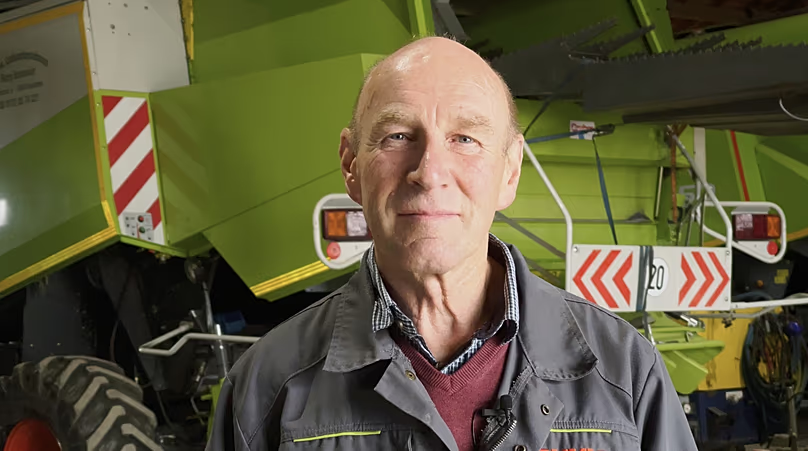
Does this signify that Bavarian landscapes will soon be dominated by PV panels, making farming impossible? Bockmaier refutes this: “This is an innovation that allows me to continue farming. Using my combine harvester, which has a cutting width of 6.60 or even 7.50 meters, I can easily navigate between the panel rows. Additionally, we have the option to install PV panels vertically.”
Nikolai Voitiouk-Blum, feld.energy’s vice president of operations, shares: “Our plan for the upcoming four years is well-defined. We aim to extend our reach into additional European markets, including Italy, with the goal of deploying one gigawatt of photovoltaic capacity, which corresponds to the output of a full-scale nuclear power plant.”