
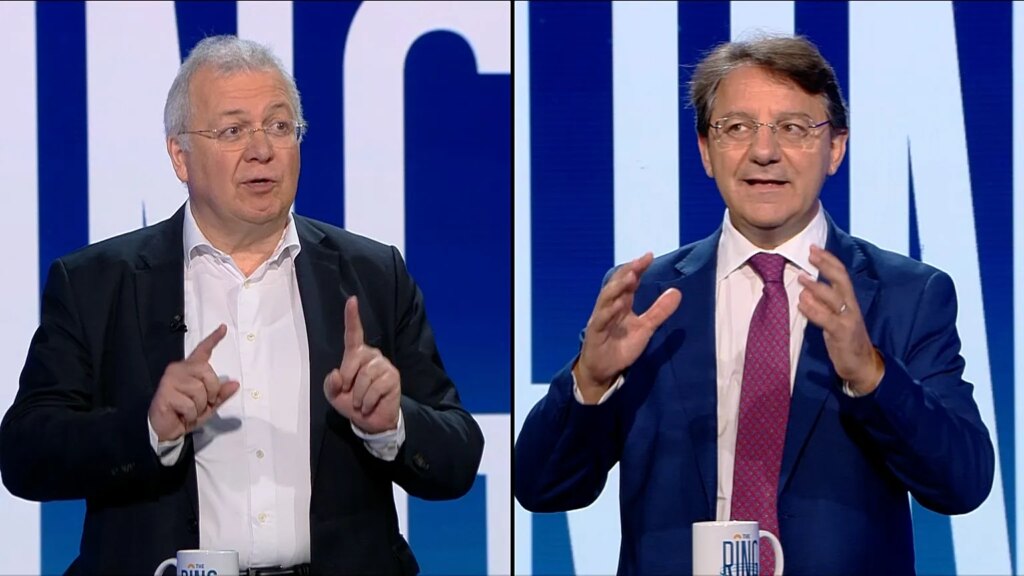
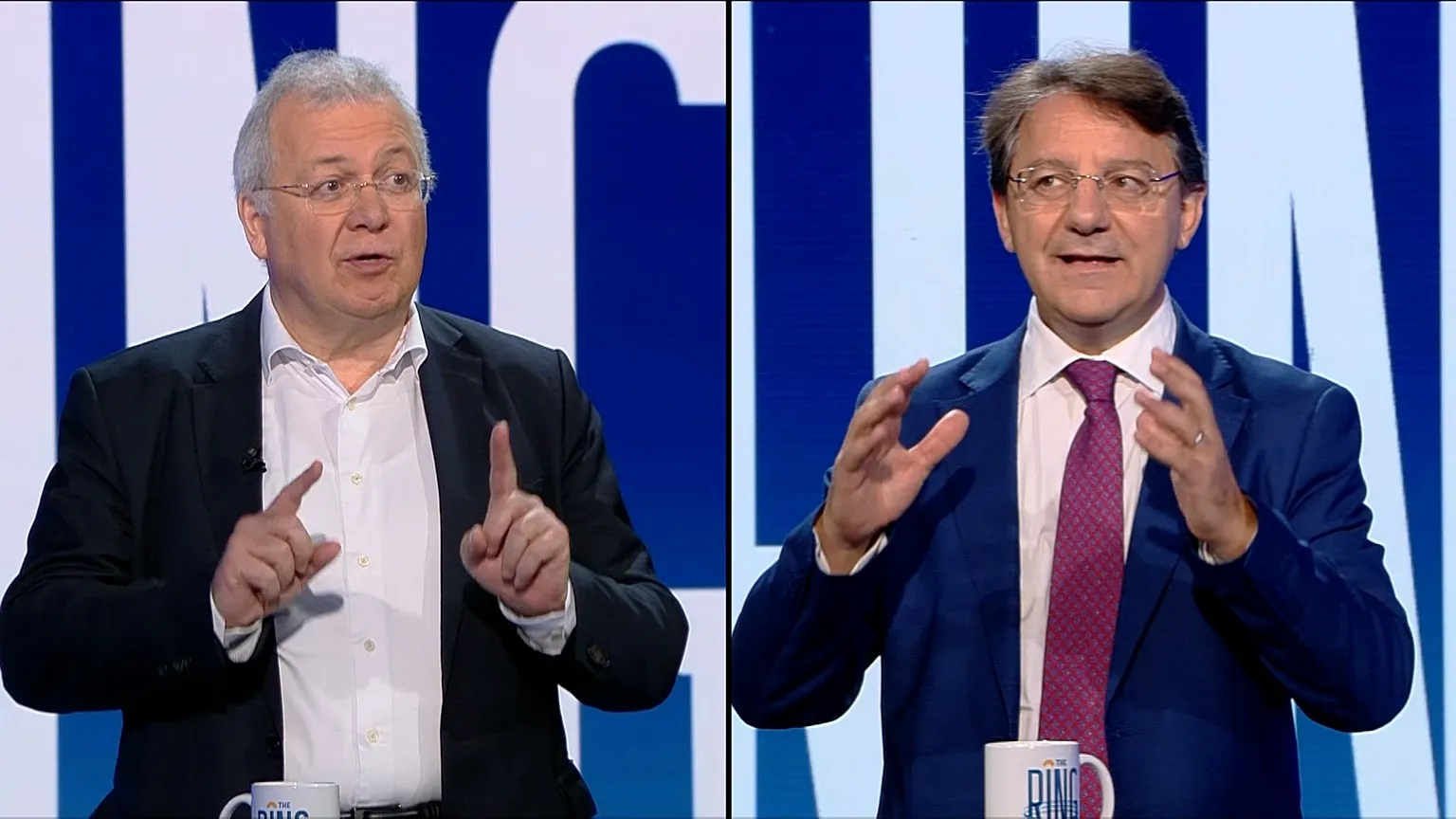
In this week’s edition of The Ring, EU parliamentarians Markus Ferber and Pasquale Tridico debate whether shared debt is the solution to Europe’s sluggish economy and reduced competitiveness.
A proposal from Spain suggesting that Brussels could borrow up to €850 billion annually to boost growth has rekindled the long-standing discussion on joint EU debt.
 ADVERTISEMENT
  ADVERTISEMENT
Nonetheless, the idea of collective borrowing remains contentious among member states. A coalition of southern nations, including France, supports increasing joint debt to boost competitiveness, while a faction of cautious northern countries opposes this, demanding stricter fiscal regulations and discipline.
This episode of The Ring, Euronews’ weekly debate program, features two MEPs from these opposing sides confronting each other.
Markus Ferber, a German Conservative, maintained that increased borrowing would only heighten the strain on public budgets and fail to tackle the fundamental reasons for slow growth, advocating instead for reforms in public expenditure.
On the other hand, Pasquale Tridico, an Italian MEP representing the Five Star Movement, characterized public debt as “one of the key instruments for economic expansion” and urged for its wider application.
“Adopting common debt is essential. This goes beyond solidarity – it is about building a robust economy,” declared MEP Tridico.
Meanwhile, Ferber pointed out that as the EU aims to postpone repayments on the Covid-era joint borrowing, known as Next Generation funds, financial markets “will doubt our ability” to handle further loans.
“I wish you luck approaching the markets for funding,” he remarked. “But when it comes to refinancing and repayment, the markets will demand high interest rates.”
Both parliamentarians addressed the intense global competition confronting Europe and the detrimental effects on the bloc’s industries and economy.
China’s industrial overcapacity, fueled by substantial state subsidies, is inundating the EU market with low-cost exports, threatening the survival of manufacturing sectors.
The European Commission is considering a strong response but has set an October deadline to achieve “concrete” progress in negotiations with Beijing.
“Our efforts regarding China are insufficient because we are not leveraging our greatest asset, the Single Market,” Ferber explained. He contended that internal barriers within the EU Single Market impose an economic burden equivalent to a 45% tariff on trade inside the union.
This episode of The Ring is hosted by Mared Gwyn, produced by Luis Albertos Altarejos and Amaia Echevarria, and edited by Vassilis Glynos.
Contact can be made via: [email protected].