
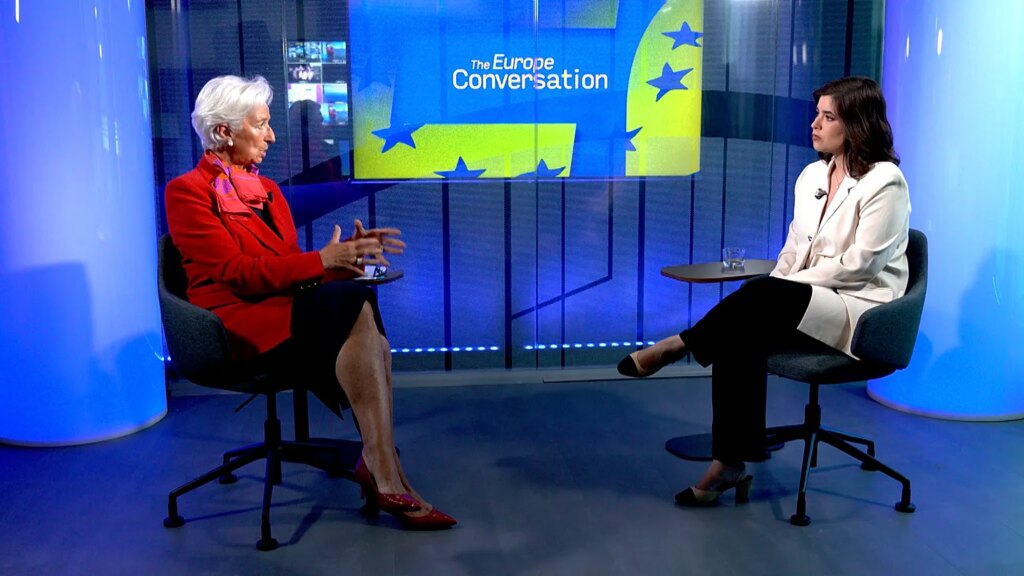
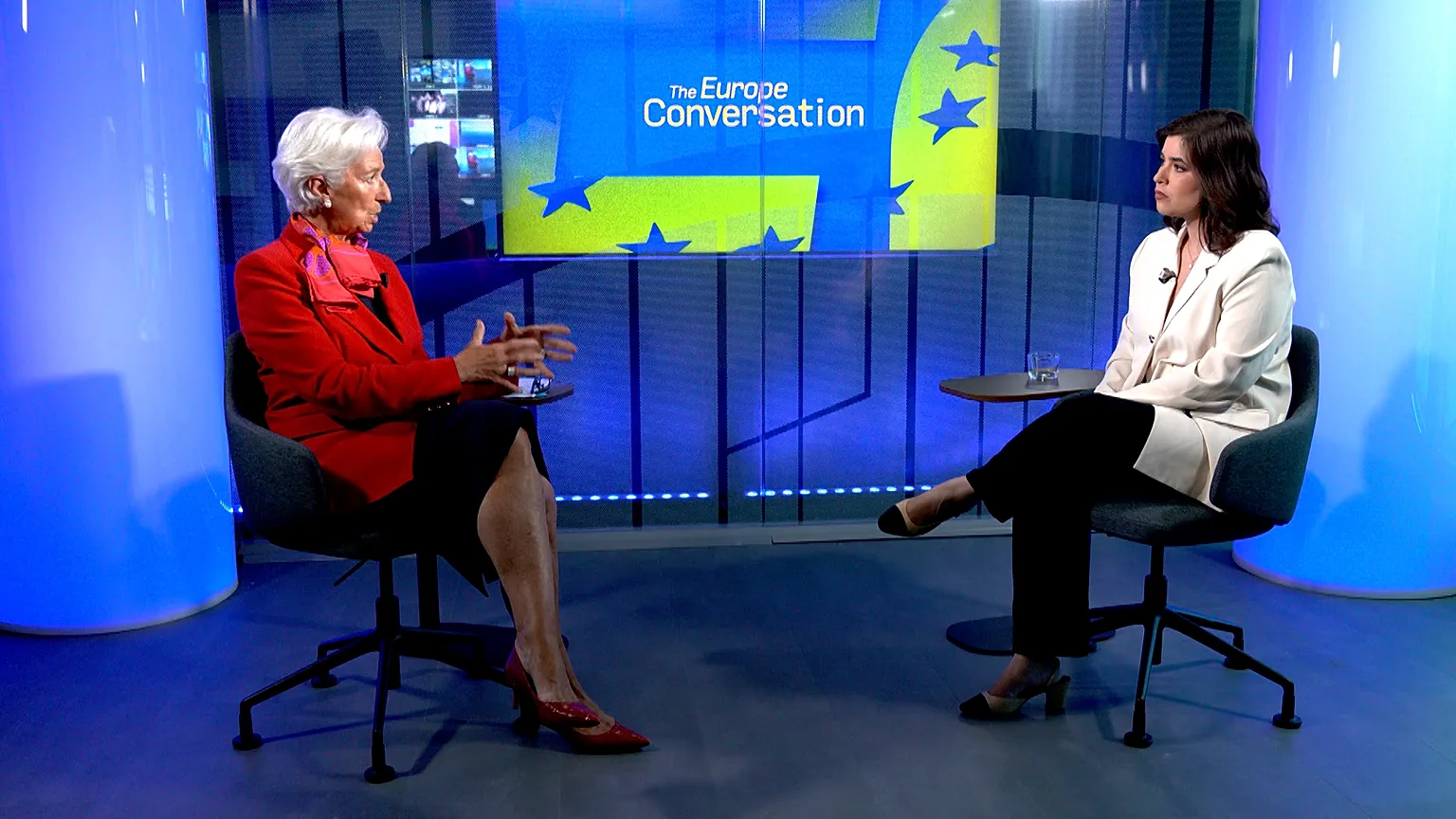
European Central Bank President Christine Lagarde dismissed in an exclusive interview with Euronews the assertions that the digital euro aims to substitute cash or enable the central bank to track payments, as the legislation advanced to a new stage after prolonged discussions in the European Parliament.
The digital euro is designed to complement cash rather than replace it, and its purpose is not to monitor transactions, European Central Bank President Christine Lagarde stated in an exclusive interview with Euronews, rejecting accusations that the initiative seeks to surveil citizens.
 ADVERTISEMENT
  ADVERTISEMENT
On Thursday, the European Parliament endorsed its negotiating mandate, moving the legislation closer to approval expected by the conclusion of 2026 after several months of stalled negotiations.
Initially, the proposal faced opposition from certain European Parliament members who contended that the digital euro might jeopardize privacy and reduce the significance of banknotes and coins as payment methods.
«It is worth acknowledging that the Parliament has overwhelmingly supported the mandate for these negotiations, which are hoped to conclude by December,» Lagarde told Euronews during The Europe Conversation with Maria Tadeo.
The ECB president clarified that the digital euro intends to bring public money—currently mostly available in cash form—into the digital sphere as competition between jurisdictions intensifies. Similar to banknotes and coins, it will maintain legal tender status.
«Both cash and the digital euro will be recognized as legal tender, implying that throughout Europe, refusal to accept banknotes will not be allowed,» Lagarde explained.
She added that the ECB plans to release a new banknote strategy before the year’s end.
«We will present proposals regarding the design and new appearance of our banknotes. Cash is here to stay but will be modernized,» she noted.
Fundamentally, Lagarde emphasized, the digital euro is also aimed at reinforcing Europe’s strategic independence in payment systems and transaction processing.
The majority of card payments across Europe are routed through foreign-owned payment networks, prompting EU officials to advocate for a domestic alternative amid growing geopolitical tensions that highlight the bloc’s reliance on providers mainly based in the US.
«The optimal option is a European solution, which we currently lack. Presently, in approximately 60% of payment cases, users rely on payment infrastructures owned by foreign entities,» Lagarde stated, referencing ECB data on card transactions.
«Our dependency is largely on US networks, occasionally on Chinese ones. Establishing a European solution is essential to secure sovereignty within our territory,» she concluded.