
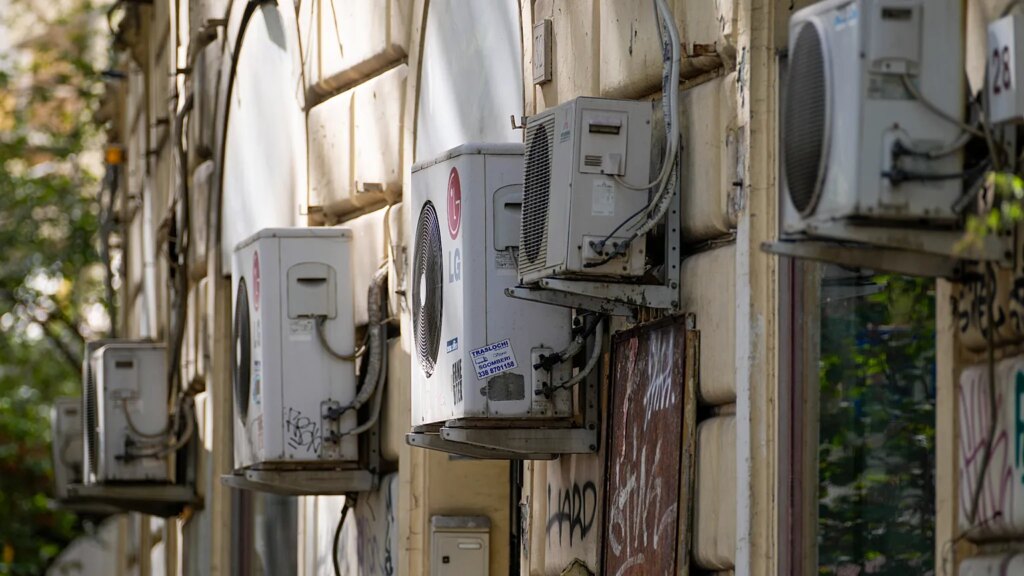
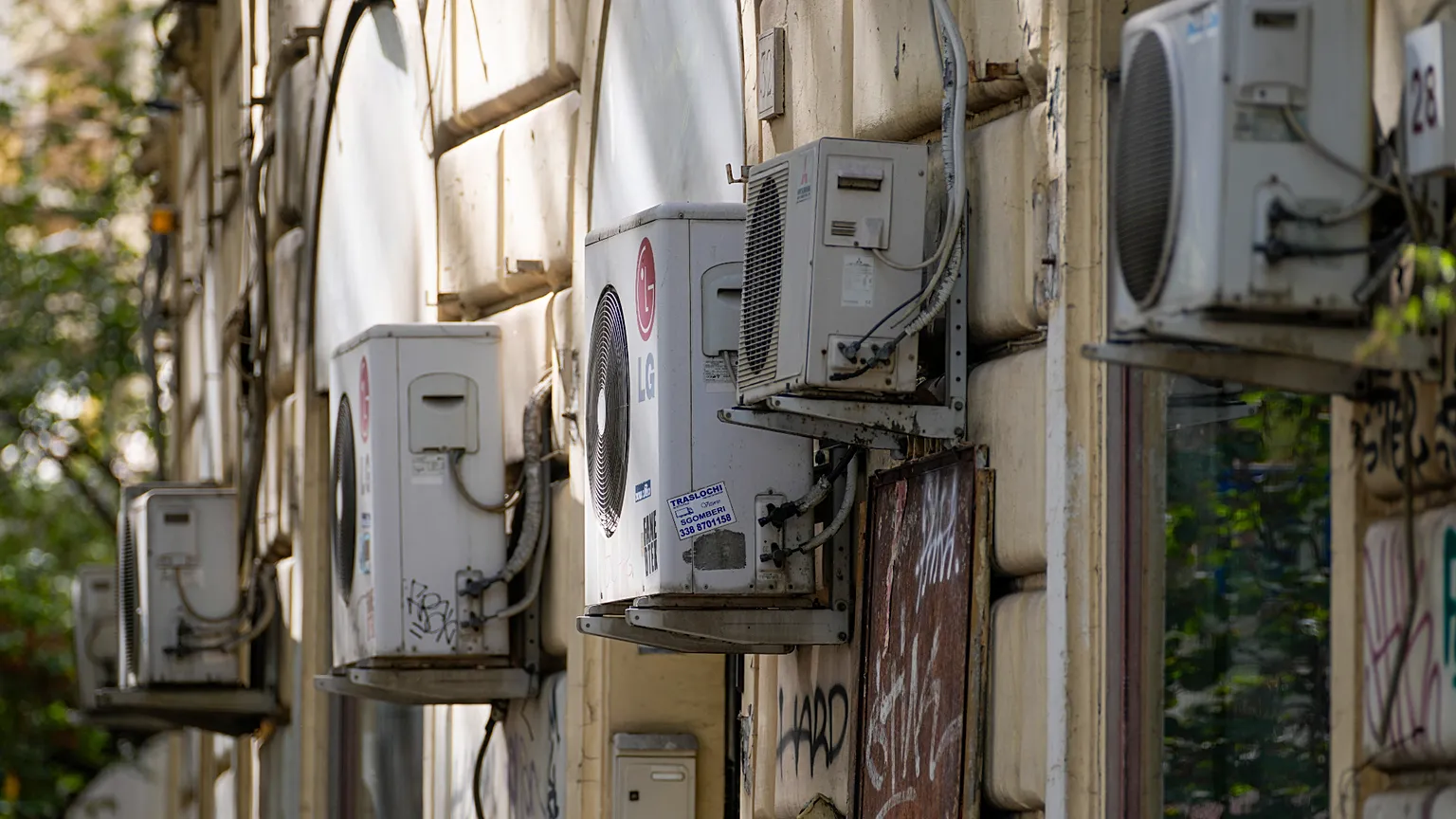
An EU official stated that cooling cities across Europe will necessitate multiple approaches, with air conditioning representing just one aspect of a wider strategy for climate adaptation.
Officials from the European Commission privately recognize that air conditioning becomes crucial amid increasingly common heatwaves, as passive cooling solutions like shading and insulation do not always suffice.
 ADVERTISEMENT
  ADVERTISEMENT
Nonetheless, as the demand for cooling grows, they warn that an exclusive dependence on air conditioning would increase electricity consumption, necessitate more energy production, and result in higher electricity costs for households, especially given the current elevated power prices.
«Air conditioning is certainly one of the necessary tools. In some situations, insulation or other passive methods are simply not adequate,» an EU official said anonymously, following a severe heatwave that revealed Europe’s unpreparedness to manage rising temperatures.
«Simultaneously, relying solely on air conditioning might lead to high installation expenses due to the need for a large generator, and it can also produce substantial energy bills,» the official added.
Additionally, the official noted that widespread use of air conditioners contributes to the urban «heat island» effect by releasing waste heat, highlighting the importance of green spaces, shading, building orientation, and improved urban design.
The official detailed the motivation behind the EU’s forthcoming climate adaptation plan, expected in late 2026, which aims to shift focus from disaster response to prevention and resilience.
Overall, the Commission supports a «comprehensive» approach integrating passive and energy-efficient cooling technologies. Rather than promoting widespread deployment of air conditioning systems, Brussels prioritizes cooler buildings and urban areas through design, insulation, and passive tactics, reserving efficient air conditioning for cases where it is truly necessary.
Air-conditioning units vs fixed systems
EU representatives recognize that portable air conditioners remain common due to the lack of installation requirements, but caution that these are far less energy-efficient compared to permanent installations.
The Commission pointed out that contemporary fixed units are «highly efficient,» often functioning as reversible heat pumps able to support both decarbonized heating and cooling.
EU regulations on energy labeling and eco-design have progressively enhanced their efficiency since 2002, with further regulatory improvements planned, according to the official.
However, the Commission acknowledged that air conditioner installation regulations typically fall under regional or local jurisdiction.
«Urban properties require flexibility to implement solar shading façades or air conditioning systems. Member states, regions, and municipalities must decide on the best suitable approach,» the official explained.
Seasoned legislator Pascal Canfin (France/Renew Europe) described reducing the climate adaptation discussion to a simple «for or against air conditioning» debate as «oversimplified.»
«Schools and hospitals should be equipped with air conditioning to protect children, elderly, and ill individuals from dangerous heat, but air conditioning does not solve every issue,» Canfin told Euronews.
The French MEP emphasized that air conditioning alone cannot address vulnerabilities in infrastructure or decreases in agricultural productivity, adding that completely rejecting every technological adaptation is as ineffective as relying on a single solution.
Terry Reintke, co-president of the Greens/EFA group in the European Parliament, stated that the «top priority» is saving lives, safeguarding vulnerable populations, and supporting those without access to cooling.
«Urban environments must be rethought: planting trees, restoring wetlands, and creating cooling areas with water features and green corridors are essential. Nature-based solutions are functional infrastructure, not just decorative,» Reintke told Euronews.
Yet, the German MEP pointed out that the recent heatwave served as a «wake-up call» to expedite the transition away from fossil fuels, which are the underlying cause of increasing heat risks.
«It is critical to intensify investment in renewable energy to power our cities while preventing further damage to the planet,» Reintke concluded.