
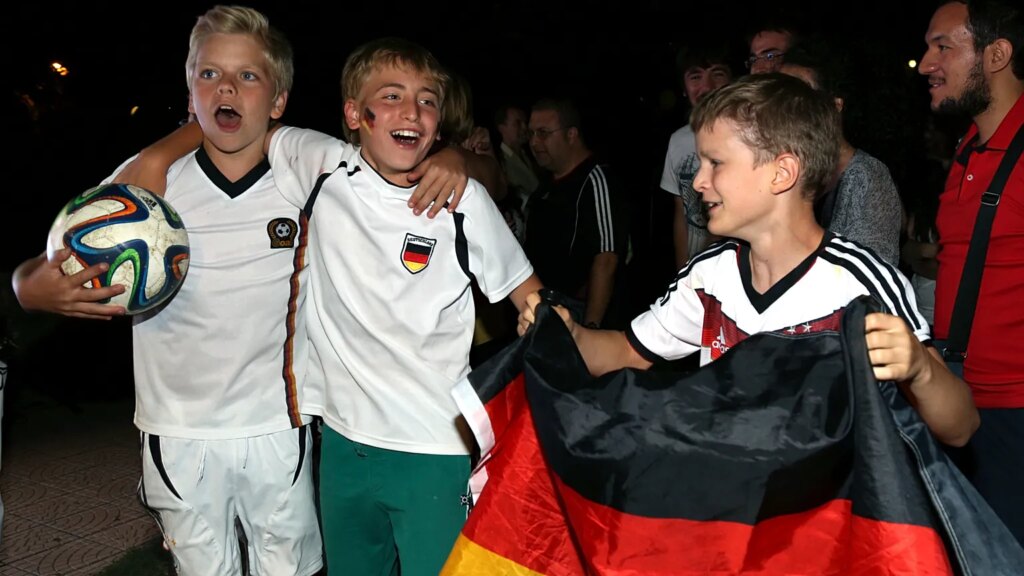
If an entire nation celebrates, does that translate into an increase in births nine months later? After the 2006 and 2014 World Cups, this idea gained traction. Examining data, maternity wards, and research uncovers the actual truth behind this belief.
The perfect follow-up to a summer fairy tale seemed set: on 13 July 2014, Germany claimed the world championship in Rio de Janeiro, with Mario Götze scoring the decisive goal in the 113th minute against Argentina. Millions took to the streets, balconies, and fan zones to celebrate. Over 30 million viewers in Germany tuned in to watch the final on TV. Naturally, the question arose — could such a massive wave of euphoria possibly impact birth rates?
 ADVERTISEMENT
  ADVERTISEMENT
Even prior to the final match, Saxon family policy expert Alexander Krauß (CDU) had forecasted a baby boom in the Bild newspaper, as WirtschaftsWoche later reported: «When the ball rolls, the atmosphere rises not only in front of the TV but also in bedrooms. German goals mean babies for Saxony!» This statement was poised to be tested by spring 2015, roughly nine months after the Brazilian victory.
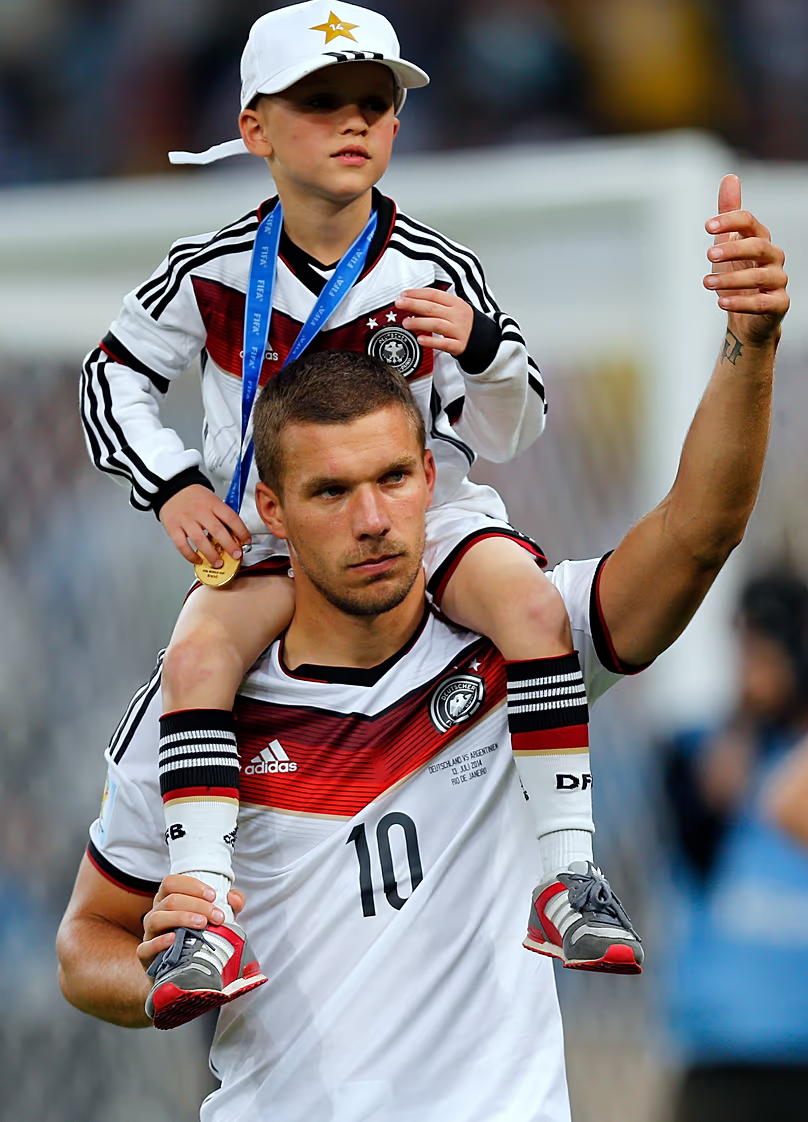
The legend of the World Cup babies
The anticipation was not novel. Back during the 2006 World Cup in Germany — considered the original «summer fairy tale» — the narrative of football babies first emerged. The atmosphere across the country was buoyant, fan zones were overflowing. Journalist and presenter Lena Cassel reflected on the period on NDR, referring to it as an «emotional release.»
In February 2007, the Frankfurter Allgemeine Zeitung described a «winter fairy tale following the summer fairy tale»: antenatal courses reached full capacity, maternity wards operated at maximum capacity. The magazine Stern echoed this account. Hamburg’s Asklepios clinic reported approximately a 10% increase in births in March 2007.
Berlin also saw a rise in births in March 2007, growing from about 2,400 to 2,800 as per the state statistics office. Vivantes hospitals noted an 11% increase compared to the previous year. Cologne registered 116 more births in April than the equivalent month the prior year. The pattern appeared again in 2015: Bild highlighted specific «World Cup babies,» and multiple cities observed increased birth rates.

Individual numbers don’t constitute a trend
If the 2014 World Cup victory truly spurred more pregnancies, this would have been noticeable prior to births—in health insurer records, pregnancy test sales, and baby supply stores. Yet WirtschaftsWoche found scant proof of this in 2015.
Barmer GEK told the publication at the time: «We do not possess data that indicates expected birth counts in upcoming months.» Techniker Krankenkasse similarly stated it could «not extract any reliable conclusions from the existing data.»
Pregnancy test manufacturers also did not observe a surge. Dolorgiet, the producer of the Hilary test, reported July 2014 sales as below average, with August at normal levels. The baby and toddler retailer BabyOne noted pram sales rising, though the increase had been ongoing since autumn 2014.
Birth statistics challenged the narrative
By spring 2015, what was once a catchy story became a statistical challenge. A quick survey by the German Press Agency of registry offices and hospitals revealed no extraordinary rise in births. None of the respondents confirmed a baby boom.
In fact, Berlin’s Charité hospital saw fewer births than usual about 40 weeks after the World Cup final. Between 4 and 6 April, only 14 babies were born, compared to the usual nine to ten per day.
Looking back, the 2006 World Cup baby boom theory also collapsed. In November 2007, the Federal Statistical Office reported a slight decrease in births in the first half of 2007: 313,100 children vs. 313,900 during the same period the previous year, a drop of 0.3%, according to Der Tagesspiegel. Martin Conrad, the official in charge, stated there had «definitely not» been a baby boom nine months after the 2006 World Cup.

Several factors can cause birth rate increases
The persistence of the baby boom story is partly due to how numbers are interpreted. Surges within specific cities or hospitals may look impressive but hold little weight as evidence of a nationwide trend. For instance, Cologne recorded more births in April 2007 than in the same month the previous year, but 2005 had even higher numbers without any World Cup involvement. Likewise, Stuttgart’s rising birth rates had been trending upward for years prior.
Other influences also come into play. Berlin’s birth increase in March 2007 coincided with the introduction of a new parental allowance. This benefit partially compensated for income lost after childbirth and aimed to facilitate parents in balancing work and family responsibilities while promoting shared childcare.
Findings from academic studies
A report by the IZA research institute actually challenges the popular belief. Analysts reviewed monthly birth data from 50 European countries over 56 years and aligned these with national team performances at 27 major football events.
The outcome: outstanding sporting success correlated with a drop in births, not a rise. Following an average performance in a tournament, birth rates decreased by 2.13% nine months later. For Germany, this suggests roughly 1,000 fewer births. A plausible reason: fans spending time celebrating in stadiums, in front of TVs, or at public viewings are less likely to be involved in conception during that period.
Similarly, demographer J. Richard Udry studied a comparable case linked to the major power outage in New York in November 1965. Media coverage implied an unusually high birth count nine months afterward, but Udry’s research, published in Demography, refuted this claim—the citywide birth rate remained normal. He concluded that people tend to associate significant disruptions in daily life with spikes in conception, despite lacking evidence.
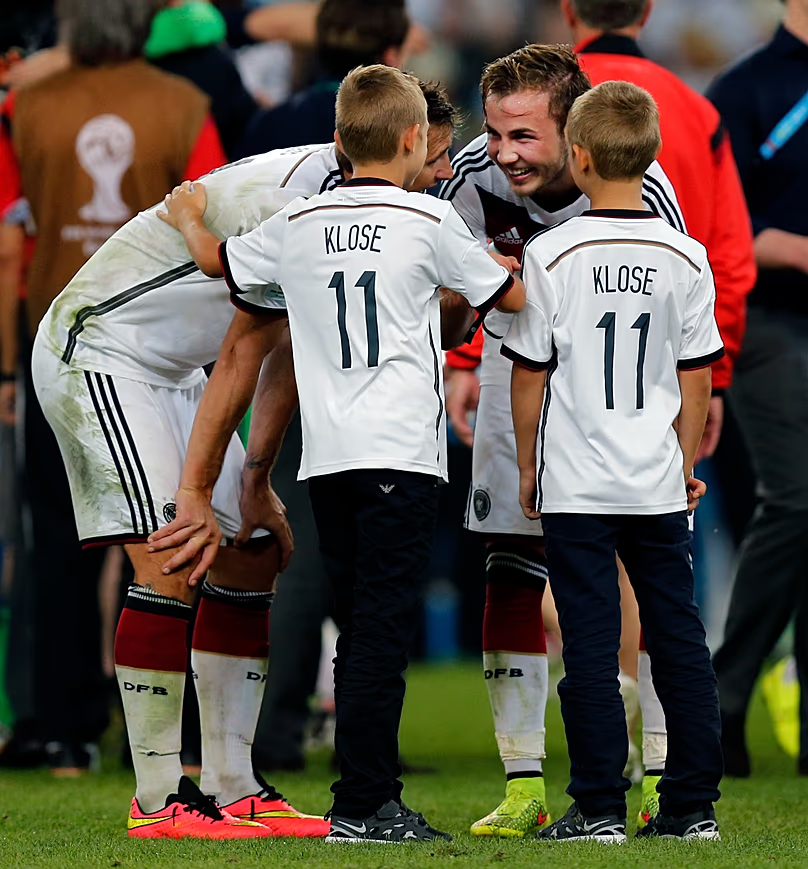
The lasting impact of the hoped-for baby boom
The phenomenon of World Cup babies reveals how quickly anecdotes solidify into enduring myths. While a handful of hospitals, fully booked antenatal classes, happy families, or significant monthly statistics might seem convincing, they do not establish a firm demographic trend.
Examining the entire year provides limited clarity, too: in 2015, Germany recorded about 738,000 births—a 3.2% increase over 2014—yet this cannot be attributed to the World Cup. Birth rates depend on many variables: the age and number of potential mothers, family policies, economic conditions, regional healthcare infrastructure, and long-term trends. The population in Germany and Europe is still declining; birth rates continue to drop.
Nevertheless, the tale of World Cup babies endures. It intertwines football excitement, a sense of unity, and familial joy into a simple, memorable narrative. Perhaps this explains why it resurfaces following major tournaments—in 2006, 2014, and potentially again now.