
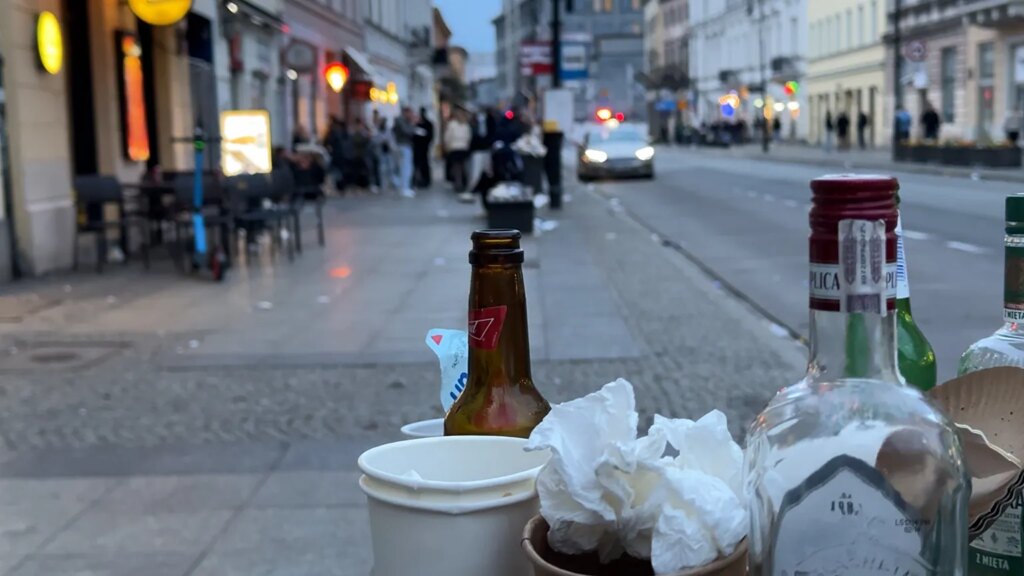
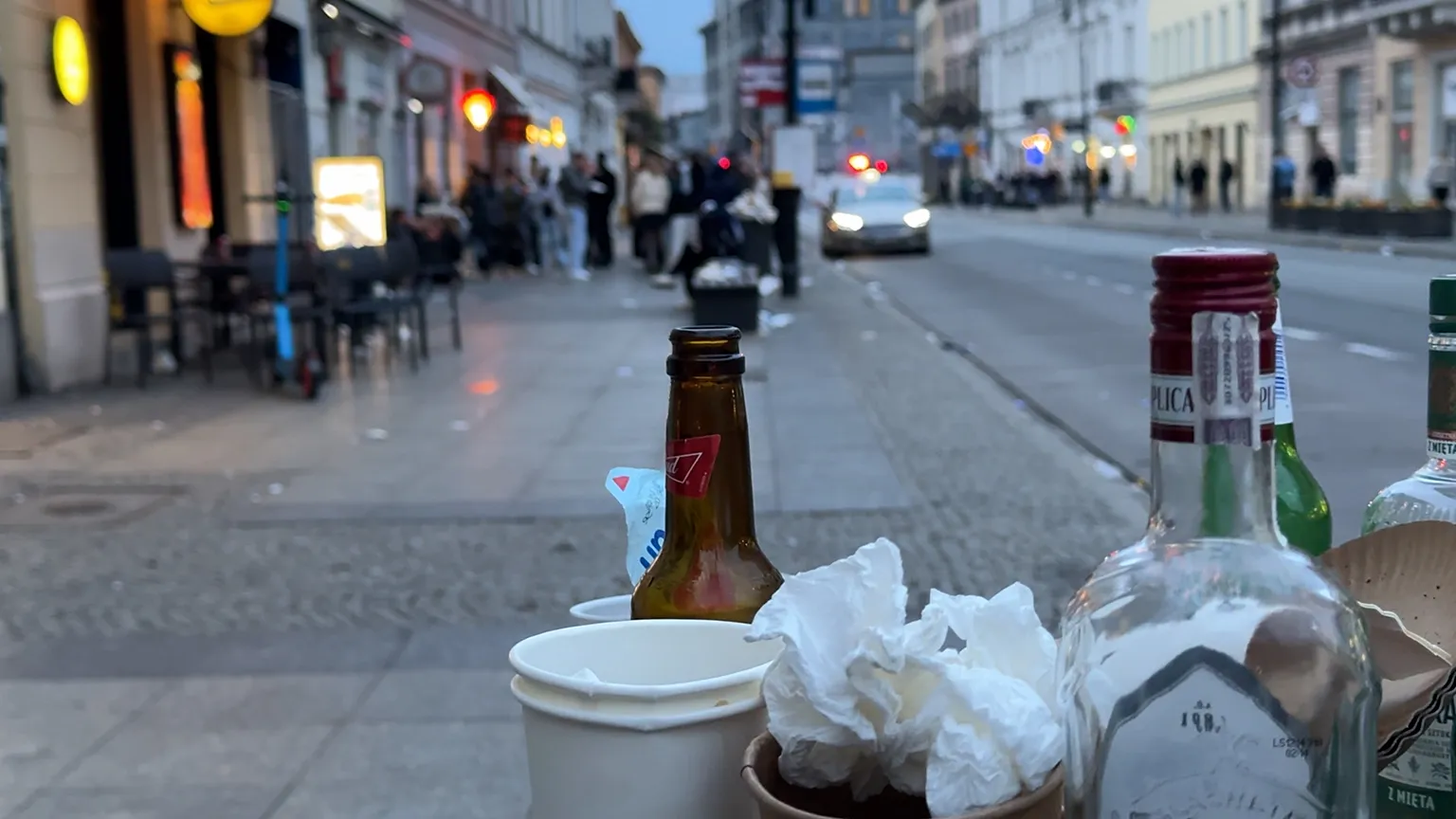
Starting 1 June, Warsaw will enforce a ban on selling alcohol during nighttime hours citywide. This initiative, a component of the Safe Night programme, aims to enhance security and reduce disturbances during late hours.
Warsaw’s City Council has decreed that from 10pm to 6am, alcohol sales will be prohibited in shops, kiosks, and petrol stations throughout the Polish capital.
 ADVERTISEMENT
  ADVERTISEMENT
“Although I usually do not advocate for such restrictions, after extensive discussion, I am convinced this measure could benefit the city,” stated Warsaw mayor Rafał Trzaskowski.
Authorities emphasize that the decision follows a pilot programme run in Śródmieście and Praga-Północ districts. Data from the Municipal Guard and police reveal a notable decline in night-time incidents in these areas.
This limitation also targets the issue known as «alcohol tourism,» where individuals roam the city searching for 24-hour outlets selling alcoholic beverages.
The prohibition excludes restaurants, bars, and the duty-free zone at Warsaw Chopin Airport.
Public opinion in Warsaw largely supports this night-time sales ban. In 2024 consultations involving close to 9,000 participants, 81% favored implementing the ban, with 97% preferring it to be citywide rather than restricted to certain neighborhoods.
How will Warsaw’s streets be affected?
A street survey conducted revealed diverse opinions among residents regarding the new regulations. Most agree that limiting alcohol sales at night will improve safety and raise living standards in the city.
“This will bring a much quieter atmosphere,” commented an elderly woman.
Several locals recalled similar policies decades ago, which they believe were effective. A ban on alcohol sales before 1pm was introduced in the communist period, autumn 1982, aiming to reduce workplace drunkenness and queue disturbances. This rule was abolished in democratic Poland in November 1990.
“Alcohol sales from 1pm to 10pm suited everyone well back then. I see this new rule as a positive development,” shared an older Warsaw resident.
Residents also mentioned experiences from other countries where alcohol sales restrictions have long been established.
“I think safety will improve. My husband and I frequently visit Sweden, where similar rules work effectively, so I believe this is an appropriate move,” said a young woman.
Nonetheless, some Warsaw residents oppose these regulations, resisting any form of limitation.
Younger people especially express the strongest objections to a citywide ban, citing challenges it might pose for socializing on summer evenings in public areas and concerns about potential price increases in bars and restaurants.
“If this ban exists, I’d have to stay sober, which I don’t favor,» remarked young men who clearly smelled of alcohol. «Prohibition, no matter the hour, is unacceptable to us.»
Concerns were also voiced about the risk of an increase in illegal alcohol sales.
“Prohibition always brings some black-market activity,» said one pensioner. «Someone will always sell from home, as it has happened for years. However, I support the ban because it will likely reduce incidents and conflicts.»
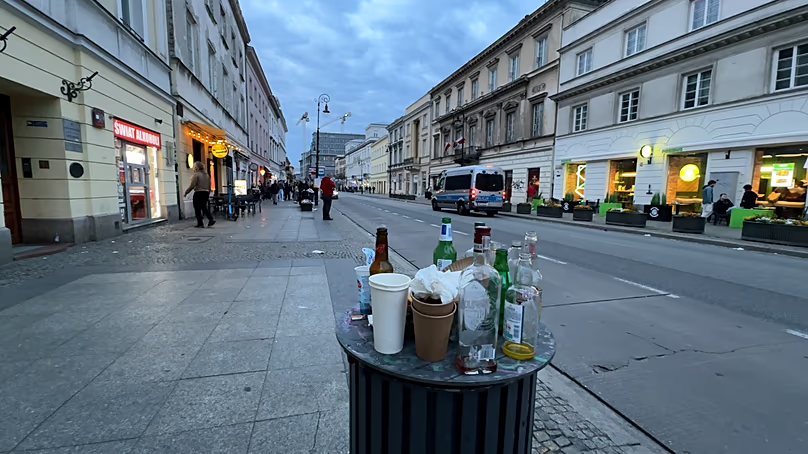
Another area of inquiry addressed whether alcohol consumption should be prohibited along the Vistula boulevards. Currently, drinking alcohol there is an exception to the general ban on public alcohol consumption, which has been in effect since 9 March 2018. The majority of locals oppose adding such a restriction.
“I have spent much time there with friends. Although not as often now, I believe young people should have places to socialize,” shared one woman.
Some citizens argue that the root problem lies not with alcohol itself but with people’s behavior and lack of moderation.
“Just because I don’t drink doesn’t mean others shouldn’t. My point is that everything should be done with moderation and responsibility. Bottles must go to bins or recycling points — not smashed on the boulevard where people can neither sit nor stand.”
Police authorities in the capital confirm a reduction in interventions in neighborhoods participating in the pilot scheme. They also warn that sellers violating the ban risk serious penalties under the Act on Counteracting Alcoholism and Promoting Sobriety, including the loss of their alcohol sales licences.
The regulations will take effect at the start of June. Only time will reveal whether limiting alcohol sales at night will indeed lead to calmer and safer streets throughout Warsaw.