
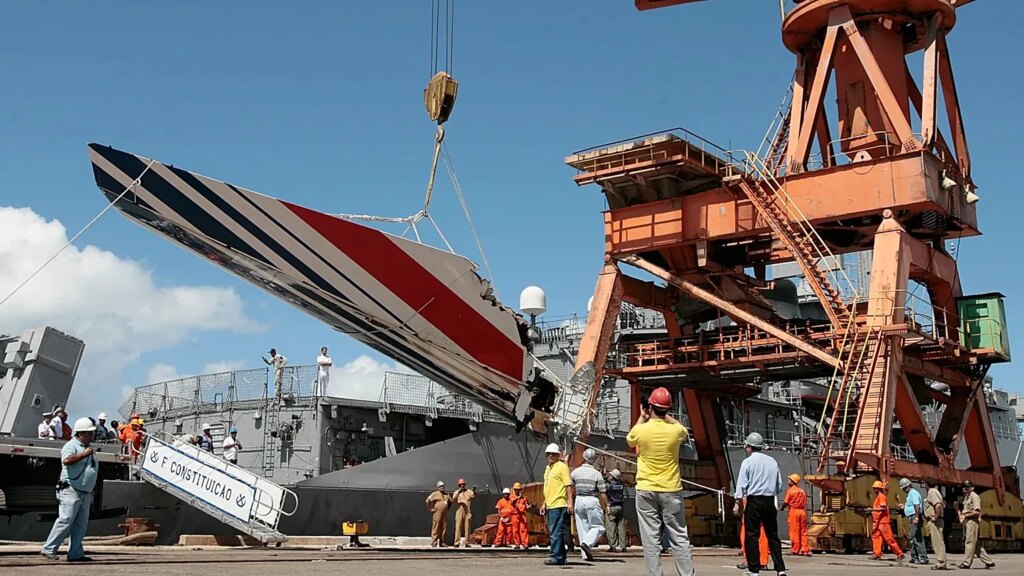
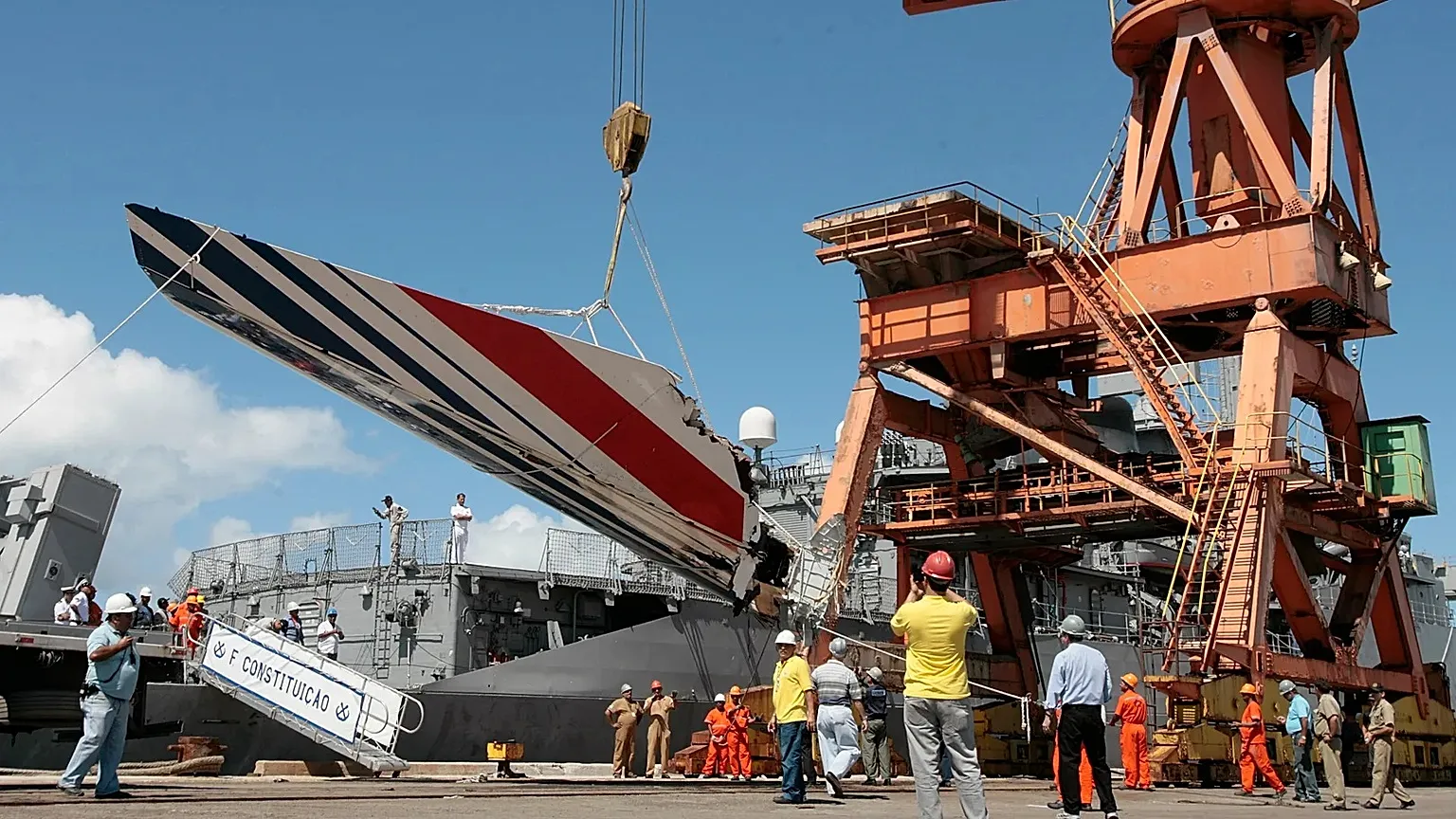
On 1 June 2009, Air France Flight AF447, en route from Rio de Janeiro to Paris, was cruising over the Atlantic when the pilots lost command of the plane, resulting in its descent into the ocean.
A French appeals court found Air France and Airbus guilty of involuntary manslaughter on Thursday in connection to the 2009 crash of the Rio-Paris flight that claimed 228 lives, marking France’s deadliest aviation accident.
 ADVERTISEMENT
  ADVERTISEMENT
The decision from the Paris Court of Appeal represented a significant reversal compared to the verdict delivered by a lower court.
The appeals judges declared that the French national airline and the leading aerospace manufacturer in Europe bore «full and exclusive responsibility for the crash of flight AF447,» ordering both to pay €225,000, the highest penalty for corporate manslaughter.
Though the fines are largely symbolic, the verdict dealt a notable hit to the reputations of the two firms.
Air France and Airbus have persistently rejected any criminal wrongdoing, attributing blame to pilot error.
The initial court acquitted both parties in 2023, ruling that while mistakes had occurred, they could not be definitively linked to causing the accident.
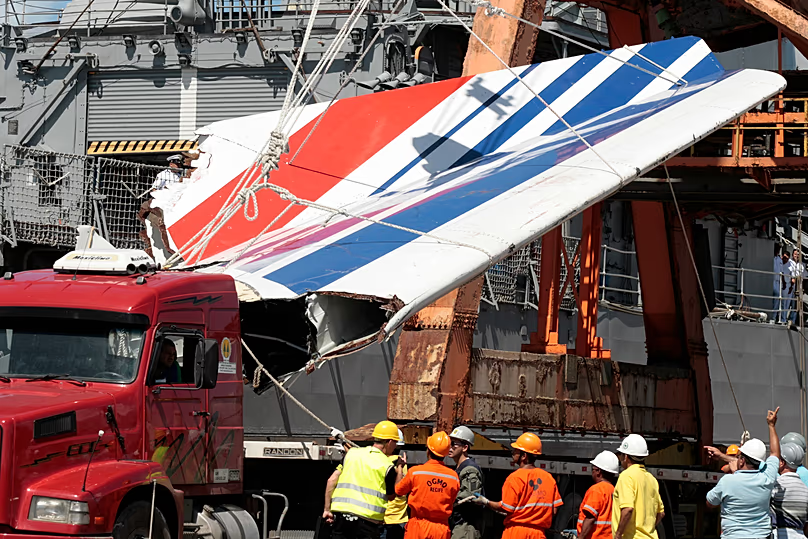
However, the presiding judge on Thursday noted that the prior court had failed to consider «the causal chain in which the pilots’ actions took place and which resulted in the fatalities of all passengers.»
«The AF447 crash was a foreseeable tragedy that could have been prevented if the companies involved had fully acknowledged the gravity of the failure,» commented Sylvie Madec.
Both Air France and Airbus declared their intention to contest the verdict.
‘Complacency and pride’
Alain Jakubowicz, representing the civil parties, anticipated that this ruling would establish a legal milestone after the 17-year-long trial.
«No battle is without hope,» he affirmed.
Air France, upon announcing its appeal, expressed awareness that the process remains prolonged, particularly affecting the families, while emphasizing that criminal liability had been dismissed twice before.
«The litigation is set to continue,» stated Simon Ndiaye, counsel for Airbus.
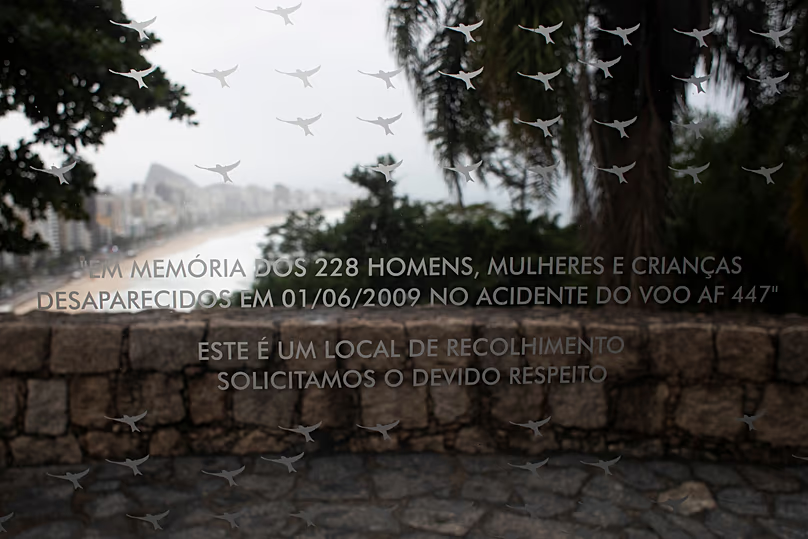
On 1 June 2009, Air France Flight AF447, heading from Rio de Janeiro to Paris, was flying over the Atlantic Ocean when its pilots lost control, leading the aircraft to crash into the sea.
None of the 216 passengers or 12 crew aboard the Airbus A330 survived; among the victims were 72 French citizens and 58 Brazilians.
In Paris, relatives of the victims welcomed the verdict.
Daniele Lamy, leader of a victims’ family association, stated that the justice system had ultimately acknowledged «the families’ suffering.»
«These well-known companies will no longer conceal themselves behind their complacency and technological pride,» she added.
Conversely, in Rio de Janeiro the atmosphere was more somber.
Nelson Faria Marinho, who lost his 40-year-old son in the disaster, mentioned that the verdict offered him no solace.
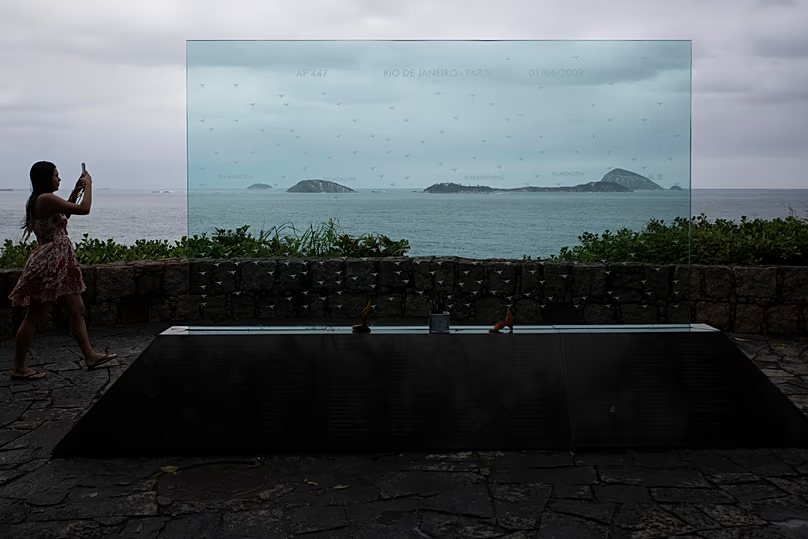
«It feels as though my son died just today,» expressed the leader of a Brazilian victims’ family group, adding his frustration that no executive has been held accountable.
Despite prosecutors recommending dropping the charges in 2023, they later proceeded with the appeal.
The appeal hearing lasted eight weeks, from September to December of last year.
‘Pilots did everything possible’
Representatives for the families argued that both companies were aware of issues with the pitot tubes, which measure airspeed, but that pilots were not trained to handle such a mid-flight emergency at high altitude.
The court learned that the faulty tubes became clogged by ice crystals during an Atlantic storm, triggering alarms in the cockpit and disengaging the autopilot system.
Experts explained how following this failure, pilots raised the aircraft’s nose, inducing a stall that caused the plane to crash into the sea.
The appeals court held Airbus accountable for multiple faults, including underestimating sensor malfunctions and failing to properly inform airline crews.
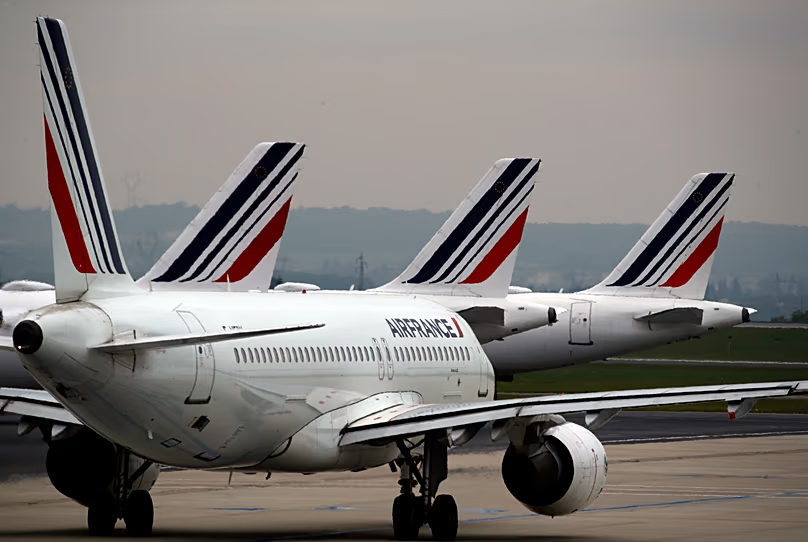
Air France was found responsible for failing to deliver adequate pilot training and insufficiently informing flight crews.
Although the court did not exclude the possibility of «pilot errors» during the 4 minutes and 30 seconds between the sensor icing and impact, it judged that the crew was ill-prepared to manage this «extremely complex malfunction.»
«The pilots of AF447 truly exhausted every option to overcome this terrible emergency,» the presiding judge remarked.
«They acted to the best of their abilities, and no fault can be attributed to them.»
Additional sources • AFP