
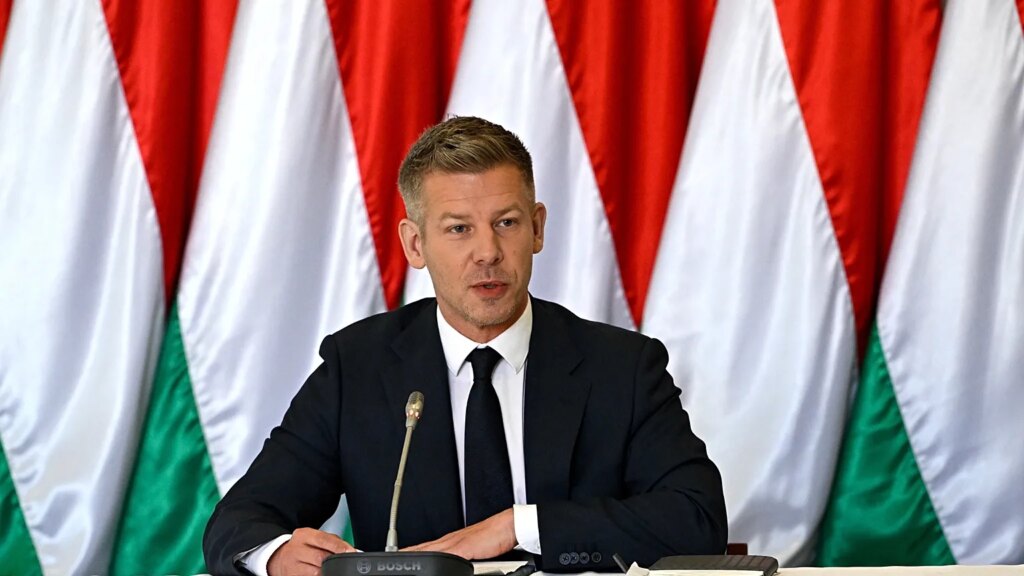
Hungary’s recently formed government has expressed openness to dialogue with Ukraine regarding its EU accession process, as multiple sources indicate. Concurrently, technical talks have been initiated with Kyiv on the complex matter of Hungarian minorities. Brussels awaits a decisive development.
Last week, the Hungarian ambassador declared that Budapest is ready to engage constructively with Ukraine to achieve tangible outcomes. This coincides with Péter Magyar’s government starting technical negotiations aimed at resolving sensitive issues concerning the Hungarian minority.
 ADVERTISEMENT
  ADVERTISEMENT
During Viktor Orbán’s administration, Hungary obstructed the commencement of the EU accession talks with Ukraine concerning the initial cluster, which involves essential reforms such as the rule of law and financial oversight.
The longstanding discord between Budapest and Kyiv centers on the substantial Hungarian minority residing in Ukraine’s western Transcarpathia region. This issue continues to resonate strongly within Hungarian society, even after Magyar’s decisive election victory ended Orbán’s 16-year leadership.
Orbán’s previous government produced an 11-point proposal to reinstate rights specifically for the Hungarian community in Ukraine. Budapest still considers the implementation of this plan crucial for unlocking the opening chapter in Ukraine’s EU accession negotiations.
Hints of improved relations surfaced during a discussion among EU diplomats last Wednesday, when the Hungarian representative confirmed Budapest’s readiness to engage on the subject.
The ambassador emphasized that a merit-based approach is essential, underscoring Hungary’s focus on safeguarding the legal status and rights of the Hungarian minority.
On April 28, Magyar announced plans to meet with President Volodymyr Zelenskyy in early June to facilitate improvements in conditions for ethnic Hungarians in Western Ukraine. The proposed location for this meeting is Berehove, a town in Zakarpattia Oblast identified as the hub of the regional Hungarian community.
Zelenskyy had met representatives of the Hungarian community on April 9, shortly before Hungary’s national elections.
The EU has set a prerequisite for Kyiv to adopt and implement an extensive minority rights action plan, which covers Hungarians as well as Romanians, Poles, and Bulgarians in Ukraine.
In March, Ukraine declared the establishment of a national day to honor the Romanian language, reflecting broader efforts to strengthen ties with Bucharest. This move followed Romania’s recognition of Ukrainian Language Day every November 9.
Ukraine’s potential enlargement may be discussed at the upcoming European Council meeting, where a meeting between Magyar and Zelenskyy is also expected on the sidelines.
However, Council President António Costa’s office has indicated that Ukraine’s accession will only be placed on the agenda if clear progress is reported, particularly regarding the official removal of the Hungarian veto on starting accession talks, Euronews has learned.
On Monday, Péter Magyar shared on Facebook that he had a phone conversation with President Costa, confirming Budapest’s launch of technical discussions with Ukraine to ensure the linguistic, educational, and cultural rights of the Hungarian minority in Transcarpathia.
“President António Costa informed me that he told the Ukrainian president yesterday that any future steps must be preceded by respect for the rights of the Hungarian minority residing in Ukraine,” Magyar stated.
Márton Hajdu, chair of Hungary’s parliament Foreign Affairs Committee from the Tisza Party, told Euronews that Hungary’s condition for progress is clear: “We demand legally guaranteed language, education, and cultural rights for the Hungarian minority in Transcarpathia as soon as possible.”
An anonymous Hungarian government source, due to the sensitivity involved, told Euronews that if Ukraine implements the 11-point plan and Hungarian minority representatives approve the results, Hungary would likely endorse opening the first key negotiation chapter with Ukraine.
Nonetheless, the source cautioned that the Orbán administration may have embedded various difficult or politically sensitive demands within the 11 points, describing them as “hidden landmines” which could complicate full implementation.
Zelenskyy affirmed that Ukraine is addressing all concerns related to the ethnic Hungarian minority in western Ukraine, emphasizing that ethnic Hungarians are “our citizens, like any others,” suggesting the issue is manageable rather than an obstacle. Budapest views these remarks positively.
Ukraine’s Foreign Minister Andrii Sybiha also tweeted that his government is willing to engage openly with Hungary’s new administration on all matters, including national minorities, aiming “to restore trust and good-neighbourly relations.”
At last week’s Foreign Affairs Council meeting, Sybiha described Hungary’s election outcome as a “critical moment” for Europe’s integration and expressed hope it would energize Ukraine’s EU membership ambitions.
“With participation from Hungarian community representatives in Transcarpathia, Hungarian-Ukrainian expert consultations will commence to address the rights of the Hungarian minority there,” posted Anita Orbán, Hungary’s deputy prime minister and foreign minister, on X Monday.
The removal of Hungary’s veto would represent only the initial step toward launching Ukraine’s accession process.
Other EU members have yet to publicly state their positions on this issue and might reveal their stances only after negotiations progress substantially.