
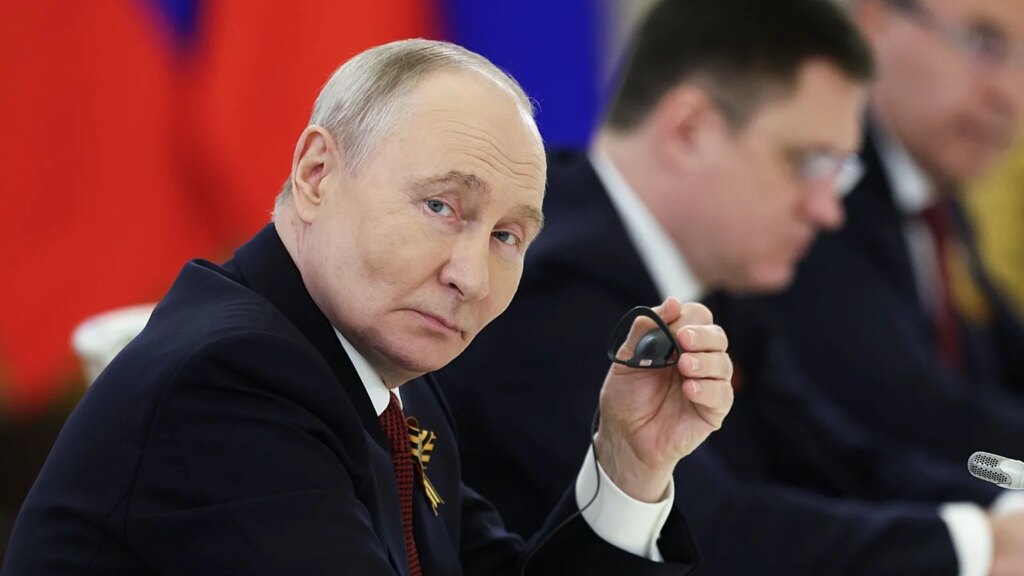
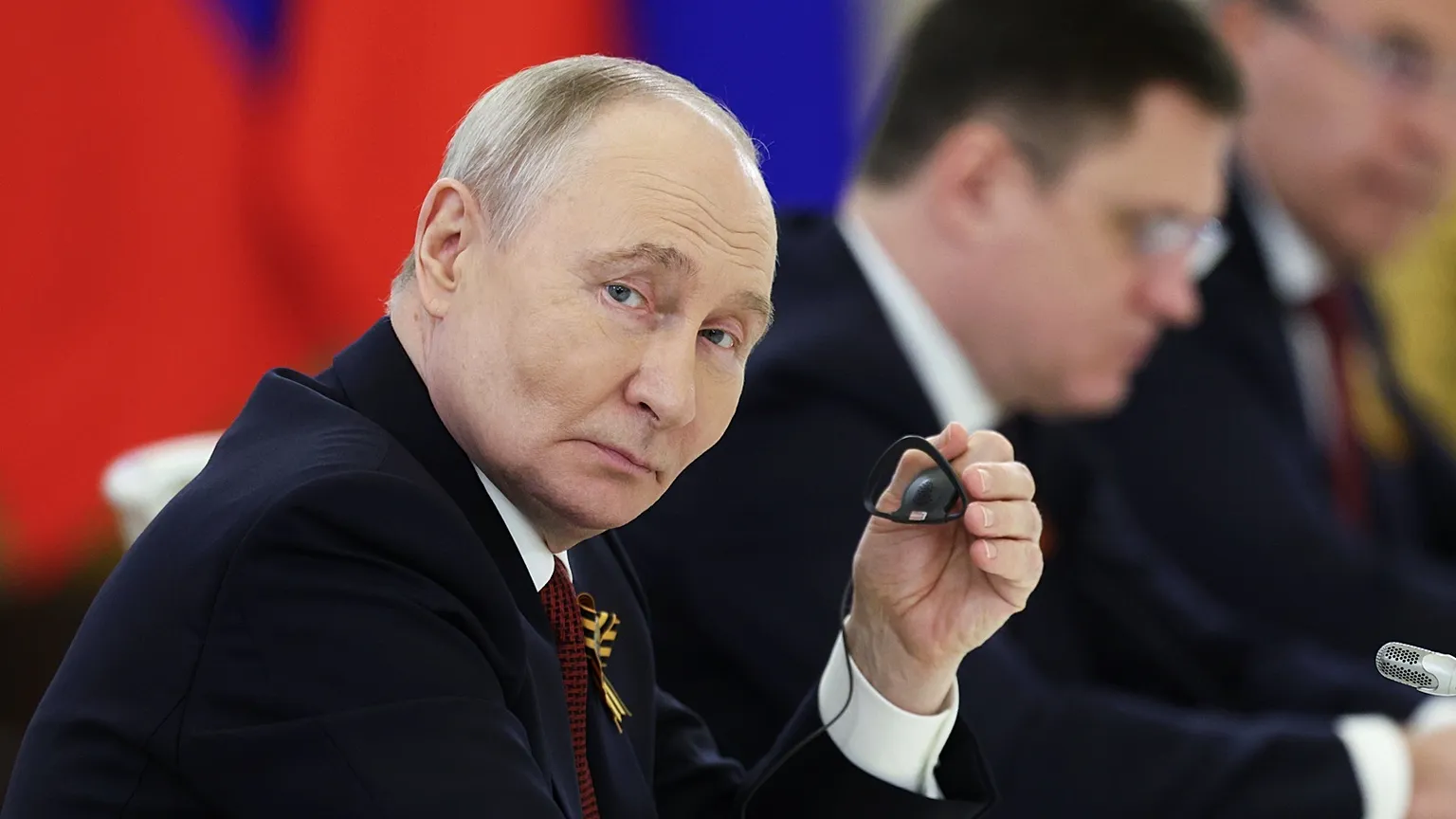
The tribunal addressing the crime of aggression against Ukraine signifies “the point of no return” in the pursuit of justice, stated the country’s foreign minister on Friday. Yet, the court will encounter challenges in prosecuting Putin.
Thirty-six nations, predominantly European, have committed to establishing a special tribunal to try Russian President Vladimir Putin for the crime of aggression against Ukraine, with its headquarters set in The Hague, Netherlands.
 ADVERTISEMENT
  ADVERTISEMENT
This collective commitment was formalised on Friday during the annual gathering of foreign affairs ministers of the Council of Europe, a human rights organisation that has actively addressed the jurisdictional void left by the International Criminal Court (ICC).
Ministers approved a resolution defining the structure and duties of the management committee supervising the tribunal. Responsibilities include approving the yearly budget, adopting procedural regulations, and electing judges and prosecutors. Participating countries vow to uphold the independence of judicial processes.
Ukraine’s foreign minister, Andrii Sybiha, who attended the event, described the occasion as “the point of no return” in the prolonged quest for responsibility.
“The Special Tribunal becomes a legal reality. Few anticipated that this day would arrive. Yet it has,” Sybiha declared on social media, invoking the legacy of the landmark Nuremberg trials that prosecuted key leaders of Nazi Germany.
“Putin has always aimed to be remembered in history. This tribunal will ensure that he is recorded — as a criminal,” he added.
The resolution signed on Friday included Andorra, Austria, Belgium, Croatia, Cyprus, the Czech Republic, Denmark, Estonia, Finland, France, Germany, Greece, Iceland, Ireland, Italy, Latvia, Liechtenstein, Lithuania, Luxembourg, Moldova, Monaco, Montenegro, the Netherlands, Norway, Poland, Portugal, Romania, San Marino, Slovenia, Spain, Sweden, Switzerland, Ukraine, and the United Kingdom.
Australia and Costa Rica were the sole non-European endorsers.
The European Union supported the initiative, although Bulgaria, Hungary, Malta, and Slovakia abstained from signing Friday’s resolution.
The list remains open for additional countries, both European and international, to join.
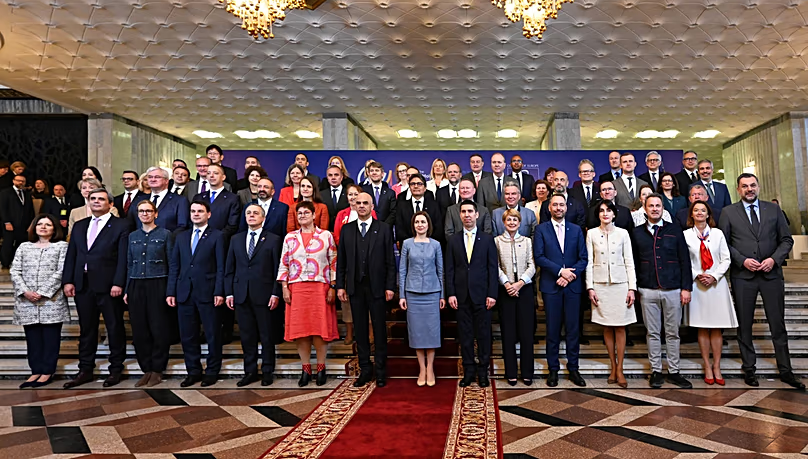
Alain Berset, Secretary General of the Council of Europe, called on members to finalise legislative processes and secure funding so the tribunal can promptly commence its work. The EU has already pledged €10 million.
Concerns about budget shortfalls had arisen previously due to the absence of US involvement during President Donald Trump’s administration. His efforts to broker peace between Ukraine and Russia also cast uncertainty over the tribunal’s fundamental mission: notably, a debated 28-point draft proposal last year suggested widespread amnesty for war crimes.
“The moment for Russia to face consequences for its aggression is approaching rapidly. The path ahead is one of justice, and justice must prevail,” Berset declared at the session.
The tribunal will be supported by the Register of Damages, compiling claims from victims of Russia’s aggression, alongside the International Claims Commission, which will assess these claims and determine suitable compensation payments.
Procesar a Putin
La creación de un tribunal especial ha sido una prioridad urgente para Ucrania y sus aliados desde que el Kremlin ordenó la invasión a gran escala en febrero de 2022.
Esta iniciativa se consideró necesaria porque la CPI solo puede juzgar el crimen de agresión cuando se le atribuye a un Estado parte. Rusia no es signataria del Estatuto de Roma y puede usar su veto en el Consejo de Seguridad de la ONU para bloquear cualquier modificación.
A diferencia de los crímenes de guerra, crímenes contra la humanidad y genocidio, que abarcan a los individuos responsables de los actos atroces, el crimen de agresión es un delito que recae en los líderes que controlan al Estado agresor.
En la práctica, esto incluye a la denominada “troika”: el presidente, el primer ministro y el ministro de exteriores, junto con altos mandos militares que han dirigido el ataque contra la soberanía e integridad territorial de Ucrania.
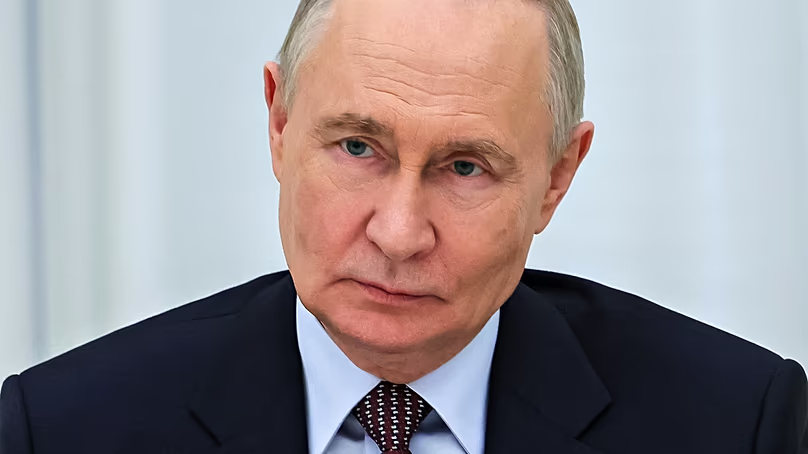
Putin, el arquitecto de la invasión y principal impulsor de su narrativa revisionista, es el objetivo más perseguido. Sin embargo, su juicio no es probable que se celebre pronto.
De manera crucial, la “troika” seguirá protegida contra juicios en ausencia — sin la presencia física del acusado — mientras permanezcan en el cargo. El fiscal podrá presentar una acusación contra Putin y su ministro de exteriores, Sergey Lavrov, pero la sala mantendrá suspendidos los procedimientos hasta que dejen sus puestos.
Por contraste, los juicios en ausencia pueden realizarse contra quienes están fuera de la troika mientras sigan en sus cargos, como Valery Gerasimov, jefe del Estado Mayor General de las Fuerzas Armadas rusas; Sergey Kobylash, comandante de la Fuerza Aérea rusa; y Sergei Shoigu, secretario del Consejo de Seguridad. Quienes sean condenados de este modo tendrán derecho a un nuevo juicio si alguna vez se presentan personalmente.
También podrían ser procesados oficiales de alto rango de Bielorrusia y Corea del Norte, dos países que han apoyado directamente la guerra de Rusia. Se espera que los acusados sean juzgados en grupos, salvo Putin, quien será juzgado individualmente.
El tribunal tendrá autoridad para aplicar penas severas a los condenados, incluyendo cadena perpetua, incautación de bienes personales y multas monetarias, que serán destinadas a un fondo de compensación para las víctimas.
Dado que la mayoría, si no todos, los juicios se llevarán a cabo en ausencia, el presupuesto se enfocará en tecnologías informáticas, ahorrando en gastos asociados a la construcción y mantenimiento de cárceles. La cifra exacta será acordada entre el Consejo de Europa y el gobierno neerlandés.
“No habrá una paz justa y duradera en Ucrania sin responsabilidad para Rusia y los perpetradores de los atroces crímenes cometidos contra el pueblo ucraniano,” afirmó la Alta Representante Kaja Kallas en un comunicado.
“Rusia eligió atacar e invadir un país soberano, asesinar a su gente, deportar a niños ucranianos y robar territorio ucraniano. Rusia debe afrontar la justicia y pagar por lo que ha hecho.”
Este artículo ha sido actualizado.