
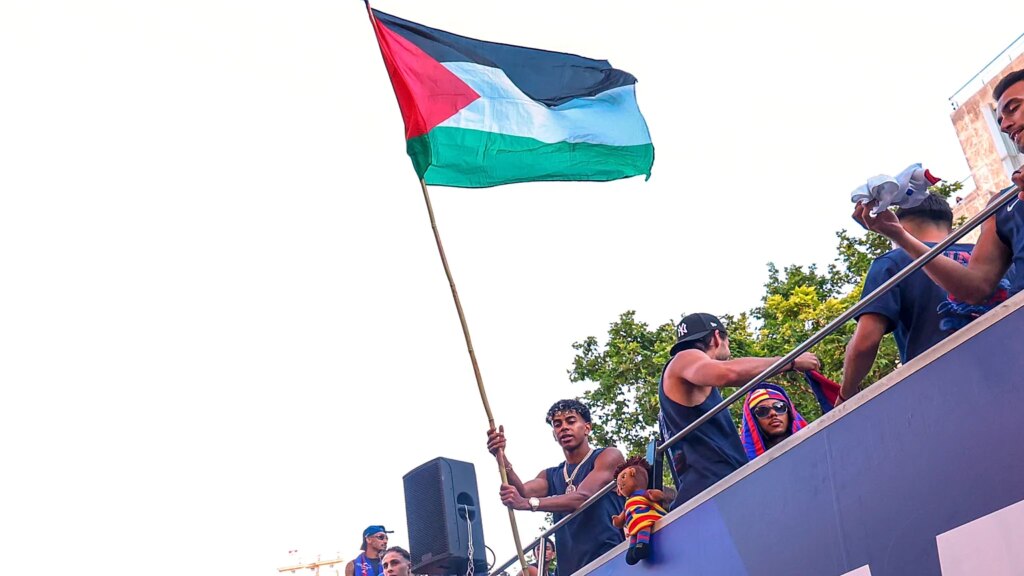
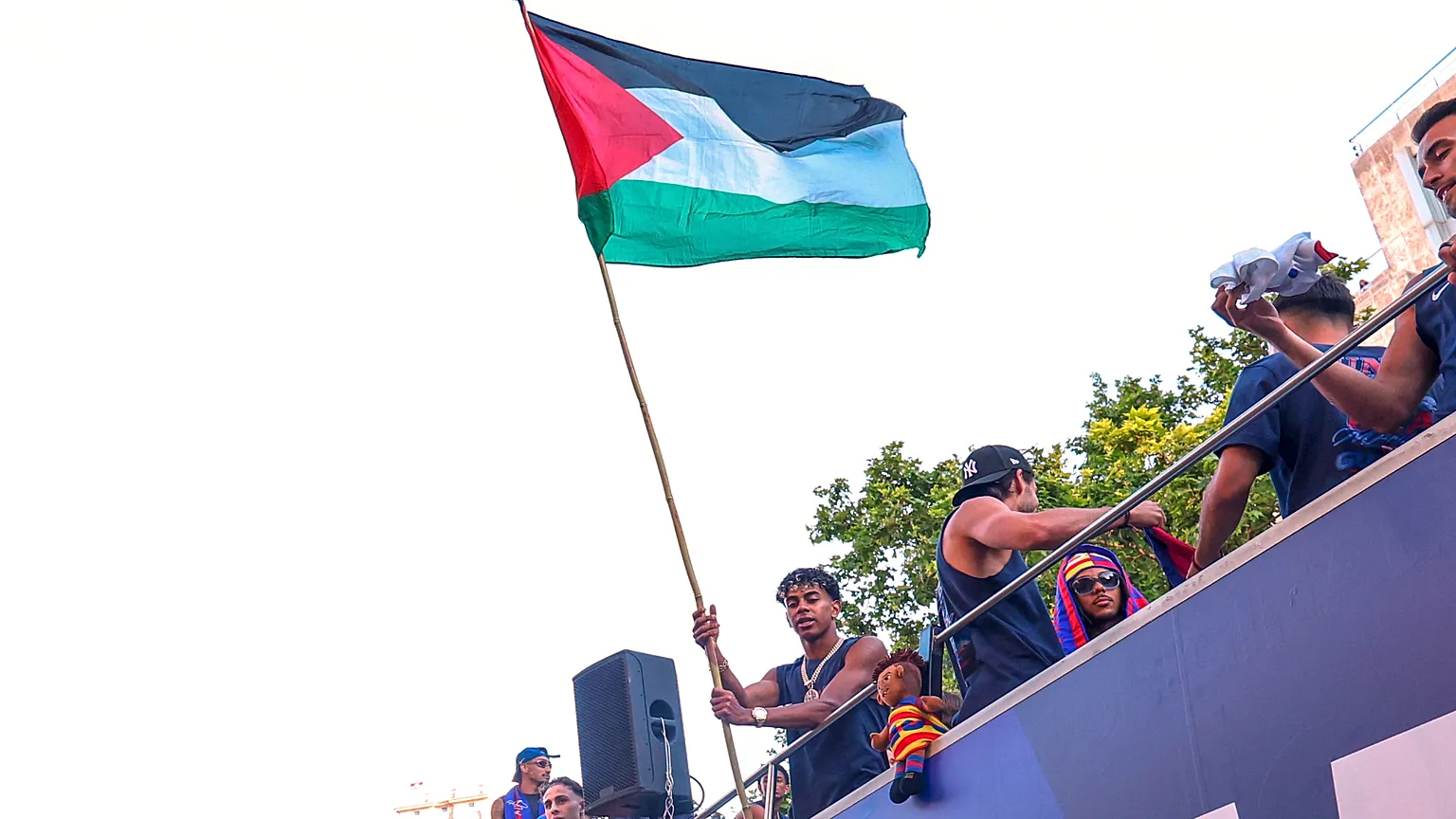
Yamal displayed a Palestinian flag during Barcelona’s La Liga victory celebrations, reigniting a discussion about the intersection of politics and sports just weeks before the World Cup amid ongoing geopolitical conflicts.
On Monday, the Barcelona forward Lamine Yamal, recognized as the world’s top young footballer, brandished a Palestinian flag while the club celebrated their La Liga triumph following their win over rivals Real Madrid.
 ADVERTISEMENT
  ADVERTISEMENT
The photograph, taken aboard Barcelona’s team bus as it toured the city streets, rapidly spread across social media. A post on Yamal’s Instagram showing several images of him holding the Palestinian flag accumulated over six million likes.
Rima Hassan, a far-left French MEP who was detained by French authorities for a social media post deemed incendiary towards antisemitism, responded with a Palestinian flag emoji.
Nevertheless, some responses were critical.
Barcelona’s coach, Hansi Flick, who supervises Yamal, stated he disagreed with mixing politics and football but acknowledged the player is mature enough to make his own decisions.
“I don’t support these actions and have discussed it with him. Ultimately, it’s his choice. He is 18 years old,” Flick commented on Tuesday.
The German coach highlighted that the primary expectation of Barcelona supporters is for football “to bring them joy, which remains our foremost objective.”
Media reactions were divided; some argued Yamal brought a sensitive political matter to light without sufficient explanation, while others commended the young athlete for boldly expressing his views and leveraging his platform, followed by millions.
This incident has revived debate concerning political expression in sports, especially with the World Cup jointly hosted by the United States, Canada, and Mexico scheduled to commence in less than a month.
During the 2022 Qatar World Cup, FIFA prohibited several team captains from wearing armbands supporting LGBTQ+ rights under the ‘OneLove’ campaign initiated by the Royal Dutch Football Association. FIFA warned of yellow cards for players displaying the armband, leading the initiative to be unused throughout the tournament.
FIFA’s rules specify that team uniforms must exclude “political, religious, or personal slogans.” Correspondingly, stadium regulations banned banners, flags, or flyers with “political, offensive and/or discriminatory content.”
The enforcement of these measures during the Qatar event sparked debate about their consistency, with critics pointing out uneven treatment of various forms of political expression.
Yamal, who holds endorsements with Adidas, Powerade, and Beats by Dr Dre, has taken a clear stance against racism and publicly supports social issues during his relatively brief but lucrative career.
His mother, Sheila Ebana, originally from Equatorial Guinea, relocated to Spain seeking opportunities, where she met Yamal’s father, Mounir Nasraoui, of Moroccan descent. Yamal has openly shared his early challenges before ascending to elite international football.
Although approached by Morocco’s national team, Lamine Yamal declared his allegiance to Spain, affirming he never wavered in his decision to represent the Spanish side. Moreover, he has condemned those who targeted his Muslim faith during matches, labeling such individuals as “ignorant” and “racist.”