
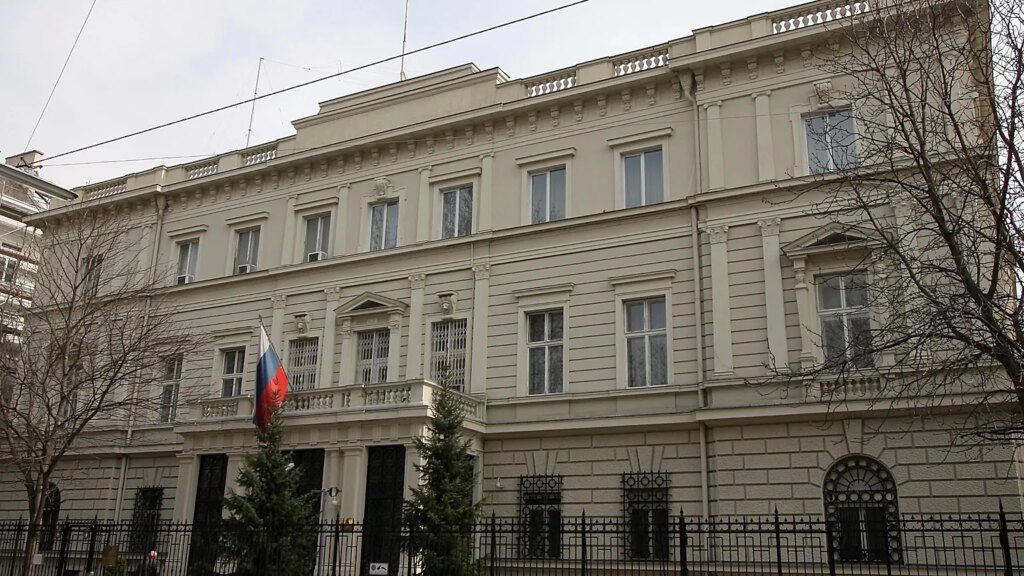
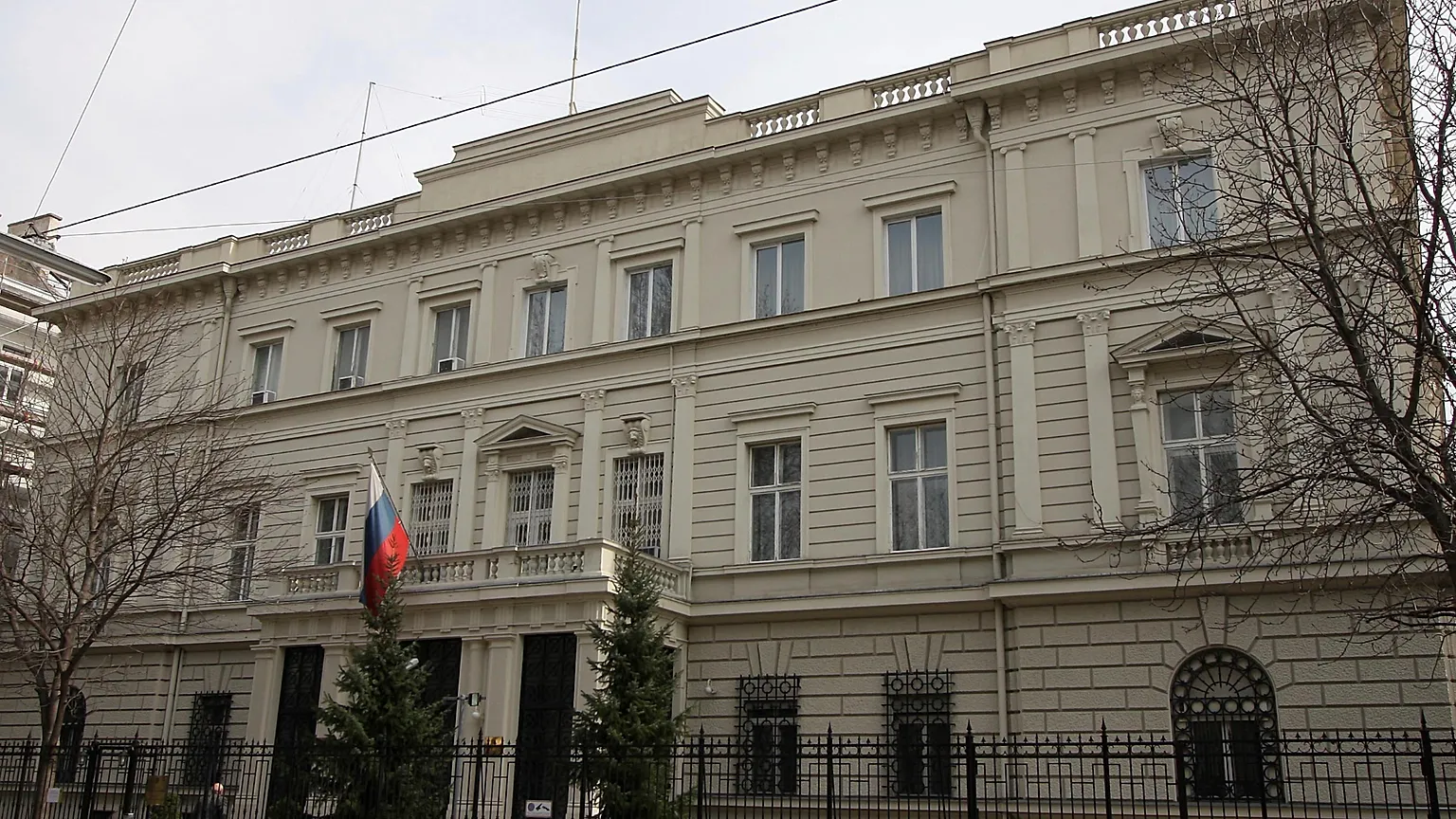
Austria recently expelled three Russian diplomats amid accusations of espionage in Vienna. Experts, journalists, and former intelligence officers suggest that extensive antenna arrays on Russian diplomatic premises might be the cause for concern.
Last week, three Russian diplomats were expelled from Austria after being accused of conducting espionage activities under diplomatic cover in Vienna.
 ADVERTISEMENT
  ADVERTISEMENT
Shortly thereafter, Foreign Minister Beate Meinl-Reisinger declared that Austria was intensifying its stance against spying activities, describing it as a «security concern» for the nation.
«We have conveyed this message clearly and unequivocally to the Russian side, including about the ‘antenna forest’ at the Russian mission,» she stated. «It is evident that diplomatic immunity cannot be exploited to conduct espionage.»
What exactly was the reference?
Experts and journalists have highlighted that multiple Russian diplomatic buildings in Vienna host large antenna arrays and satellite dishes, which might be utilized to intercept communications.
It is common for embassies to have rooftop antennas and satellite systems for maintaining secure contact with their home governments.
According to Article 27 of the Vienna Convention on Diplomatic Relations, diplomatic missions may employ secure communication methods. Still, any installation or operation of wireless radio transmitters requires the host nation’s approval.
Nonetheless, a Financial Times investigation published in March, which quoted officials and analysts tracking the sites, noted that the satellite dishes frequently moved and adjusted their positions—a behavior considered unusual for equipment used exclusively for diplomatic communication.
Erich Möchel, an Austrian investigative journalist, has been monitoring satellite dishes and antennas on Russian diplomatic buildings in Vienna together with a team of senior Austrian technologists and electronics engineers known as Nomen Nescio.
He informed Euronews’ fact-checking unit, The Cube, that one antenna system on the Russian embassy buildings in Vienna’s third district «points far to the west,» which he deemed as «atypical for embassy communications.»
The antenna is directed towards commercial satellites transmitting communications between Europe and Africa, rather than towards satellites linked to communications with Moscow.
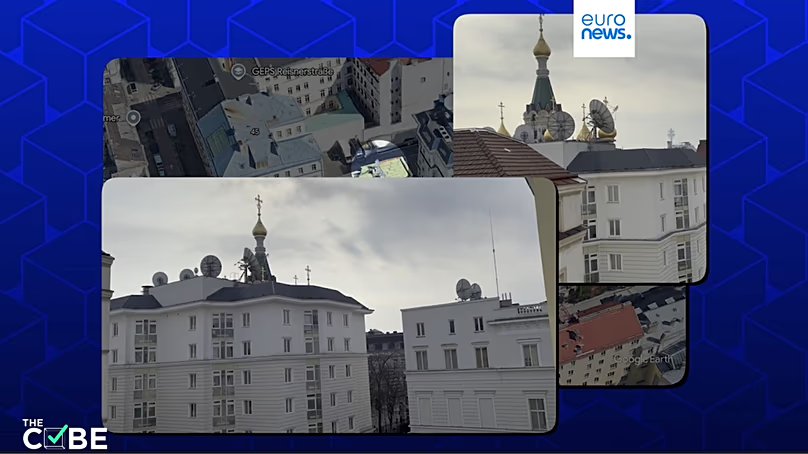
According to Möchel, another Russian diplomatic building located in Vienna’s 22nd district seems to operate as a «dedicated signals intelligence station,» with multiple dishes pointed at satellites facilitating communications between Europe and Africa.
The Nomen Nescio group has noted that one particular dish is frequently moved and then resumes its standard orientation. Möchel described this dish as likely being «used for scanning.»
«They might be searching for something specific, like a particular channel on a different satellite,» Möchel explained.
The group also identified unusual rooftop structures comprised of lightweight materials such as wood and plastic. Möchel indicated these resemble radomes—weather-resistant housings designed to protect antennas and conceal their orientation.
Intensified focus on diplomatic rooftops
Claims about rooftop surveillance equipment on diplomatic premises are longstanding.
Der Spiegel’s reporting, based on documents leaked by former NSA contractor Edward Snowden, indicated that the US embassy in Berlin contained rooftop surveillance tools used for signals intelligence gathering.
In 2013, Germany’s Foreign Ministry summoned the British ambassador following accusations that British intelligence had established a «covert listening post» atop the embassy building.
Russia has also faced similar claims. In 2023, Central European media outlet VSquare published an investigation revealing that embassy rooftops from Warsaw to Brussels were equipped with specialized gear capable of intercepting electronic communications in their host states, according to several former intelligence officers interviewed.
Sergei Jirnov, a former KGB agent, told The Cube that antennas on diplomatic buildings may serve dual roles: facilitating communication with Moscow and conducting espionage within the host country.
Claude Moniquet, a former operative with France’s DGSE intelligence agency, explained that certain diplomatic antennas could be employed for «intercepting radio waves, microwave transmissions, satellite links, unencrypted internet traffic, and capturing mobile device identifiers and metadata via IMSI-catcher devices.»
He noted that Chinese and Russian intelligence services use similar techniques, pointing out Brussels, Vienna, and Geneva as major centers for these activities due to the concentration of international organizations.
Vienna, in particular, has a longstanding association with espionage, hosting entities such as the United Nations, the International Atomic Energy Agency, the Organisation for Security and Co-operation in Europe, and OPEC.
Since Russia launched its full-scale invasion of Ukraine in 2022, Austria has expelled fewer Russian diplomats compared to countries like Germany, Poland, and France.