
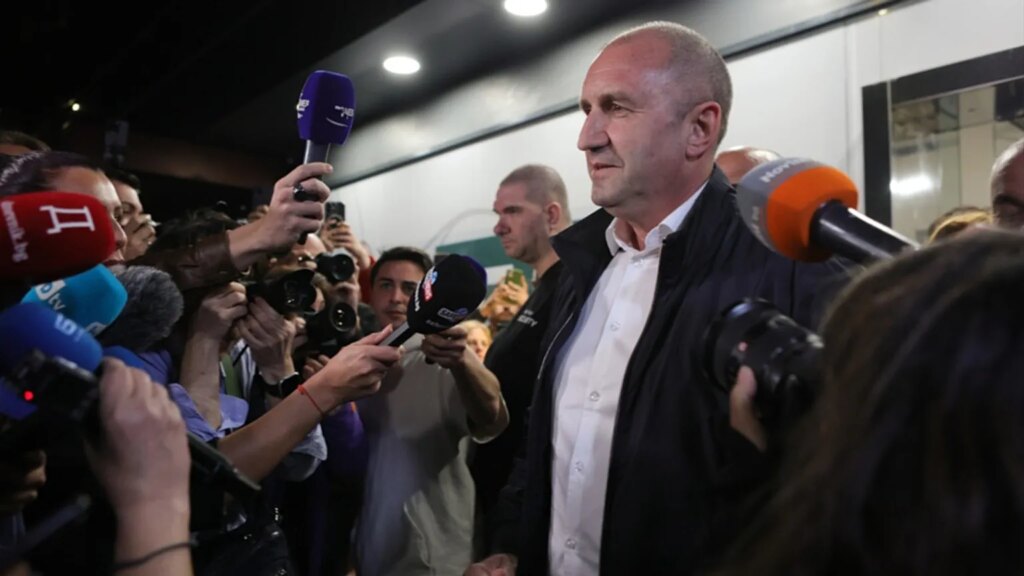
Radev secured a decisive victory in last month’s election, regarded by many as one of the most significant in recent Balkan history, achieving an outright majority for the first time since 1997. He received the presidential mandate to govern on Thursday.
On Friday, Bulgaria’s parliament officially confirmed Rumen Radev as the new prime minister, aiming to restore political stability and stimulate economic growth in the European Union member state.
 ADVERTISEMENT
  ADVERTISEMENT
“There are no illusions regarding the challenges and crises confronting the government, which will shortly seek your backing – skyrocketing prices, budget constraints, absent reforms, a severe global energy crisis, and intensifying conflicts,” Radev declared to the legislators.
The chamber approved Radev, a 62-year-old former fighter pilot, as prime minister with a vote tally of 124 in favor, 70 against, and 36 abstentions.
Earlier in January, Radev stepped down from the largely symbolic presidency, just months before his second term concluded, to pursue leadership of the government in the more influential prime ministerial role.
The previous conservative administration in Sofia collapsed last December after mass anti-corruption demonstrations, attracting hundreds of thousands of mostly young protesters nationwide.
Radev’s popularity increased as he positioned himself against the entrenched mafia networks and their connections with senior political figures. During campaign events, he promised to “eradicate the corrupt, oligarchic governance model from political power.”
His Progressive Bulgaria party won a commanding victory in the 19 April parliamentary election, securing 131 seats out of 240, granting the first absolute majority in the Bulgarian parliament since 1997.
Radev earned a Master of Strategic Studies from the US Air War College in Alabama in 2003, prior to his appointment as commander of the Bulgarian air force.
Supporters are split between those anticipating his crackdown on oligarchic corruption and others who align with his Eurosceptic and Russia-leaning perspectives.
Although his pro-Russian stance has raised concerns about Bulgaria’s role in European policymaking, several analysts expect his approach to remain moderate, in contrast to former Hungarian Prime Minister Viktor Orbán.
This moderation is largely influenced by Bulgaria’s status as a poor nation of 6.5 million, which remains dependent on European financial aid. Radev’s administration is anticipated to implement reforms to access nearly €400 million in EU funding.
Additional sources • AP