
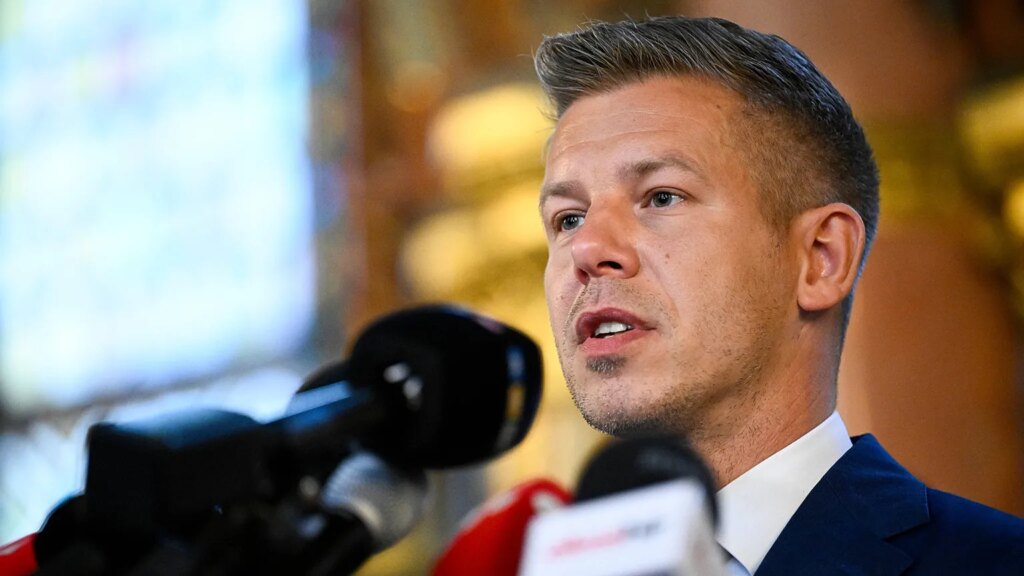
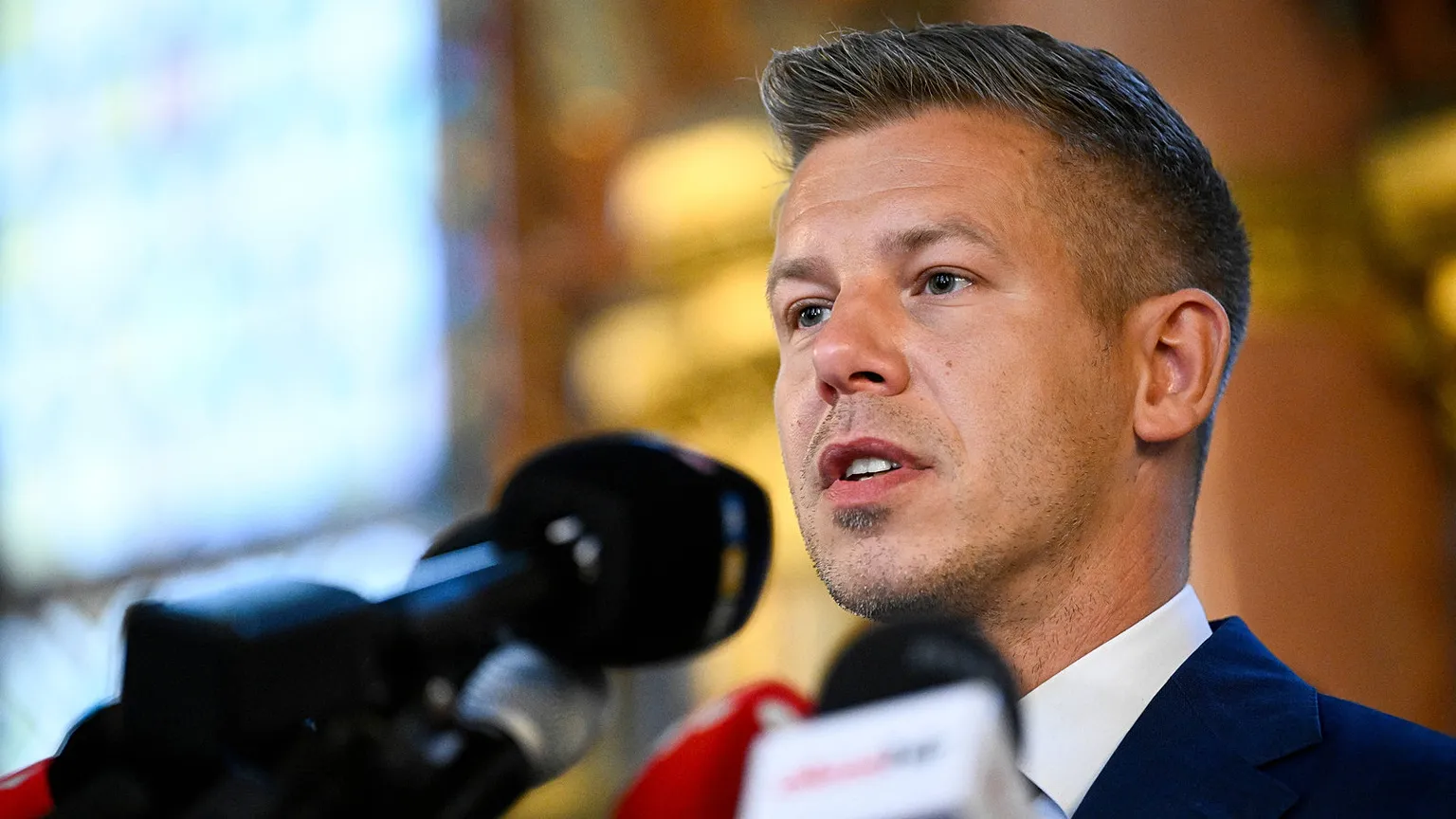
The newly appointed Hungarian Prime Minister faces a tight schedule as he strives to secure billions of euros from the EU before the August deadline.
Good morning, I’m Angela Skujins. Today marks my debut writing Euronews’ premier daily newsletter.
 ADVERTISEMENT
  ADVERTISEMENT
This trip to Brussels also represents the inaugural visit of incoming Hungarian Prime Minister Péter Magyar. The journey is highly anticipated as it aims to mend and revitalise the ties between the Central European nation and its EU partners.
The conclusion of Viktor Orbán’s 16-year governance occurred following the critical election held on 12 April. Orbán’s administration resulted in €17 billion in EU funds being frozen over concerns linked to democratic decline. If no accord is achieved by August’s end, Hungary risks forfeiting approximately €10 billion from post-COVID support.
However, Magyar is determined to reclaim these funds. He plans to utilise his visit for a private discussion with European Commission President Ursula von der Leyen to facilitate their release before the deadline. “There is no time to lose,” the Tisza Party leader stated on social media platform X. He is not anticipated to engage with reporters.
This leadership meeting follows a series of reciprocal visits between lower-ranking delegations, the latest including Anita Orban, designated to serve as Hungary’s upcoming foreign minister.
The willingness on both sides to «initiate work on several pressing matters» is evident, according to a Commission statement from that period. Observers interpret these dialogues between EU officials and a government yet to be installed as indicative of the urgency and renewed political commitment from all parties.
European Council President Antonio Costa is also scheduled to meet Magyar at 6 p.m. on Wednesday. This comes months after Costa cautioned then-Prime Minister Orbán that the European Council would resist any attempt at coercion, and after Hungary and Slovakia withdrew their veto on the EU’s 20th sanctions package against Russia and approved the €90 billion loan for Ukraine.
The most recent European Commission report on the rule of law across EU member states reveals Hungary has failed to advance on seven of its eight key reform targets, with the negative conditions persisting.
Nonetheless, as Euronews’ Sandor Zsiros has previously outlined, Magyar’s strategy to release the funds consists of four stages. It prioritises tackling corruption, reinstating judicial independence, and protecting freedoms of the press and academia. Additionally, he proposes revising the €16 billion SAFE defence initiative submitted by the former Orbán administration, citing concerns regarding corruption.
Manfred Weber, President of the European People’s Party, addressed reporters at the European Parliament in Strasbourg on Tuesday, stating that the EU must now back Budapest, emphasizing that “trust is the core message.”
“Europe should now stand as an ally to Hungary and its new government, meeting the tangible expectations of its citizens,” Weber affirmed.
EU ready to impose sanctions on Israel over Russian ship transporting stolen Ukrainian grain
The European Union has signalled its readiness to penalize Israel if it facilitates the trade of Ukrainian grain illicitly taken by Russia from occupied areas, following the arrival of a new vessel loaded with the crop at Haifa’s port.
A representative from the European Commission informed Euronews’ Jorge Liboreiro that the EU executive condemns all efforts that fund Russia’s invasion and circumvent EU sanctions. Brussels is prepared to “add individuals and entities from third countries to sanction lists if necessary,” the spokesperson added.
The ship, reportedly carrying over 6,200 tonnes of wheat and 19,000 tonnes of barley, has not yet unloaded in the northern Israeli port. However, an earlier shipment of stolen Ukrainian grain was permitted earlier this April.
Ukrainian President Volodymyr Zelenskyy stated on social media platform X that his administration would begin coordinating “appropriate sanctions” with European partners against those “attempting to profit from this criminal operation.”
Israeli Foreign Minister Gideon Sa’ar assured that the vessel would be inspected and that domestic authorities would «act according to legal procedures.»
Jorge provides the complete account.
European Parliament advocates for a unified EU definition of rape as sex without consent
On Tuesday, the European Parliament adopted a resolution calling for a consistent EU-wide definition of rape based on the absence of freely given, informed consent, Vincenzo Genovese reports from Strasbourg.
Currently, the rape definition varies across EU countries. For instance, Latvian law describes rape as sexual violence committed under coercion, involving force or pressure, whereas Romanian legislation emphasises the victim’s inability to provide consent.
The resolution seeks to address a significant gap in EU laws concerning violence against women. Nonetheless, the process has only just begun. The European Commission now has the task of proposing relevant legislation, which will require approval from EU member states and the European Council. Further details.
Additional updates from our news teams
Polish-Belarusian journalist Andrzej Poczobut released from Belarusian detention, officials confirm. Poczobut, a correspondent for the prominent Polish newspaper Gazeta Wyborcza, was serving an eight-year sentence in a case widely criticized as politically driven. Mateusz Jaronski and Gavin Blackburn provide the full story.
Individual charged with attempted assassination of Trump during White House correspondents’ dinner shooting. French national Louis Arnaud spent two years imprisoned in Tehran’s Evin prison, notorious for torture and executions, after his arrest by Iran’s Islamic Revolutionary Guards Corps (IRGC) on 28 September 2022. More information here.
Ongoing coverage
- The European Parliament’s plenary session continues in Strasbourg, with intensifying afternoon debates concerning the EU’s approach to the ongoing conflict in the Middle East, energy price surges, and the bloc’s engagement with Russia through sports.
- The European Commissioner for Tech Sovereignty, Henna Virkkunen, is set to hold a morning press conference at the European Parliament in Strasbourg regarding the EU’s proposed age verification application.
That concludes today’s briefing. Contributors to this newsletter include Maria Tadeo, Sasha Vakulina, Jorge Liboreiro, and Vincenzo Genovese.