
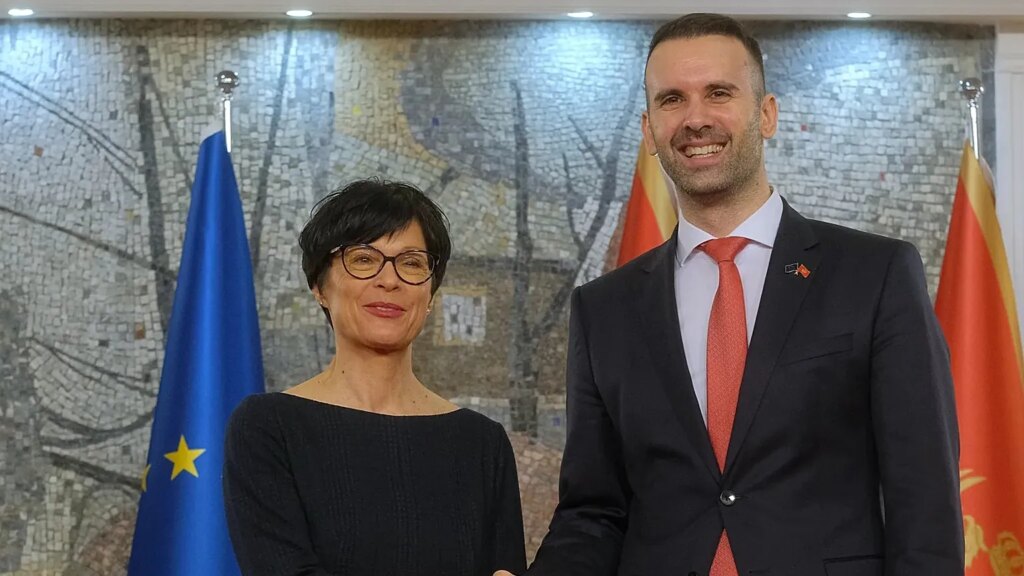
Montenegro, which has been an EU candidate country since 2010, aims to join the European Union as its 28th member by 2028.
This week, Montenegro advanced further in its EU accession journey as current EU member states consented to initiate drafting an accession treaty for the Balkan nation.
 ADVERTISEMENT
  ADVERTISEMENT
On Wednesday, ambassadors representing all EU member states announced their decision to create an «ad hoc working party» tasked with drafting the accession agreement, which European Council President António Costa described as a «crucial milestone» and «a significant step towards EU membership.»
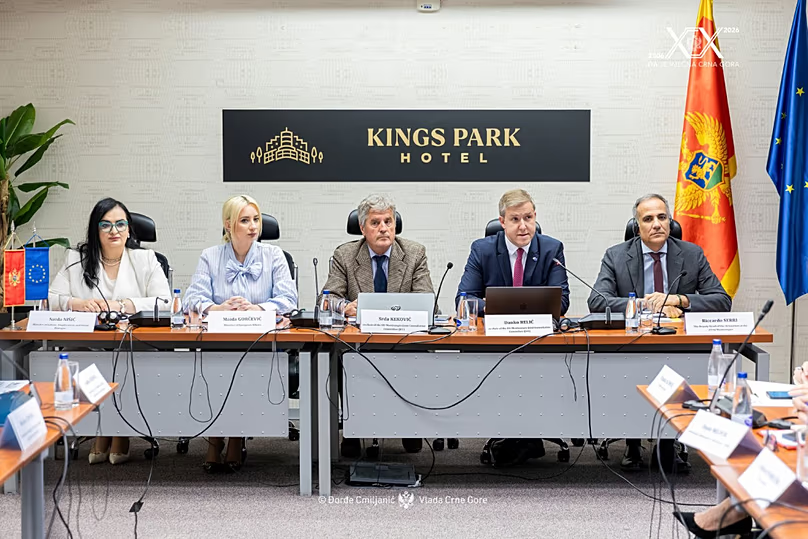
At a Joint Consultative Committee (JCC) meeting held Friday in Podgorica, Montenegro’s capital, Minister of European Affairs Maida Gorčević noted that with the closure of negotiation chapters and the drafting of the accession treaty, the country is entering the «final stage of a fourteen-year-long journey toward the EU.» She emphasized this step as the conclusion of the negotiation process, with membership targeted by 2028.
The JCC, formed between the EU and Montenegro’s civil society, serves as a platform to incorporate civil society perspectives within the EU’s institutional framework concerning the Stabilisation and Association Agreement.
Gorčević also underscored the vital contribution of civil society in Montenegro’s accession, stressing their active involvement in working groups.
During the same event, Riccardo Serri, deputy head of the EU Delegation to Montenegro, commented that «Montenegro holds a historic chance to finalize its EU accession process.»
«However, time is pressing – progress relies on implementing specific reforms within the coming months,» Serri added, highlighting that this effort requires a collaborative approach between institutions and civil society.
Since Croatia joined the EU in 2013, Montenegro and Albania have been leading candidates to enter the bloc. Although Montenegro is not part of the Eurozone, it has independently adopted the Euro as its currency, maintaining a unique relationship with the European Union.
Accession negotiations have been underway for approximately 14 years, with several significant challenges still to be resolved, which Montenegro is currently addressing.
To facilitate membership, the EU has organized a series of «clusters» grouping requirements—from taxation to environmental policies—that Montenegro must comply with.
To date, Podgorica has completed negotiations on 14 out of 35 clusters.
On Wednesday, European Commissioner for Enlargement Marta Kos affirmed that «Montenegro’s position within the EU is now becoming defined.»
«This also provides an opportunity to learn from previous enlargements, incorporating stronger safeguards in future accession treaties to prevent regression in the rule of law and core values,» Kos stated.
Additional sources • AFP