

EU governments are cautioning that Brussels’ efforts to streamline regulations via its so-called ‘omnibuses’ might be counterproductive, amid increasing worries that the new rules could in fact delay urgently required projects such as housing and essential infrastructure, according to a letter obtained by Euronews.
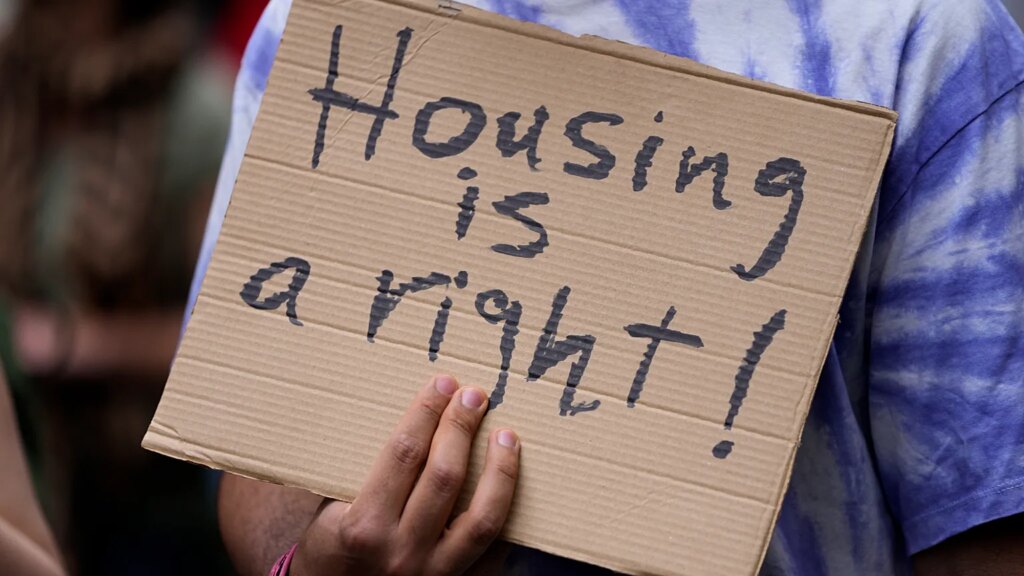
The Irish government has urged Economy Commissioner Valdis Dombrovskis to reconsider plans aimed at expediting permitting procedures, emphasizing that swifter approvals are crucial to deliver housing and crucial infrastructure. This appeal arrives as the nation grapples with a worsening housing crisis marked by skyrocketing rents, widespread homelessness, and persistent supply deficits.
 ADVERTISEMENT
  ADVERTISEMENT
Recently, Irish Housing Minister James Browne has called upon developers engaged in cost-rental projects suffering financial pressures to collaborate with his department, striving to maintain project viability. His comments follow the collapse of a north Dublin cost-rental initiative, which was deemed economically unfeasible.
Browne highlighted a “very significant pipeline” of cost-rental developments targeting workers whose incomes exceed social housing thresholds but remain excluded from the private rental market. This social challenge extends beyond Ireland’s borders, with EU statistics revealing that housing prices grew by 53% between 2010 and 2024, while rents increased by 25%.
EU governments warn that Brussels’ initiative to simplify regulation through its ‘omnibuses’ could be producing unintended consequences, as concerns mount that the measures might actually hinder urgent projects, reveals a letter reviewed by Euronews.
“Enhanced clarity and consistency in the EU regulatory framework concerning EU permitting and environmental laws is critical to lowering costs, increasing home building, succeeding in the twin transition (…) and maintaining global competitiveness,” states the letter spearheaded by Ireland and supported by six additional EU nations.
Alongside Ireland, Austria, Greece, Lithuania, Poland, Slovakia, and Slovenia argue that the problem stems not from excessive regulation but from misaligned EU legislation. While backing reductions in bureaucracy, they caution that the current proposals might have the reverse effect.
Europe’s slow permitting timelines
The core concern is the lengthy duration required to authorize major projects across Europe—such as housing developments, renewable energy facilities, transportation systems, and digital infrastructure.
These initiatives are deemed vital for economic progress, energy independence, and maintaining competitiveness on a global scale, yet they frequently encounter delays due to complex approval procedures governed by multiple layers of both EU and national legislation.
Governments call for clearer and more harmonized regulations, warning that without improved coordination between environmental and business frameworks, the EU could unintentionally undermine both its green ambitions and its economic standing worldwide.
The European Commission has sought to address this by proposing accelerated environmental assessments. In principle, this should facilitate quicker project approvals. Nonetheless, governments highlight that the new regulations do not always integrate smoothly with existing environmental laws, creating practical challenges for authorities.
Competitiveness as the EU’s central focus
Following the 2024 European elections and the appointment of a new European Commission, EU policy has shifted dramatically from regulation toward deregulation to enhance competitiveness.
This shift responds to prolonged economic sluggishness, industrial rivalry from the United States and China, and geopolitical volatility, including the conflict in the Middle East that threatens persistent high energy costs and inflation. Within this context, the European Commission introduced ten ‘Omnibus’ packages—accelerated sets of legislative simplifications—designed to accelerate Europe’s momentum and increase investment appeal.
For the Commission and pro-business advocates, simplification involves removing administrative obstacles to stimulate investment and economic growth. Commissioner Dombrovskis described this as a necessary “deep clean” of EU laws to bolster Europe’s competitive advantage.
«We have set ambitious goals to reduce the overall administrative burden by 25% for all businesses, and by 35% for SMEs, which translates to an annual cut of approximately €37.5 billion in administrative costs,» Dombrovskis told Euronews on Friday during the Delphi Economic Forum in Greece, describing competitiveness as an «overarching priority».
Critics contend that the Omnibus packages represent covert deregulation, eroding key foundations of the Green Deal and weakening environmental and social safeguards under the guise of efficiency.
“Europeans require housing and energy legislation that is effectively implemented—not diminished protections. Today’s housing and energy challenges arise from a poorly regulated market prioritizing profit over affordability and sustainability,” stated Sonja Leyvraz, policy officer for buildings and circular economy at the NGO European Environmental Bureau.