
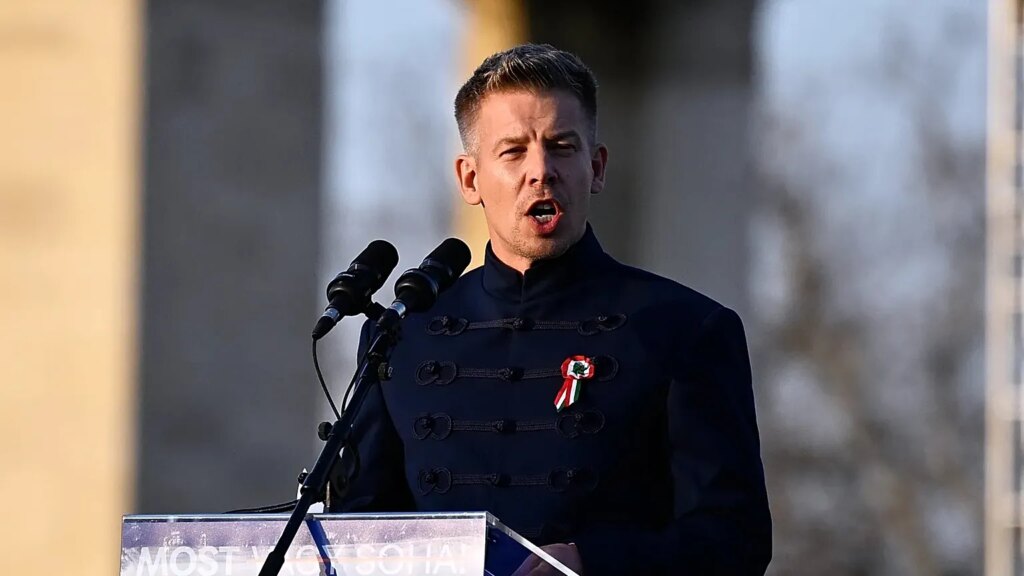
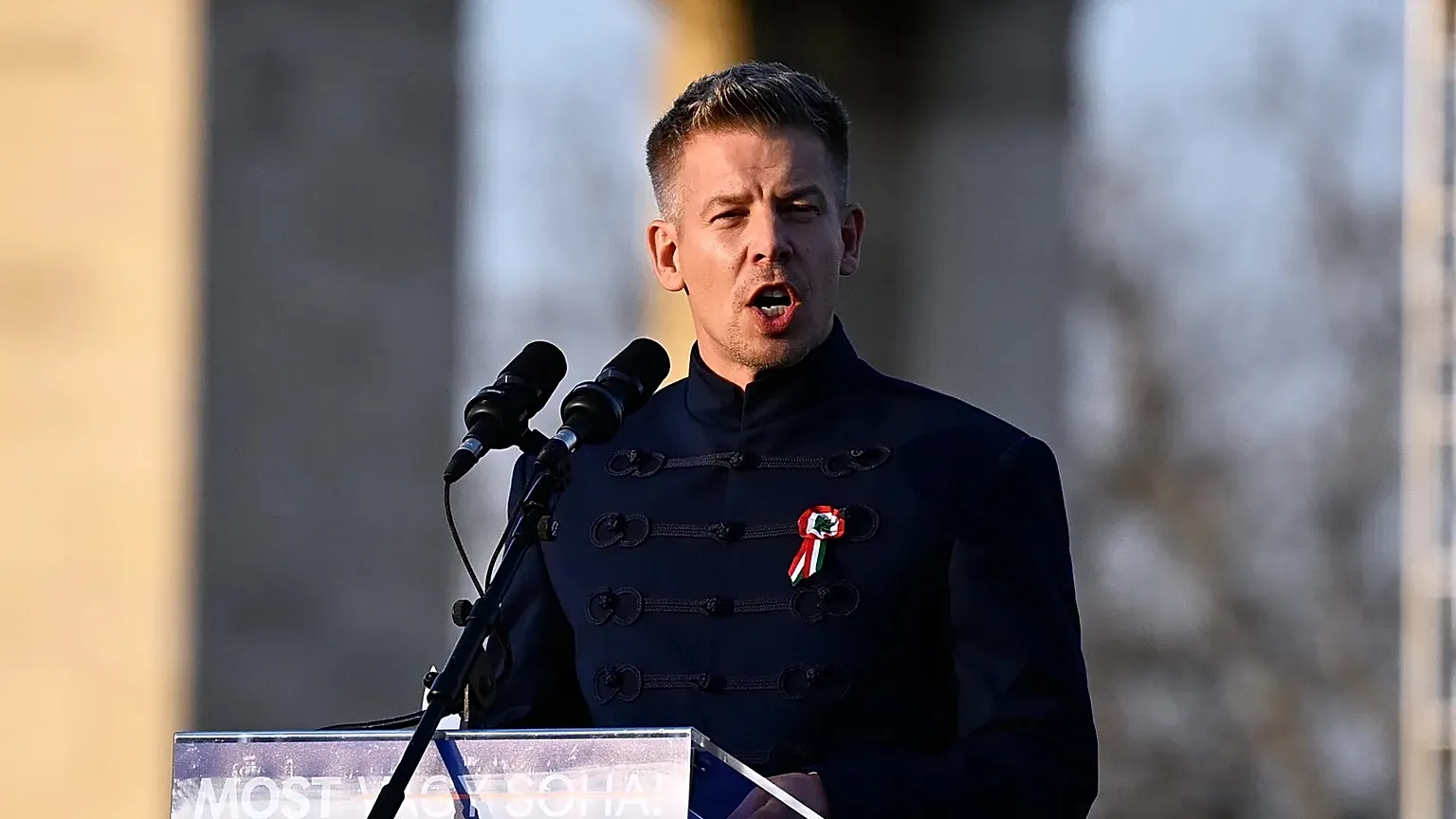
The leader of Hungary’s opposition Tisza party has focused his efforts on domestic campaigning rather than his parliamentary responsibilities, occasionally opposing his European Parliament group to connect with voters and distancing himself from EU figures such as Ursula von der Leyen.
Péter Magyar has worked extensively to avoid being branded a “Brussels puppet” by his competitor Viktor Orbán, resulting in his scarce presence in Brussels.
 ADVERTISEMENT
  ADVERTISEMENT
As leader of Tisza, Hungary’s principal opposition party, Magyar has largely utilized his MEP position to challenge the current Prime Minister and amplify his campaign in Budapest ahead of the upcoming elections on April 12.
However, since being elected as an MEP in 2024, Magyar has not authored any parliamentary reports; he has endorsed only a single resolution in a chamber that records dozens monthly, and, according to several colleagues, he rarely participates in committee meetings.
His most recent session attendance was in Strasbourg in January, where he voted in favor of sending the EU-Mercosur trade agreement to the Court of Justice.
“His involvement in plenary votes appears quite low, roughly 21% since the term began,» noted Doru Frantescu, analyst at the EU Matrix think tank, which offers data and analysis on EU institutions. «This indicates his focus has been on internal affairs not only lately but even earlier.»
The MEP on a Mission
This highlights a distinct goal: from the beginning, Magyar’s main priority has been to unseat Orbán after 16 years of mostly undisputed control.
In this context, the European Parliament has served as a launching pad for his campaign, providing him immunity and allowing him to form strategic alliances ahead of the decisive vote.
This momentum was already visible in the June 2024 European elections, where Magyar secured 30% of the vote with a party established just months prior. Shortly after, the European People’s Party welcomed Tisza’s seven MEPs into Europe’s largest political faction.
As polls indicate a probable victory, Magyar’s campaign has escalated recently, compelling him to concentrate on rallies and election activities in Hungary instead of Brussels.
Moreover, Magyar is among many MEPs who have historically leveraged their European Parliament roles to promote national campaigns. Nevertheless, in his case, the majority of MEPs regard Magyar as the strongest alternative to Orbán, who has become a contentious figure in Brussels, blocking significant EU initiatives with vetoes.
Within this environment, the Parliament has aided Magyar in elevating his political stature domestically and internationally.
The sole confrontation between Orbán and Magyar occurred in the Strasbourg plenary during Hungary’s EU Council presidency in October 2024. After Orbán’s usual speech to MEPs, Magyar responded by accusing him of transforming Hungary into the EU’s poorest and most corrupt member state.
The dispute did not conclude there. Magyar later approached Orbán, and their handshake created a viral image, portraying Magyar as vigorous beside Orbán.
Yet, an MEP’s role is intended to balance European and national duties, a balance shifting in recent years as many MEPs dedicate more time in Brussels, actively shaping EU policies.
Indeed, the Treaties explicitly define MEPs’ responsibilities as playing a crucial part in crafting EU laws by amending and voting on legislative proposals from the European Commission and negotiating the final text with the Council representing EU member states.
A lawyer by training, Magyar was assigned to two key committees—Constitutional Affairs (AFCO) and Agriculture and Rural Development (AGRI). Still, he has not contributed to any reports from these committees.
He has signed only one resolution—on women’s rights in Iraq—and submitted a single written inquiry to the Commission concerning land confiscations linked to the historic Beneš decrees in Slovakia, impacting Hungarian minorities.
“I have little to comment as I have rarely seen him,” a fellow MEP from Magyar’s committee told Euronews. Another colleague confirmed that Magyar’s committee contributions “have been substantially lacking” due to his campaign commitments in Hungary.
When contacted by Euronews, several Tisza members declined to discuss Magyar’s parliamentary activities given the political sensitivity of the Hungarian elections. Others maintain that Magyar’s opposition to Orbán places him in a unique position compared to other MEPs.
“This is not an ordinary campaign; it is a defining election where Hungary’s very EU membership is at risk, necessitating Péter Magyar’s full focus,” a Parliament insider close to Tisza told Euronews, asserting that his physical absence from Brussels does not equate to disengagement.
“He remains fully involved in all critical decisions. When high-stakes votes arise, especially concerning voting positions, he often participates directly in discussions,” the official explained.
Another official remarked that without parliamentary immunity, “he would have faced difficulties reaching this point.” Hungarian authorities have sought to lift Magyar’s immunity in three legal cases, but the Parliament overwhelmingly rejected these requests.
Within the EPP, Magyar’s absence is noted but largely tolerated.
“He never joins group meetings,” an EPP official told Euronews, adding that Zoltán Tarr, head of Tisza’s delegation in Parliament, predominantly represents the party in the group’s political dialogues in Brussels or Strasbourg.
EPP officials recognize that group leadership has accepted Magyar’s limited engagement in group affairs, prioritizing support for an EPP party’s electoral success in Hungary.
Walking a tightrope in Brussels
Although Tisza is regarded as more pro-European than Orbán’s Fidesz, Magyar treaded carefully to avoid adopting political stances in Brussels that might be unpopular domestically, seeking to counter Orbán’s portrayal of him as a “Brussels puppet.”
Orbán has accused Tisza of advancing the agendas of the EU and Ukraine, a charge Magyar denies.
For Tisza, Ukraine’s potential EU membership is particularly sensitive: while it is supported by most of the European Parliament, including the EPP, many of its voters remain doubtful.
A similar tension exists concerning the EU and EPP’s commitment to increasing assistance for Ukraine. In February 2026, Tisza MEPs opposed the EU’s proposed €90 billion loan to Ukraine, aligning with Orbán’s veto.
“Tisza’s room for maneuver is restrained. Holding a position completely opposed to Fidesz would not be popular among a significant portion of the electorate,” Frantescu explained. “They must balance carefully between EPP’s stance and current public opinion back home.”
On subjects like migration and the environment, Tisza acts as a mediator, largely adhering to its European political family while remaining close to Fidesz’s position.
“The EU and Hungary require robust external border protection and joint efforts against illegal migration. I oppose redistributing asylum seekers across Europe,” Magyar told Euronews in an October 2024 interview, months after his election as MEP.
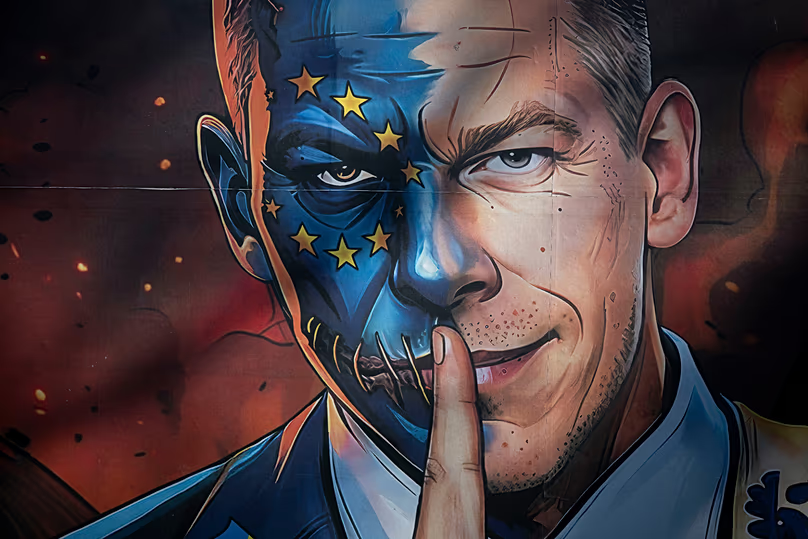
Occasionally, efforts to win over the Hungarian electorate have created tensions between Tisza and other parties inside the EPP group.
Tisza has recently defied the EPP group’s position three times, resulting in internal penalties. Its MEPs opposed the EU-Mercosur trade deal citing the necessity to protect Hungarian farmers, a decision that led to a six-month ban on Tisza lawmakers speaking at plenary sessions.
Another contentious matter involves Tisza’s attempts to distance itself from EPP chair Manfred Weber and Commission President Ursula von der Leyen, who are both negatively portrayed by the Hungarian government and frequently shown next to Magyar on Fidesz’s campaign posters.
This is also mirrored in Tisza’s parliamentary conduct: their MEPs did not back von der Leyen in the recent confidence vote in January, an act widely interpreted as deliberate.
“We appreciate Brussels confirming that Tisza politicians have no masters,» Magyar stated on Facebook at that time, indicating that his loyalty to EPP and EU principles has consistently been secondary to domestic considerations.