
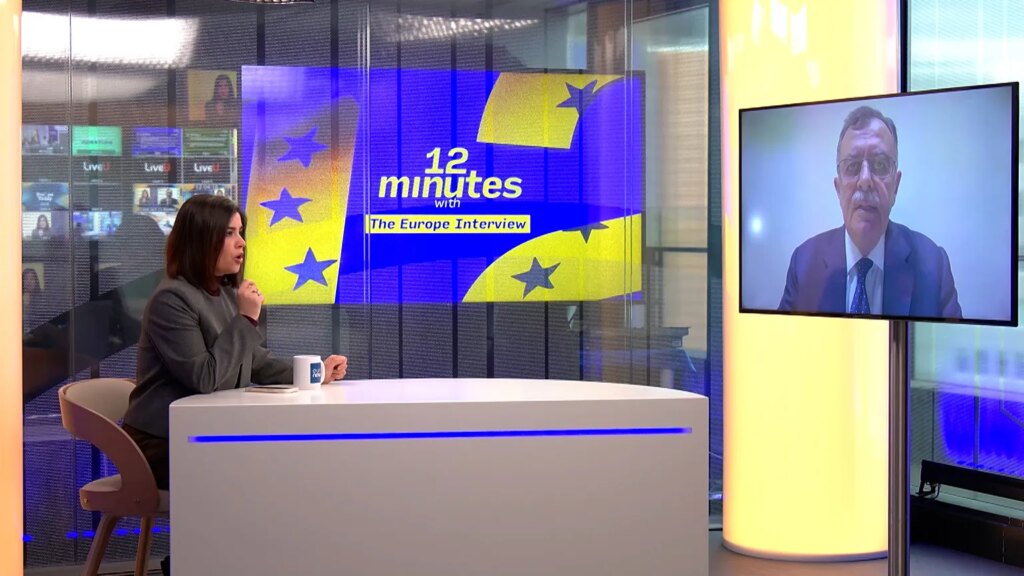
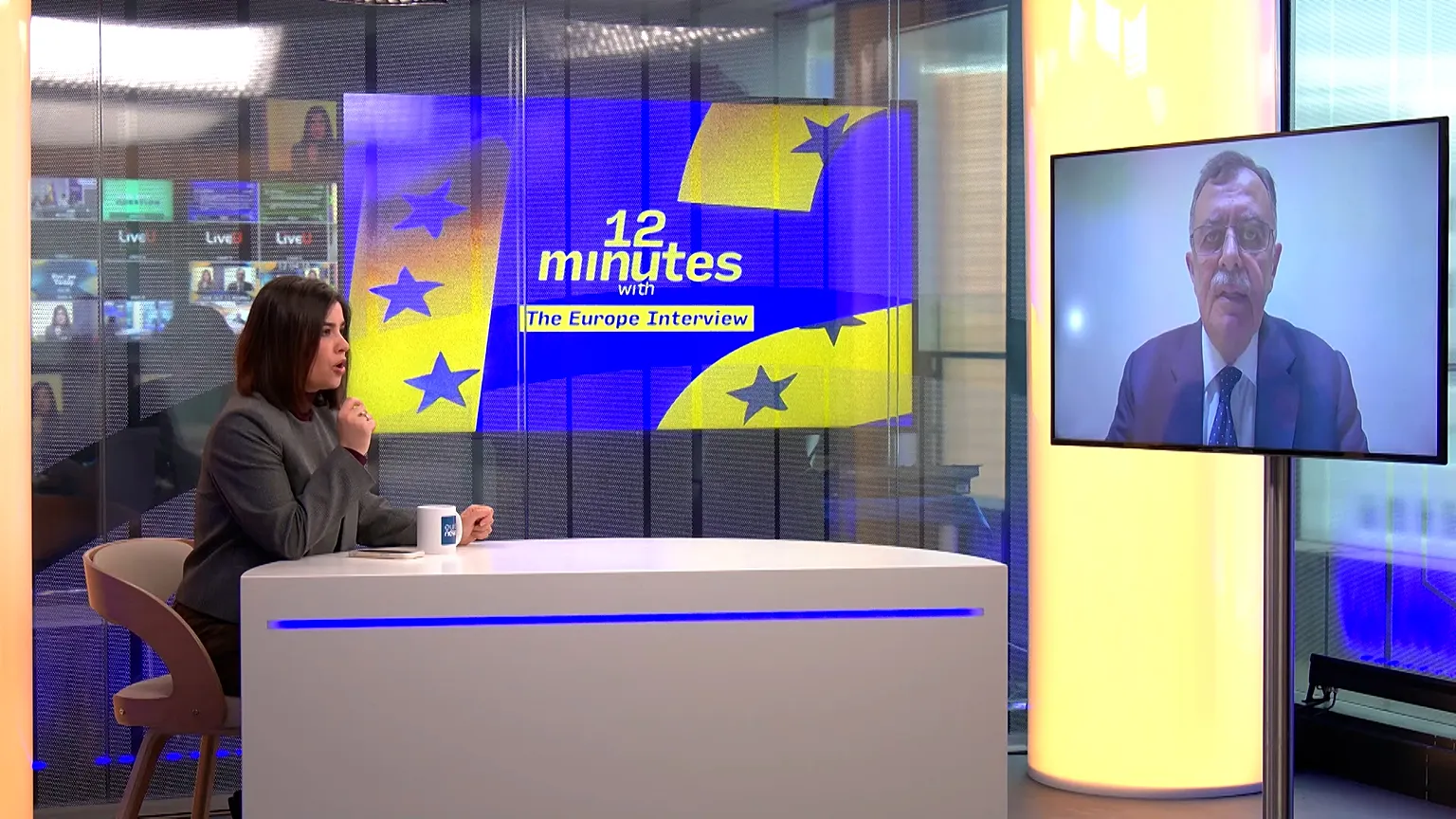
In an interview with Euronews, the exiled head of the Kurdish Iranian opposition asserted that nobody within the Iranian regime could be considered “trustworthy,” challenging assertions by the US administration that Iranian officials acted as “reasonable” negotiators.
Abdulla Mohtadi, leader in exile of the Komala Party of Iranian Kurdistan, expressed in a private dialogue with Euronews his disbelief in the reliability of “any figure within the Islamic Republic of Iran.”
 ADVERTISEMENT
  ADVERTISEMENT
These declarations from Abdulla Mohtadi — who leads the Komala Party from exile in Iraq — came in response to remarks by US President Donald Trump on Monday, who claimed to have engaged with “reasonable” unnamed Iranian officials during diplomatic talks.
Conversely, Mohtadi labelled the leaders of Iran’s Islamic Republic as “mass murderers” and “convicted felons.”
“They are mass murderers of the Iranian populace, criminals, a collective of lawbreakers,” he declared, emphasizing his party’s advocacy for a “democratic and secular system” that safeguards the rights of Kurds and other ethnic minorities.
Kurds represent roughly 10 percent of Iran’s population and have a longstanding history of grievances against both the Islamic Republic and the former monarchy, linked to decades of persecution and exclusion.
When Ayatollah Khomeini was in power, he proclaimed a “holy war” against Kurdish groups, labelling them as ‘infidels’ and “state enemies.”
A large share of Iranian Kurds is concentrated in the western and northwestern regions of Iran, while thousands of Kurdish exiles reside in the autonomous Kurdistan Region in northern Iraq, home to Iraqi Kurds.
Kurdish endorsement of initiatives to undermine the regime
Regarding the ongoing joint US and Israeli military campaign against Tehran launched on 28 February, Mohtadi expressed his support for measures aimed at weakening the Iranian government but underlined that “regime change depends on the Iranian people.”
“If the American administration weakens the regime sufficiently, dismantling its security forces and military industrial base — while sparing civilian infrastructure, since we oppose damaging that […] — then perhaps it could facilitate an uprising by the Iranian population eventually.”
Mohtadi added he was “not taken aback” by the US and Israel initiating their military actions.
“I anticipated this would occur decades ago,” he commented, “the regime has voiced ‘death to America’ for 47 years, threatened to destroy Israel, and destabilized the region through its terrorist proxies.”
He described Iranian Kurds as one of the primary “credible” opposition groups persistently resisting the regime since its establishment in 1979.
“From the start, we rejected Iran’s Islamic regime. Our struggle for rights and democracy continues. Other groups include Baluchis, Azerbaijanis, Arabs, as well as Persian populations.”
Mohtadi criticised what he termed Europe’s “appeasement policy,” condemning the bloc’s “de-escalation” tactics.
“It is time for Europe to abandon this appeasement strategy and adopt a more proactive anti-regime stance favorable to Iranians.”
Speculations about a Western-supported ground invasion in Iran
At the outset of the US and Israel’s conflict in Iran in late February, reports surfaced that the CIA was assisting in arming and training Iranian Kurdish forces based in Iraq.
US President Donald Trump initially appeared to endorse a Kurdish-led ground offensive in early March, but days later clarified to reporters: “I don’t want the Kurds to enter Iran… The war is already complicated enough.”
Mohtadi told Euronews that a Kurdish-backed ground offensive was more of a “concept than an operational plan,” adding that Trump ultimately “decided not to include Kurds in the campaign.”
“Currently, we hold defensive positions in Iraqi Kurdistan. No border crossings have occurred. We have endured continuous shelling by Iranian missiles and drones—both day and night—for about a month now.”