
In just weeks, the European Commission concluded agreements with Mercosur, India, and Australia. Despite the controversy surrounding the Latin America pact, Brussels maintains a consistent strategy: aggressive on wine and automobiles, cautious on beef.
Three agreements involving three significant regions: Mercosur, India, and Australia.
 ADVERTISEMENT
  ADVERTISEMENT
While the Commission celebrated the agreement with Australia as a fresh geopolitical achievement, EU farmers remain strongly dissatisfied over the Mercosur pact.
In reality, the opposition surrounding the deal with Argentina, Brazil, Paraguay, and Uruguay has scarcely influenced the Commission’s dual-track negotiation stance. On one side, it continued to yield on entry-level or mid-tier agricultural goods like beef, yet on the other, it pressed for market entry for high value-added products—such as wine, Geographical Indications (GI), and automobiles—with mixed success.
“The EU possesses all the tools necessary to be a leader in agri-food,” Luc Vernet, from the Brussels-based export-oriented think tank Farm Europe, told Euronews, adding: “It’s essential to adopt a wider strategy that extends beyond premium products to encompass all sectors and quality levels, since the European model consistently delivers notable quality not just in luxury items.”
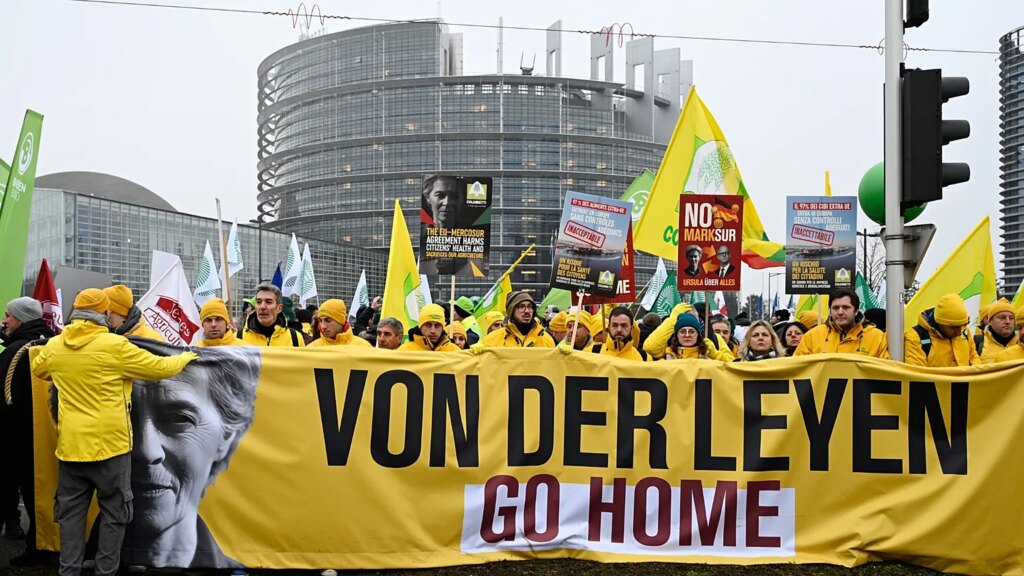
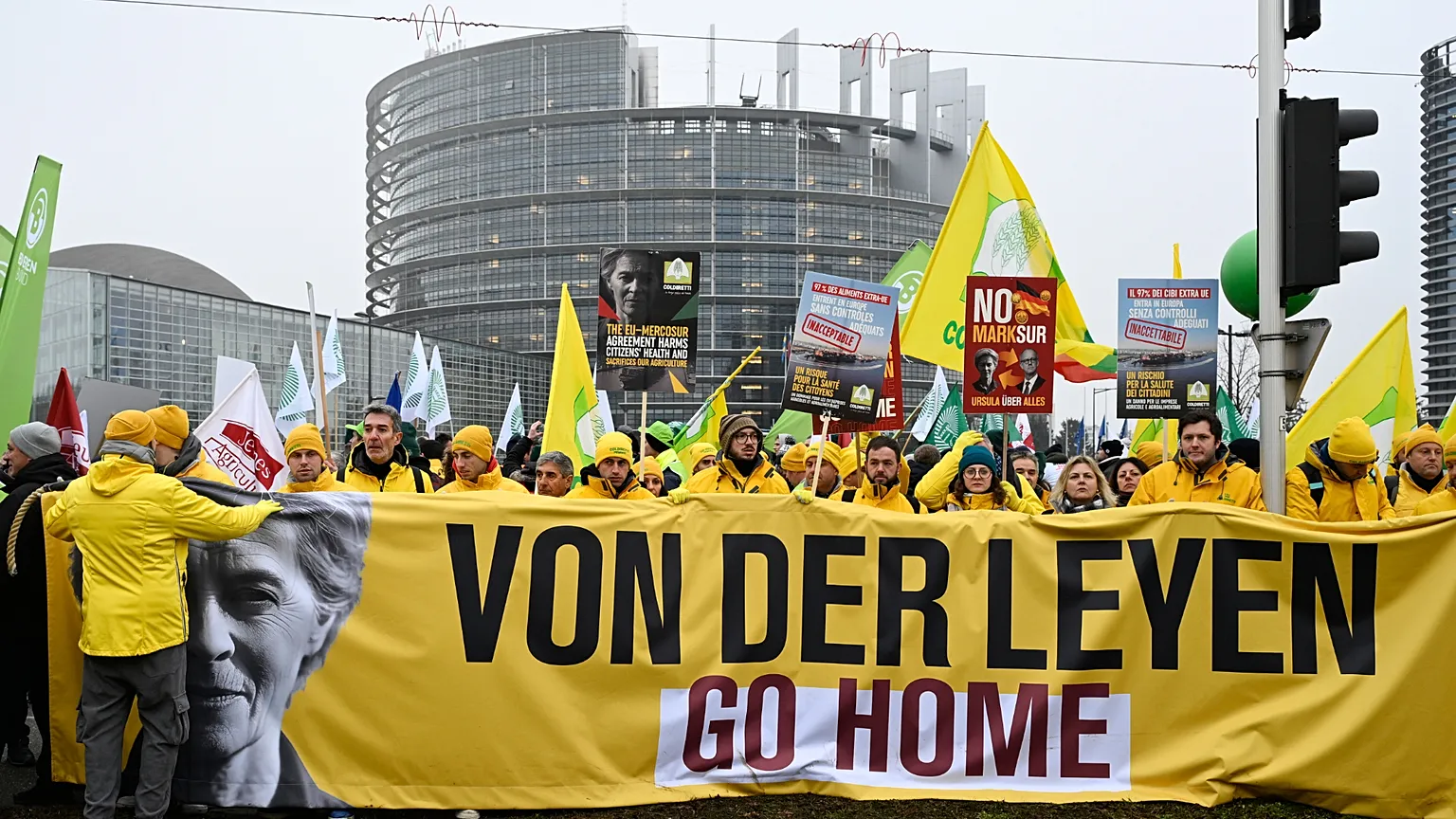
Nevertheless, resistance to the Latin America agreement—which has prompted a legal challenge delaying its ratification—solidified among EU farmers due to concerns about unfair competition from meat imports.
The Mercosur agreement established quotas of 99,000 tonnes of beef annually, 25,000 tonnes of pork, and 188,000 tonnes of poultry. Even though new quotas in the Australia deal include added stipulations, EU farmers claim that imports continue to accumulate across successive agreements.
Concessions granted on beef
During eight years of negotiations with Canberra—the world’s second-largest beef exporter—Australia pushed intensively for expanded access for beef and sheep meat. Tensions escalated in 2023 when talks stalled after the EU declined Australia’s request for 40,000 tonnes of beef per year, proposing no more than 30,000 tonnes instead.
The final agreement reached Tuesday permits an annual import of 30,600 tonnes of beef into the EU. For sheep and goat meat, Brussels agreed to a duty-free quota of 25,000 tonnes, while sugar is capped at 35,000 tonnes of raw cane for refining and rice at 8,500 tonnes yearly.
However, likely learning from Mercosur, Brussels set several conditions on these quotas. Beef imports must originate from grass-fed cattle and will be introduced gradually over 10 years; sheep meat will phase in over 7 years, and rice over 5 years. Sugar imports will also require certification under a private sustainability scheme.
Safeguard clauses, which allow both parties to respond to market disruptions, will be in effect for seven years—extended for sensitive agricultural products: 15 years for beef, 12 years for sheep, and 10 years for rice.
Yet a farmers’ representative expressed serious reservations about the enforceability of these safeguards to Euronews: “Typically, activating such safeguards is extremely challenging because the burden of proof lies with us, the farmers.”
The Commission’s proactive agenda
In contrast, agricultural issues were far less contentious during the India negotiations, as New Delhi was reluctant to open its market, especially concerning its domestic dairy sector. Sensitive EU products were mostly excluded.
Still, wine was a central element in Brussels’ offensive agenda, with Indian tariffs cut from 150% to 20% for premium wines and to 30% for mid-tier wines during seven years. Tariffs on cars will drop from 110% to 10% but will be subject to an annual quota of 250,000 vehicles after ten years—by which time Chinese manufacturers are likely to have consolidated their market presence.
In talks with Australia, the EU again sought enhanced access for its wine but faced substantial opposition from local producers. Ultimately, the deal safeguards over 1,600 EU wine GIs and more than 50 new ones from 12 member states.
Regarding Prosecco, Australian producers may continue to use the term domestically to identify a grey grape variety, provided it links to an Australian GI, while Canberra agreed to cease exports of such wines after ten years.
The EU also achieved protection for 165 agri-food GIs and 231 spirit drink GIs. However, it did not succeed in removing Australia’s luxury car tax, gaining instead preferential treatment for EU electric vehicles. Brussels secured better access to crucial raw materials—a central EU demand, which may have contributed to compromises concerning meat imports.