
Also in this newsletter: The troubled EU-US trade agreement is anticipated to pass the final approval during a vote in the plenary session of the European Parliament.
Good morning from Brussels. This is Mared Gwyn with your Thursday newsletter.
 ADVERTISEMENT
  ADVERTISEMENT
Former European Commission President José Manuel Barroso stated on Europe Today that European Council President António Costa should consider excluding Hungary from certain sensitive EU discussions unless Viktor Orbán’s administration can provide a satisfactory explanation regarding accusations of leaking EU meeting details to the Kremlin.
A report by the Washington Post initially brought to light claims that Hungarian Foreign Minister Péter Szijjártó allegedly kept Russian counterpart Sergey Lavrov regularly informed on EU foreign minister meetings by contacting him during breaks, a charge which Budapest denies vehemently.
“They (Hungary) should clarify the situation first. If the clarification is inadequate, I believe the President of the European Council can perfectly well decide that, for certain matters, meetings will proceed without Hungary,” Barroso told our EU editor Maria Tadeo, adding that all EU members must adhere to standards of “decent behaviour.”
“For sensitive topics tomorrow, there’s nothing in the EU Treaties preventing the other 26 or 25 countries from gathering in the same room. This has happened before and it wasn’t overly dramatic,” Barroso noted, referring to the exclusion of the UK from fiscal treaty discussions during the financial crisis.
Budapest dismissed the accusations, stating it is standard practice to brief international partners—including Russia, the US, Turkey, Israel, and Serbia—“before and after” key ministerial meetings in Brussels.
“The fact that a European and NATO member government places the United States and Russia on equal footing is quite odd, and, in my opinion, raises serious questions about loyalty between member states,” Barroso commented. Watch the full interview on Europe Today.
Continue reading to understand why President Costa is confronting the toughest test of his tenure as Hungarian Prime Minister Viktor Orbán maintains his veto on the EU’s €90 billion loan to Ukraine.
Zelenskyy indicates shift towards Middle East: Our Ukraine correspondent Sasha Vakulina reports this morning that Orbán’s choice to gradually halt Hungarian gas exports to Ukraine until Kyiv restores the Druzhba oil pipeline marks a further escalation in Budapest’s ongoing efforts to obstruct assistance to Ukraine amid the pipeline dispute.
Last week, Budapest upheld its veto against the €90 billion loan for Ukraine and continues to block the latest tranche of EU sanctions on Russia, as well as Ukraine’s EU accession process.
“We see ourselves blocked in Europe, and as long as this risk persists, we need to explore other avenues to strengthen our position,” Ukrainian President Volodymyr Zelenskyy said in his Wednesday evening address, hinting that Kyiv may be turning its focus away from Europe.
“The Middle East and Gulf region, in our view, signify the right direction to explore, offering considerable opportunities to bolster our position,” Zelenskyy added.
The Ukrainian President confirmed last week that several countries in the Middle East and Gulf region formally requested support from Ukraine, leveraging its hard-earned expertise in countering Iranian-designed Shahed-type drones.
“Ukraine possesses this expertise, and in exchange for our aid, we seek equivalent support in areas where we face greater difficulties here—specifically, defense against ballistic threats and financial backing for defense. Ukraine presents a mutually advantageous partnership: empowering those who can empower us.”
Another decisive vote on the EU-US deal: Meanwhile, the trade agreement reached between the EU and the US last summer may overcome its final major obstacle today, reports our trade journalist Peggy Corlin. Having passed through the European Parliament’s trade committee, the contentious agreement is now subject to a decisive plenary vote. The result will influence the next rounds of negotiations with EU member states.
This deal sets US tariffs at 15% on European goods while eliminating EU tariffs on most US industrial exports. Opponents argue the agreement is uneven, citing the US’s unpredictable trade policies ranging from Greenland threats to new investigations following a Supreme Court ruling overturning the 2025 tariffs.
MEPs will vote not only on tariff reductions but also on safeguards introduced by legislators. A “sunset clause” would reinstate EU tariffs after 18 months if the deal is not renewed, whereas a “sunrise clause” would make tariff cuts conditional upon Washington fulfilling its promises, if passed.
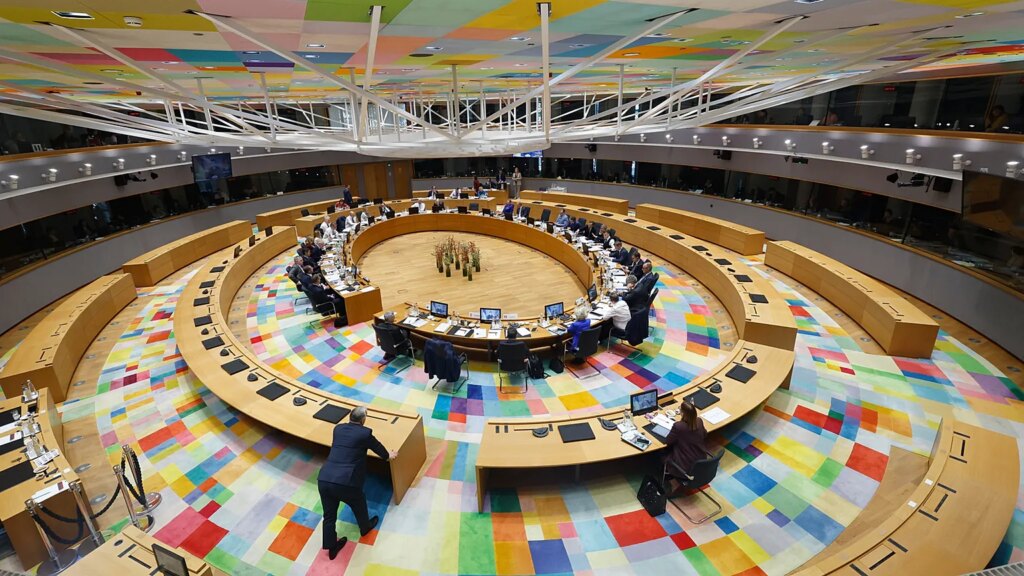
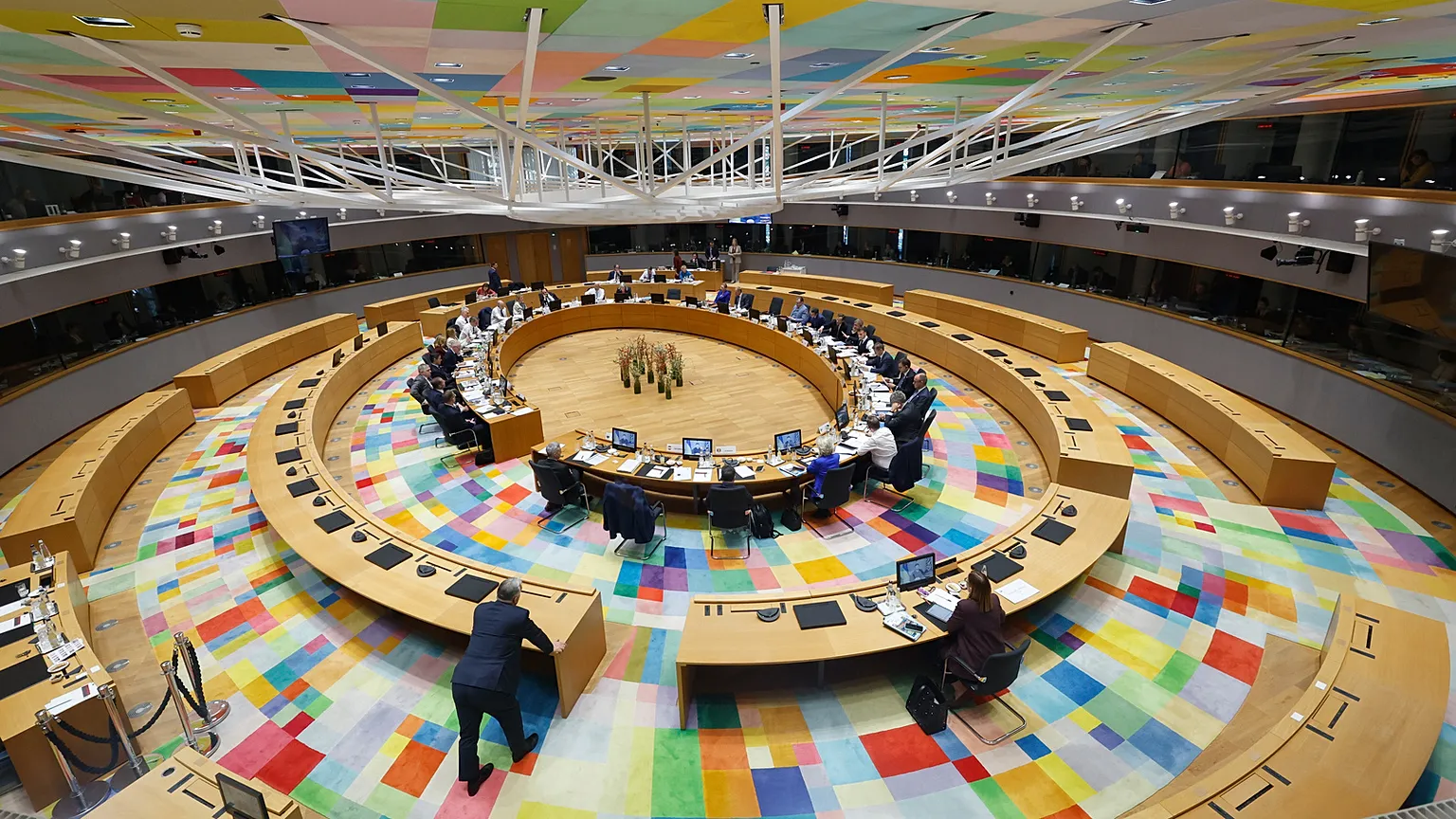
In Orbán’s ‘unacceptable’ veto, António Costa faces his biggest test yet
Regarding Viktor Orbán’s veto on the EU’s €90 billion loan to Ukraine, the individual most impacted may be António Costa.
My colleague Jorge Liboreiro explains in this essential analysis that the Hungarian prime minister’s dramatic decision to block the loan over the Druzhba pipeline conflict with Ukraine stands as the greatest challenge to Costa’s authority and credibility as President of the European Council.
“Nobody can blackmail the European Council. Nobody can blackmail the European Union institutions,” Costa asserted following last week’s summit, when leaders fiercely criticized Orbán for reneging on the agreement painstakingly reached in December’s high-stakes meeting.
This was a notably stern statement from the president, usually known for his genial demeanor and constant smile.
Since taking office at the end of 2024, Costa, one of the few socialists at a predominantly right-leaning table, has worked to foster cordial relations with all 27 heads of state and government.
While no one in Brussels is directly blaming Costa for the ongoing deadlock with Hungary, it is his office—as the ultimate guarantor of European unity—that risks being left unsupported due to Orbán’s veto.
“It is a turning point,” a senior diplomat remarked, dismissing creative Plan B proposals bypassing Hungary. “Discussing a Plan B means giving in to his demands. And no one is willing to submit to blackmail.”
Since Orbán has targeted von der Leyen in his harsh campaign, ruling her out as a mediator between Brussels and Budapest, Costa effectively stands alone. Overcoming the Hungarian veto involves both backing Ukraine and preserving the credibility of the European Council and, consequently, his own.
“What makes it delicate is that the veto breaches a commitment that was not honored. To our knowledge, this has never happened before,” added another diplomat.
“It’s a significant political and institutional challenge.”
Jorge provides the full article.
Trump insists Iran ‘badly’ wants deal with US after Tehran rejects his ceasefire offer
US President Donald Trump claimed that Iran is eager to reach a deal to end the conflict, despite Tehran dismissing his 15-point ceasefire plan and issuing its own broad counter-demands while launching new attacks on Israel and neighboring Gulf Arab nations.
Earlier Wednesday, Pakistan—alongside Turkey, potential mediators in the conflict—reported presenting US demands to Iranian officials to initiate a diplomatic process for restoring peace and order in the region.
Speaking broadly about Washington’s proposals, Pakistani officials familiar with Trump’s plan described the deal as involving sanctions relief, rollback of Iran’s nuclear program, missile restrictions, and reopening the strategic Strait of Hormuz, through which roughly a fifth of global oil transits annually.
In response, Iran—via state media—rejected the White House’s demands, instead releasing its own list of terms which include reparations for war damages, guarantees against further wars, cessation of attacks on its officials, and sovereignty over the key waterway.
Iran also asserted that no direct or indirect negotiations have occurred with the United States regarding ending hostilities, contradicting Trump’s claims.
“No negotiations have occurred with the enemy to date, and none are planned,” stated Abbas Araghchi, Iran’s foreign minister.
Malek Fouda has the complete report.
More from our newsrooms
Hungary remains sidelined as European Commission freezes defence funds. Hungary is the only EU member still awaiting Brussels’ approval to access the landmark €150 billion EU defence funding initiative called SAFE, after France and the Czech Republic’s plans were approved on Tuesday. Sándor Zsiros brings details.
Danish king names outgoing PM Mette Frederiksen to lead government formation talks. Denmark’s King Frederik X entrusted outgoing Prime Minister Mette Frederiksen on Wednesday with leading negotiations to build a new government, following her Social Democrats’ narrow victory without a majority. Gavin Blackburn has more.
Gazprom and Rosneft linked to deportation of Ukrainian children, Yale report finds. Russia’s energy giants assisted and financed the transport and re-education of forcibly deported Ukrainian children, according to the latest Yale Humanitarian Research Lab (HRL) report. Sasha Vakulina reports here.
Also on our radar
- European Commissioner for Enlargement Marta Kos is visiting Podgorica, Montenegro
- European Commissioner for Defence Andrius Kubilius to sign Secure Connectivity agreements with Iceland and Norway
- Finnish President Alexander Stubb to host the Joint Expeditionary Force (JEF) Leaders’ Summit in Helsinki
That concludes today’s briefing. Contributors include Peggy Corlin, Sasha Vakulina, Jorge Liboreiro, Malek Fouda, Maria Tadeo, and Sandor Zsiros.
Don’t forget to subscribe to receive Europe Today in your inbox every weekday morning at 08.30.