
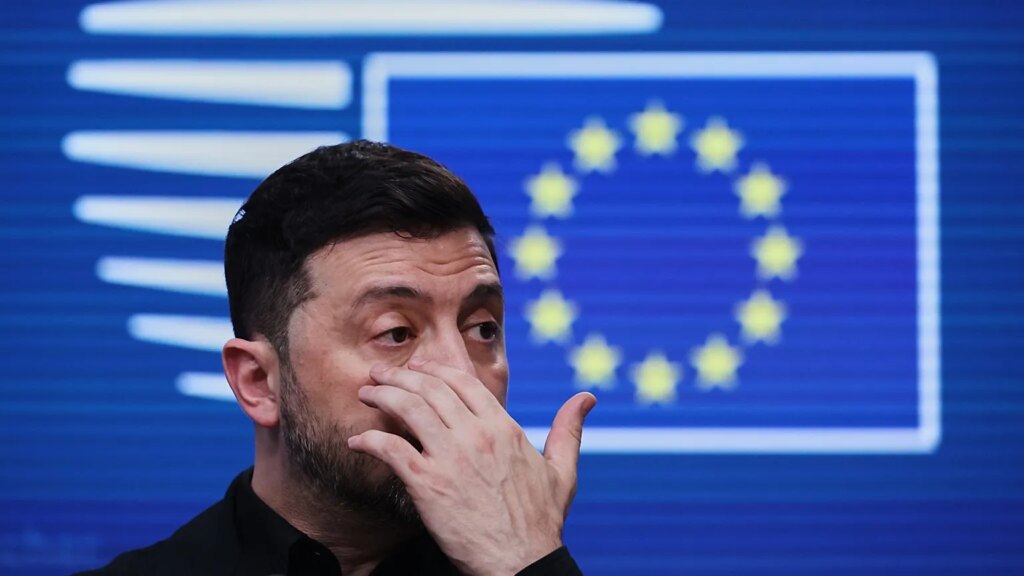
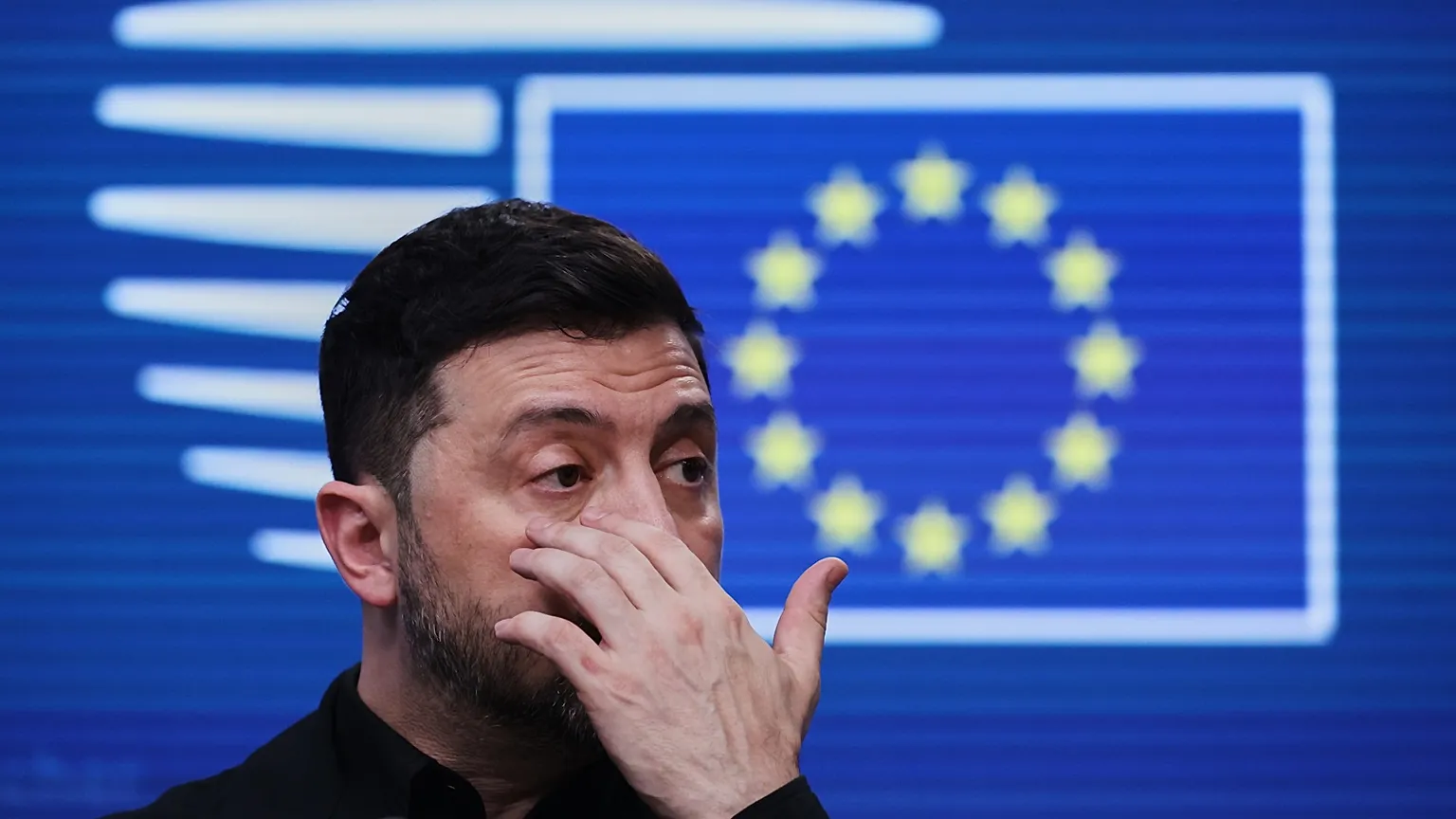
The notion of adjusting accession procedures to permit a «reversed» membership for Ukraine has been widely rejected by member nations.
Countries within the European Union have mostly dismissed the concept of offering Ukraine a so-called «reversed» membership amid ongoing peace discussions, concerned that such a reform could compromise the integrity of the accession framework.
 ADVERTISEMENT
  ADVERTISEMENT
The reluctance became clear on Wednesday evening during an informal ambassadors’ dinner with the European Commission, several diplomats told Euronews.
«The purpose of that dinner was to restore a level of political pragmatism,» one diplomat mentioned anonymously. «While our goal is to firmly integrate Ukraine into Europe, we must proceed with practical measures.»
The diplomat continued, «At this point, alternative approaches and frameworks are necessary.»
In the framework of the «reversed» model proposed by the Commission, Ukraine would receive formal EU membership but be excluded initially from most key privileges like voting rights, the Common Agricultural Policy (CAP), and cohesion funds.
These privileges would be earned progressively as Kyiv meets specific requirements and demonstrates advancement. Essentially, the process would be inverted.
The Commission never formalized this radical idea in official documents but shared its outline with member states, which was later leaked to the media.
However, on Wednesday, ambassadors openly dismissed the idea, with the clear lack of enthusiasm signaling the concept’s demise.
This reaction was anticipated, as capital cities had already indicated their opposition to a fundamental change in accession rules.
Another diplomat criticized the Commission for generating hype and misleading optimism that enlargement could be purely political rather than based on merit.
The candid and amicable dialogue was overshadowed by the stark truth that a peace agreement remains elusive, with Russia yet to make a single concession at the negotiating table.
Diplomats emphasize that accession timing must not be dictated by either Washington or Moscow but should remain under the control of the Commission and member states.
Uncertainty around 2027
Despite the dinner, no definitive conclusions were reached.
There was consensus that discussions must continue over the next months to strike a balance between Ukraine’s EU ambitions and the need to preserve the union’s stability and maintain the accession process’s integrity, which involves 35 detailed chapters that may take years to complete.
Montenegro, the candidate closest to accession, started its negotiations in June 2012. For Ukraine—the first country to apply for membership amidst conflict—such a lengthy process is neither acceptable nor feasible.
Ukrainian President Volodymyr Zelenskyy is advocating for embedding a «concrete date» into a future peace agreement, targeting 2027. Establishing a clear accession timeline could help offset the difficulties linked to possible territorial compromises and facilitate garnering public support in a membership referendum.
«Indeed, there is a desire for an expedited path to membership,» Zelenskyy stated last week, cautioning that Moscow would try to divide member states to block unanimous approval.
Standing alongside him, European Commission President Ursula von der Leyen commended Kyiv’s «remarkable» reform pace but warned against fixing a date prematurely.
«The date set acts as a benchmark for desired progress. From our perspective, though, setting firm dates is not feasible,» she explained.
Diplomats interpret von der Leyen’s comments as reflecting her growing recognition of member states’ private concerns.
This opposition has also surfaced publicly. Earlier in the week, Rob Jetten, the newly appointed prime minister of the Netherlands, advised Brussels to approach enlargement cautiously.
«We are open to expanding support for these candidate countries, but advancing too rapidly is not advisable,» Jetten told journalists.
«Currently, setting a fixed date for Ukraine’s accession is not possible, but it is feasible to discuss how Europe can assist Ukraine with critical reforms, and I intend to speak with President Zelenskyy about this. Nevertheless, it remains too soon to establish a timeline.»