
Also in this newsletter: Eurogroup President Kyriakos Pierrakakis tells Europe Today the EU economy is being "tested" amid the Middle East war, but is "better prepared" following the 2022 energy crisis.
Good morning from Brussels. I’m Mared Gwyn.
 ADVERTISEMENT
  ADVERTISEMENT
Today, Europeans advocate for diplomatic efforts and de-escalation as evidence grows that the Middle East conflict is intensifying, with attacks widening on both sides to affect civilian infrastructure, including critical energy facilities.
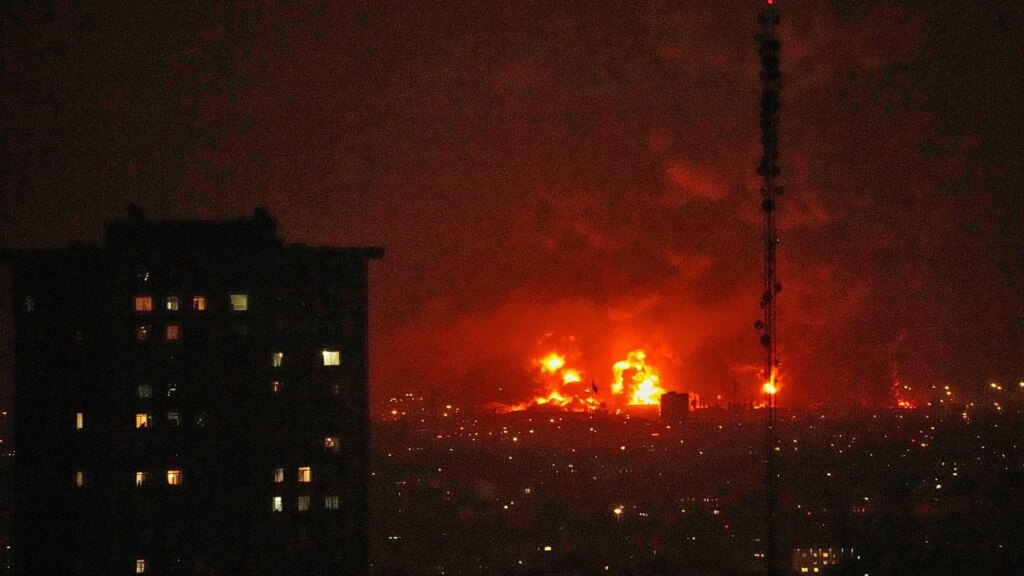
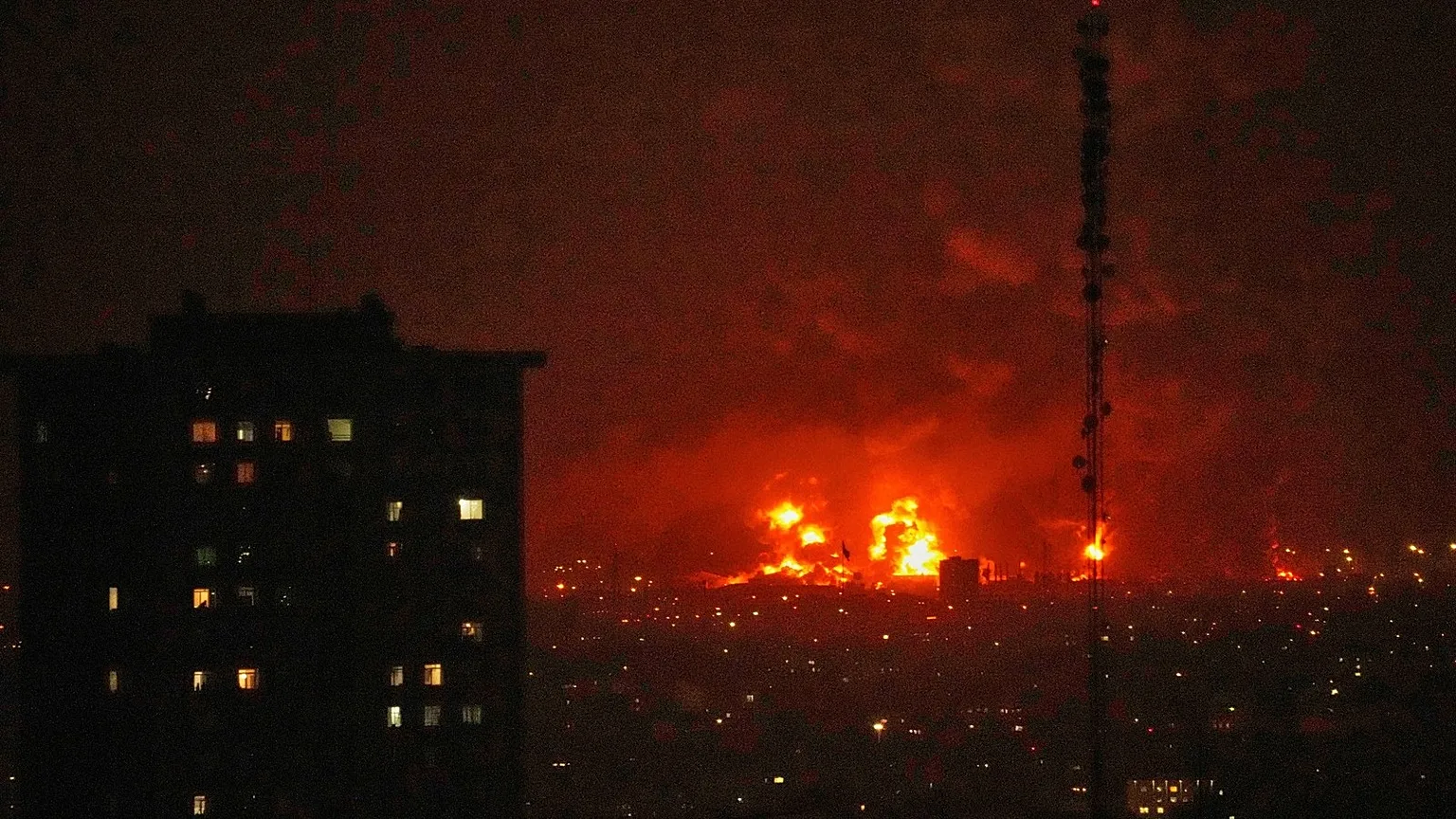
Bahrain’s national oil company Bapco has declared force majeure after an alleged Iranian drone struck its refinery. Additionally, oil storage sites around Tehran were targeted over the weekend, blanketing the Iranian capital in dense black smoke.
Crude oil prices have now surged past $100 (€87) per barrel for the first time since August 2022, risking further increases in consumer costs.
In reaction, G7 finance ministers are set to consider a coordinated oil release from emergency reserves in collaboration with the International Energy Agency (IEA), as reported by the Financial Times, citing insiders who state that the United States supports this move.
The Eurozone finance ministers will also convene later today to discuss the economic consequences of the ongoing war.
Eurogroup President and Greek Minister of Economy and Finance Kyriakos Pierrakakis told Europe Today earlier that the EU is facing a “test,” with the war’s influence on the economy hinging on the conflict’s “duration” and the level of “disruptions” to global energy flows and supply chains.
“Clearly, we are under a test. We are deeply concerned about developments on the ground,” Pierrakakis expressed, noting that measures crafted in 2022 during the Ukraine crisis have helped Europe to be “better equipped.” Watch.
Experts have warned that an extended conflict could undermine Europe’s growth projections and intensify financial pressure on households by raising costs beyond oil and energy sectors. The International Monetary Fund (IMF) has highlighted that the scope of economic harm will depend on the war’s length, damages to vital infrastructure in the region, and the ripple effect on energy prices, recommending central bank interventions if necessary.
Meanwhile, Iran appointed Mojtaba Khamenei as successor to his father Ali Khamenei as Supreme Leader on Sunday—a hardliner whom former US President Trump has labeled an “unacceptable” heir, sparking concerns over escalating hostilities.
Diplomatic contacts from European capitals are increasing, amid mounting signs of conflict escalation, posing serious risks to the global economy.
The Presidents of the European Council and Commission, António Costa and Ursula von der Leyen, will hold a videoconference with Middle Eastern leaders later today to evaluate the regional situation and explore “methods to end the present conflict,” as announced by Costa’s office.
In the first telephone exchange between a Western leader and Tehran since the Middle East war began over a week ago, French President Emmanuel Macron called Iranian President Masoud Pezeshkian last night, urging a cessation of attacks on Gulf countries and the restoration of safe passage through the Strait of Hormuz, while pledging to maintain diplomatic communication channels between Paris and Tehran.
Later today, President Macron will visit Cyprus to demonstrate “solidarity” with the EU island nation, which was recently caught in the crossfire of the Middle East conflict, raising fears that Europe might be drawn deeper into the war.
During the visit, he is anticipated to meet with Cypriot and Greek officials to outline plans aimed at “enhancing security around Cyprus and in the eastern Mediterranean,” the Élysée stated on Sunday.
An Iranian-made Shahed drone targeted the British Royal Air Force (RAF) base at Akrotiri in southern Cyprus on Sunday, 1 March, believed to be launched by the Iranian-backed Hezbollah militia. This prompted several EU countries to deploy defensive forces to Cyprus. In response, France dispatched its nuclear-powered aircraft carrier Charles de Gaulle to the eastern Mediterranean.
The attack on the British base has also sparked protests against the UK’s presence on the island, with hundreds demonstrating in the capital, Nicosia, over recent days.
Although the UK government sent a warship to reinforce defenses near its Cyprus base, Cypriot authorities have expressed dissatisfaction with the timeliness of UK communications post-attack and the scale of defense assets provided.
In other news: Slovakia’s Prime Minister Robert Fico announced plans to meet Commission President Ursula von der Leyen tomorrow, as tensions over oil transit via the Soviet-era Druzhba pipeline continue amidst disputes with Ukraine.
The pipeline was damaged in a strike in Ukraine in late January, disrupting Russian oil supplies to Slovakia and Hungary. Since then, a heated exchange has occurred between Hungarian Prime Minister Viktor Orbán and Ukrainian President Volodymyr Zelenskyy, which escalated on Friday when Hungary detained, then released, seven Ukrainian bank employees transporting gold and cash through the landlocked nation. Further details on the upcoming discussions between Fico and von der Leyen will be available in tomorrow’s edition.
Senior UAE official outlines country’s defence strategy
As Iranian drone and missile attacks persist in the Gulf region, the United Arab Emirates (UAE) states it is defending its territory while striving to prevent the conflict from expanding, reports correspondent Jane Witherspoon.
Jane was among a limited group of journalists who received briefings from senior Emirati officials in Abu Dhabi over the weekend. They noted the country had prepared for instability well prior to the recent escalation.
“We have been preparing—not anticipating war but readying for emergencies similar to the current situation. The UAE is a nation that plans ahead, having prepared extensively due to our assessment of regional developments. Preparations have included food supplies, infrastructure, among others,” one official explained.
These statements provide unusual insight into how the UAE anticipated potential wider regional instability while maintaining diplomatic outreach with Tehran.
“Our approach with Iran, together with other GCC states, has been constructive,” the official added, though expressing surprise at Iran’s attack that jeopardizes its relationships with neighboring countries.
Jane provides the full report.
More from our newsrooms
Explainer: Who is Mojtaba Khamenei and how did he succeed his father? Iran’s Assembly of Experts officially confirmed that Mojtaba Khamenei has become Ali Khamenei’s successor as the third Supreme Leader of the Islamic Republic. Alain Chandelier offers a detailed look at his background and ascent to power.
Iceland plans August referendum on resuming EU membership negotiations. The Icelandic government proposes holding a referendum on 29 August regarding the restart of negotiations for EU accession. Grégoire Lory provides more details.
Hungary’s opposition leader Péter Magyar urges Russia to cease election interference. Magyar has called on Russia to halt interference in Hungary’s parliamentary elections scheduled for April, following reports revealing an alleged Kremlin operation based in Budapest’s Russian embassy aimed at supporting Viktor Orbán’s continued governance. Russia has denied these claims. Sandor Zsiros reports on the development.
We’re also keeping an eye on
- Speeches from European Commission President Ursula von der Leyen, European Parliament President Roberta Metsola, and EU foreign policy chief Kaja Kallas at the 2026 EU Ambassadors’ Conference.
- Gathering of Eurozone finance ministers in Brussels.
- Commencement of the European Parliament plenary session in Strasbourg.
That concludes today’s briefing. Jane Witherspoon contributed to this newsletter. Subscribe to receive Europe Today directly in your inbox every weekday morning at 08:30.