
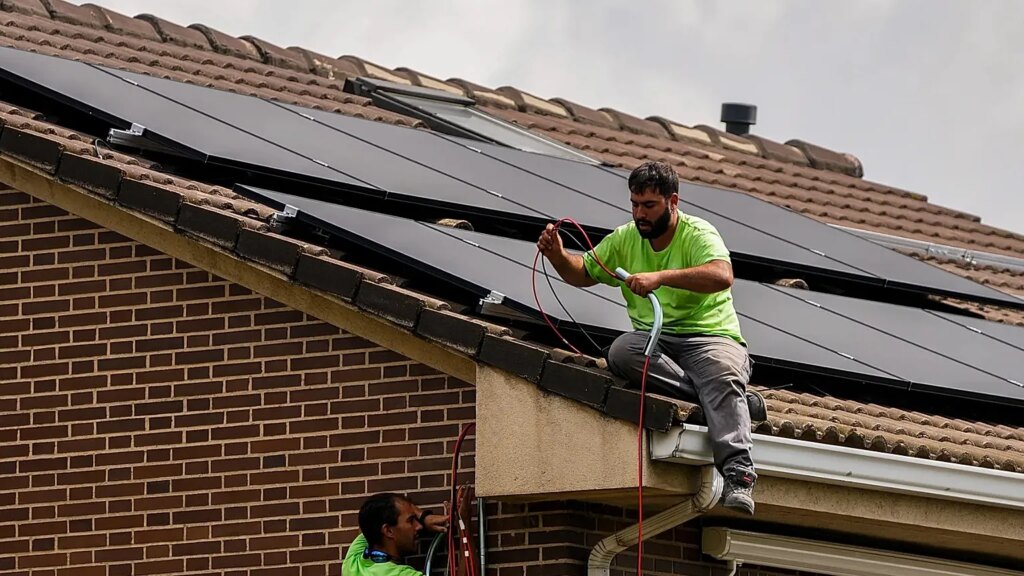
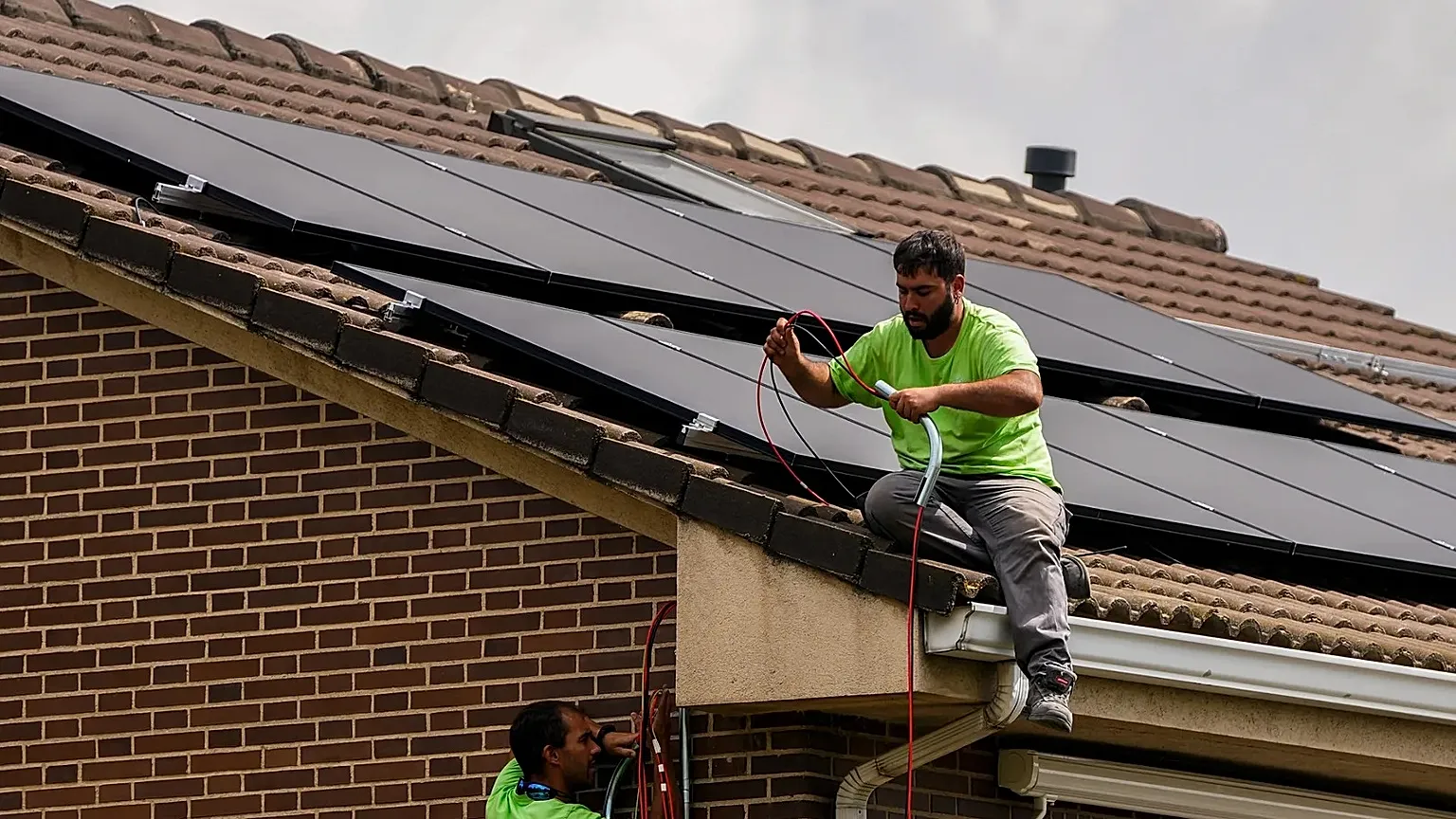
People involved in energy communities generally show enthusiasm for generating their own renewable energy, yet recurring issues and dissatisfaction persist, as highlighted by the recent audit from EU auditors. Resistance from existing energy producers also impedes advancement.
The European Court of Auditors (ECA) disclosed on Monday that the European Union’s ambition for a grassroots energy transformation is encountering significant obstacles. The initiative encouraging citizens, local bodies, and small enterprises to form so-called “energy communities” — enabling them to generate, share, and consume renewable energy independently — is advancing much more slowly than initially anticipated.
 ADVERTISEMENT
  ADVERTISEMENT
Members of energy communities frequently report confusion regarding permit procedures, legal requirements, and a lack of adequate guidance and support, dampening hopes for energy independence through shared rooftops or community-owned wind turbines.
In 2019, the EU empowered citizens to produce and sell their own energy by officially recognizing energy communities, directly challenging the monopoly of large utility companies. Despite this being seen as progress toward democratizing energy, progress has been slowed by national regulators and established industry stakeholders.
The EU aimed for every municipality with over 10,000 inhabitants to establish at least one renewable energy community by 2025. Although the European Commission has yet to report on developments, the evidence compiled by EU auditors indicates that this target has largely been unmet.
“Citizens’ involvement in energy is an appealing concept—ideal in theory but complicated in execution—especially as the EU pushes to achieve its climate and energy targets,” stated João Leão, the ECA member responsible for the audit. “To ensure effective implementation on the ground, the EU must eliminate legal barriers and technical challenges.”
Slow progress
The EU anticipated that energy community initiatives would contribute to climate objectives, potentially representing up to 21% of Europe’s solar and wind capacity by 2030. However, auditors observe that expectations were overly ambitious; the quantity of energy communities remains insufficient, and overall progress is lagging behind.
The report identifies political and bureaucratic impediments as primary concerns, a viewpoint echoed by citizens eager to engage. It also highlights that EU regulations lack clarity, making it difficult to define what constitutes an energy community, how to establish one, or how to market surplus electricity.
In apartment complexes, where half the EU population resides, forming a separate legal entity atop existing management organizations introduces additional bureaucracy, discouraging involvement from residents.
The Croatian town of Poreč-Parenzo served as a pilot for developing an energy community under an EU-funded program running from 2021 to 2024, sparking interest from other municipalities.
«Due to unsupportive legislation, complex administrative processes, and an incomplete national legal framework, the voucher model concept remains untested,» the project’s website states.
Technical difficulties further complicate matters.
Grid congestion can prevent or delay new projects, and the output from solar panels does not always correspond to household energy demands, leading to mismatches in supply and demand.
«Part of the problem is that production and consumption do not align naturally: solar panels mainly produce energy around midday, whereas household demand peaks in mornings and evenings,» explained the EU auditors.
Energy storage could provide a solution, but the European Commission has not prioritized storage options for energy communities, thereby missing an opportunity to expand them, the auditors remark.
They recommend that the EU simplify regulations, introduce incentives for citizens and vulnerable groups, and support storage technologies. Without decisive political commitment, this “citizen-led energy revolution” risks remaining unfulfilled.
Flore Belin, a Renewable Energy Policy Expert at the environmental NGO Climate Action Network Europe, commented that energy communities face multiple challenges and can only achieve their full potential if EU countries fully implement the EU legal framework.
«With appropriate regulatory and market frameworks, energy communities offer a more democratic, equitable route that brings Europe closer to its climate goals, enhances energy resilience, and ensures more stable, affordable energy costs,” Belin told Euronews.
A European Commission spokesperson welcomed the ECA’s suggestions, emphasizing the need for clarity regarding apartment ownership, incentives for storage solutions, clear objectives, and strong registration and monitoring systems.
«The Commission will respond to these recommendations within the Citizens Energy Package, focusing particularly on inclusivity and access to energy communities for everyone,» the spokesperson stated.
Industry resistance
Incumbent stakeholders within the energy sector are also hindering the growth of energy communities.
Numerous energy communities confront opposition from industry players through lobbying, regulatory pressure, and control over grid infrastructure, slowing the expansion of citizen-driven energy initiatives despite supportive EU policies.
ValleiEnergie, a Dutch citizen cooperative, recently attempted to establish a community solar project near Ede but encountered significant grid access obstacles. The grid operator declined to assign connection capacity, citing full network utilization.
Simultaneously, the cooperative had to pay a substantial deposit merely to join the queue for grid connection, without any guarantee of obtaining it.
“Such deposits impose heavy financial strain on energy cooperatives,” members of the community reported.
Nonetheless, some successful examples do exist, albeit limited, in Belgium and Denmark.
A project in Belgium’s Flanders region recently marked one year of operation, involving 72,000 co-owners collectively managing wind turbines, solar installations, and heating networks.
The Danish island of Samsø gained recognition for achieving 100% renewable energy through citizen-owned projects, including wind turbines and centralized district heating systems that distribute warmth via insulated underground pipes to multiple buildings.
“People embraced the wind turbines because they owned shares in them,” remarked a local participant in the wind turbine cooperative. “When you hold a stake, the turbine becomes part of your community.”