
The President of Poland, affiliated with the opposition Law and Justice party, asserts that the EU’s defence loan initiative could threaten national sovereignty and has introduced an alternative plan lacking detailed provisions.
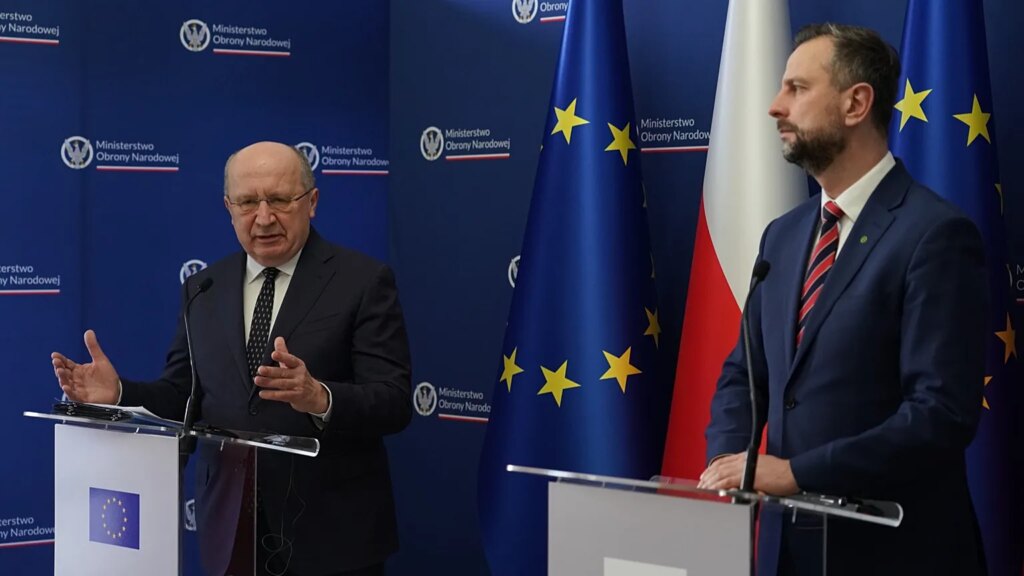
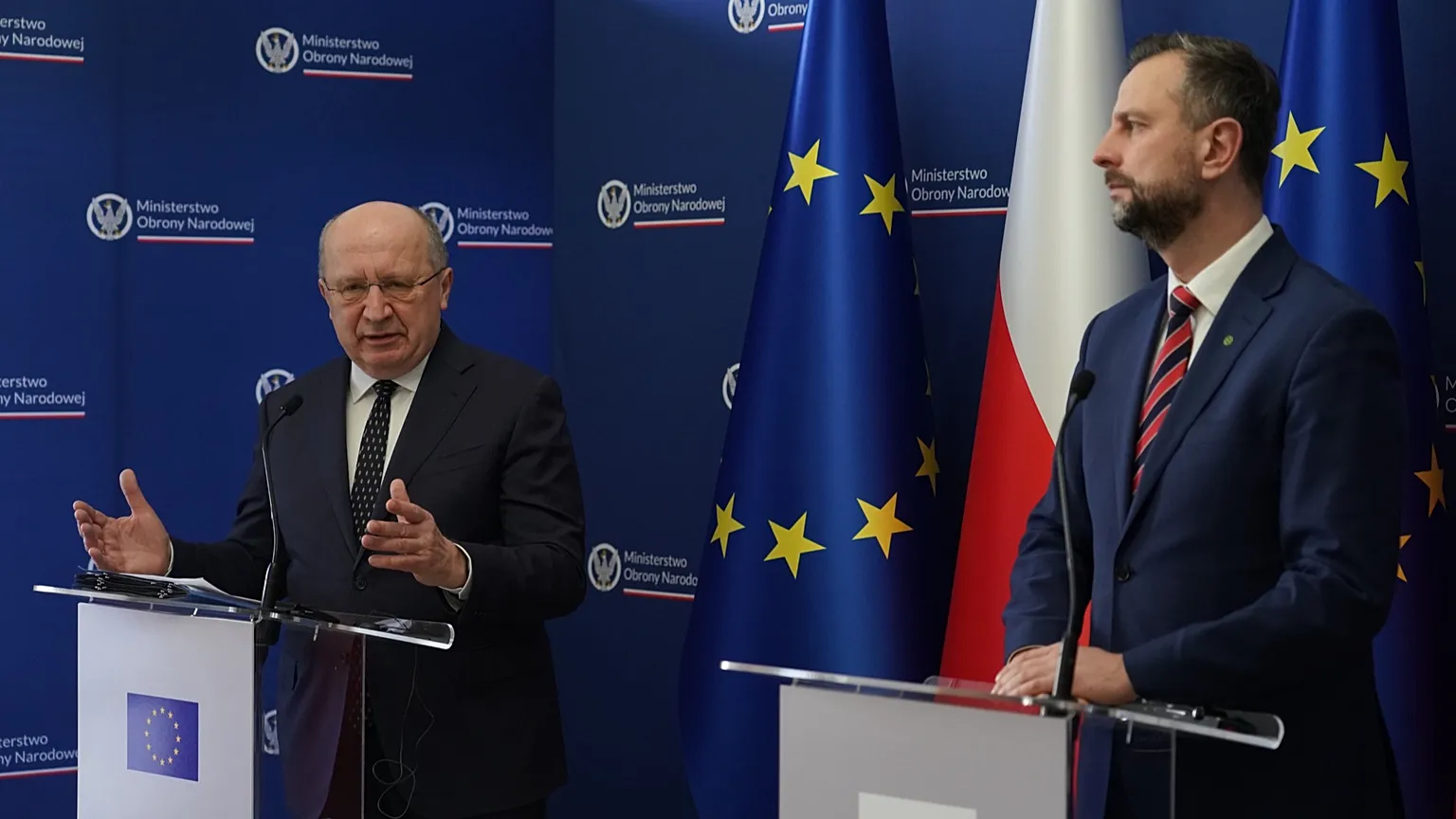
European Commissioner Andrius Kubilius intervened in Poland’s political discussion on Friday, urging Warsaw to approve participation in the EU’s Security Action for Europe (SAFE) defence loan initiative, which has become a focal point of domestic political controversy.
 ADVERTISEMENT
  ADVERTISEMENT
«I find the Polish debate on SAFE quite unexpected,» Kubilius stated from Warsaw during the initial leg of his «Missile Tour» around the EU. «Rejecting SAFE equates to rejecting employment opportunities for Polish citizens.»
Poland is slated to obtain the largest portion (€43.7 billion) from the €150 billion SAFE programme, which the Commission established to enhance defence preparedness throughout the bloc ahead of the decade’s end — the period when intelligence assessments suggest Russia might be ready to strike an EU member state.
Poland’s defence investment proposal to utilize these funds has passed the needed approvals from the European Commission, the European Council, and both parliamentary houses, yet its enactment is stalled by President Karol Nawrocki, who must sign it into law.
Nawrocki, whose presidential campaign was supported by the opposition Law and Justice (PiS) Party, contends that the programme would limit Polish sovereignty, is directed by Brussels and Berlin, and would not benefit the Polish economy or local enterprises.
Nawrocki suggests ‘Safe Zero’ alternative
Marta Prochwicz of the European Council on Foreign Relations explained to Euronews that SAFE had not been widely discussed in Poland, where the need for improved defence readiness is generally accepted, until the president and his party used it as a lever for political advantage.
«This approach is familiar to them. It has long been their strategy to attract voters by emphasizing Polish sovereignty as opposed to Brussels imposing constraints on Poland,» she remarked to Euronews.
According to the polling aggregator Europe Elects, the right-wing populist PiS party has seen its support decline to around 23%, down from 35% in September. Meanwhile, the centre-right Civil Coalition alliance led by Prime Minister Donald Tusk has gained traction, now leading at 34% in national polls.
Nawrocki has instead introduced a «SAFE Zero» plan, developed alongside the president of the National Bank of Poland, which would depend on the institution’s foreign currency reserves and gold holdings, though detailed information remains limited.
He argues this option would be more economical for Poland, as SAFE is a Commission-provided loan that Warsaw would need to repay.
Within SAFE, the Commission, boasting a AAA credit rating that most member states lack—Poland, for example, is rated A- by Standard & Poor’s—would raise funds on markets to offer long-term loans with durations up to 45 years and a 10-year grace period before principal repayments to capitals.
The goal is to provide a more affordable mechanism for defence investments.
In his remarks on Friday, Kubilius dismissed some of Nawrocki’s points, asserting that the programme, which enforces a strict Made in Europe clause, would primarily benefit the national economy. He referenced Prime Minister Donald Tusk’s statements that approximately 80% of the funds would support local industry and «significantly stimulate the economy.»
«Who suffers if Poland rejects SAFE? Polish citizens, local communities, and regions,» Kubilius emphasized. «Refusing SAFE means denying Polish people employment.»
He warned that without SAFE, manufacturing plants might not be constructed, and the chance to grow the European missile sector could be forfeited.
«If Poland chooses to use taxpayer funds to purchase weaponry from outside Polish industries, it means Polish taxpayer money will create jobs elsewhere,» he added. The commissioner also noted Poland’s capacity to build “the strongest defence industry in Europe” while maintaining close collaboration with Ukraine.
Poland could become home to ‘best army in Europe by 2030’
Alongside Kubilius, Poland’s Defence Minister Władysław Kosiniak‑Kamysz reiterated his appeal for the country’s SAFE plan to be enacted, highlighting that «contracts are already signed» and «the programme is prepared.»
Contrasting SAFE, which he described as «sophisticated,» the president’s alternative was characterized as merely «the promise of a new initiative,» Kosiniak‑Kamysz said. Adopting a more conciliatory tone, he stated he was «not interested in choosing between the two,» suggesting they could «complement each other.»
«If so, Poland could have the most powerful army in Europe by 2030,» he concluded.
According to Prochwicz speaking to Euronews, Nawrocki’s refusal to sign SAFE into law would limit funding strictly to military hardware.
«If President Karol Nawrocki signs this law, much of the money will be allocated to infrastructure projects, including not only armed forces modernization but also military mobility and dual-use infrastructure,» she explained.
However, if the president declines to sign, the scope of loan implementation would probably narrow. In that scenario, Prochwicz said, funds would mainly be channeled through the defence ministry, rather than distributed across several ministries involved in a broader “total defence” and national resilience framework.
She further noted that although Poland has advanced military modernization efforts, it still trails in areas such as critical infrastructure, military mobility, and cross-border connectivity—challenges shared by much of Europe.
Correction: The article was updated to clarify that Nawrocki is not a member of the Law and Justice party.