
Also in this newsletter: Hungary’s energy leader MOL lodges an EU competition complaint against Croatia’s JANAF, while the EU aims to limit China’s dominance with a “Made in Europe” initiative.
Greetings from Brussels. This is Mared Gwyn.
 ADVERTISEMENT
  ADVERTISEMENT
Washington and Israel exchanged further fire overnight with Iran as concerns grow that the conflict could spread beyond the Middle East, following a US submarine’s sinking of an Iranian warship in the Indian Ocean yesterday afternoon.
This morning, the US Senate voted against a bill aimed at limiting President Donald Trump’s wartime authority, with the split largely along party lines. The House of Representatives is set to revisit the vote on Trump’s war powers tomorrow.
Later in the day, EU foreign ministers will convene online to coordinate their unified response to the conflict, which has been hindered by internal divisions and limited diplomatic leverage.
The EU’s foreign policy chief warned Wednesday that the prospect of a democratic Iran remains «far from assured,» cautioning about a «widening war» in the region and a «critical moment» for Europe.
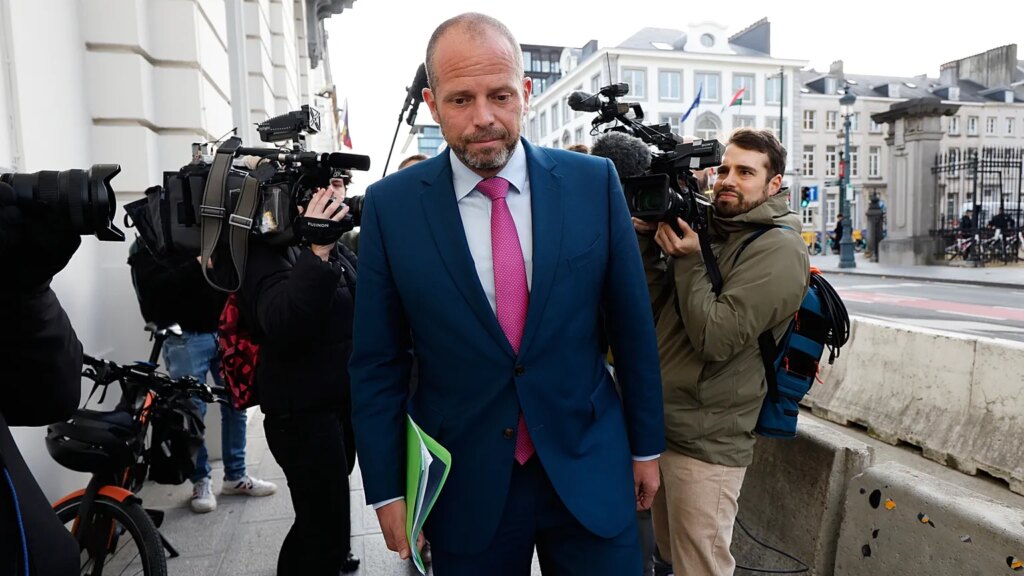
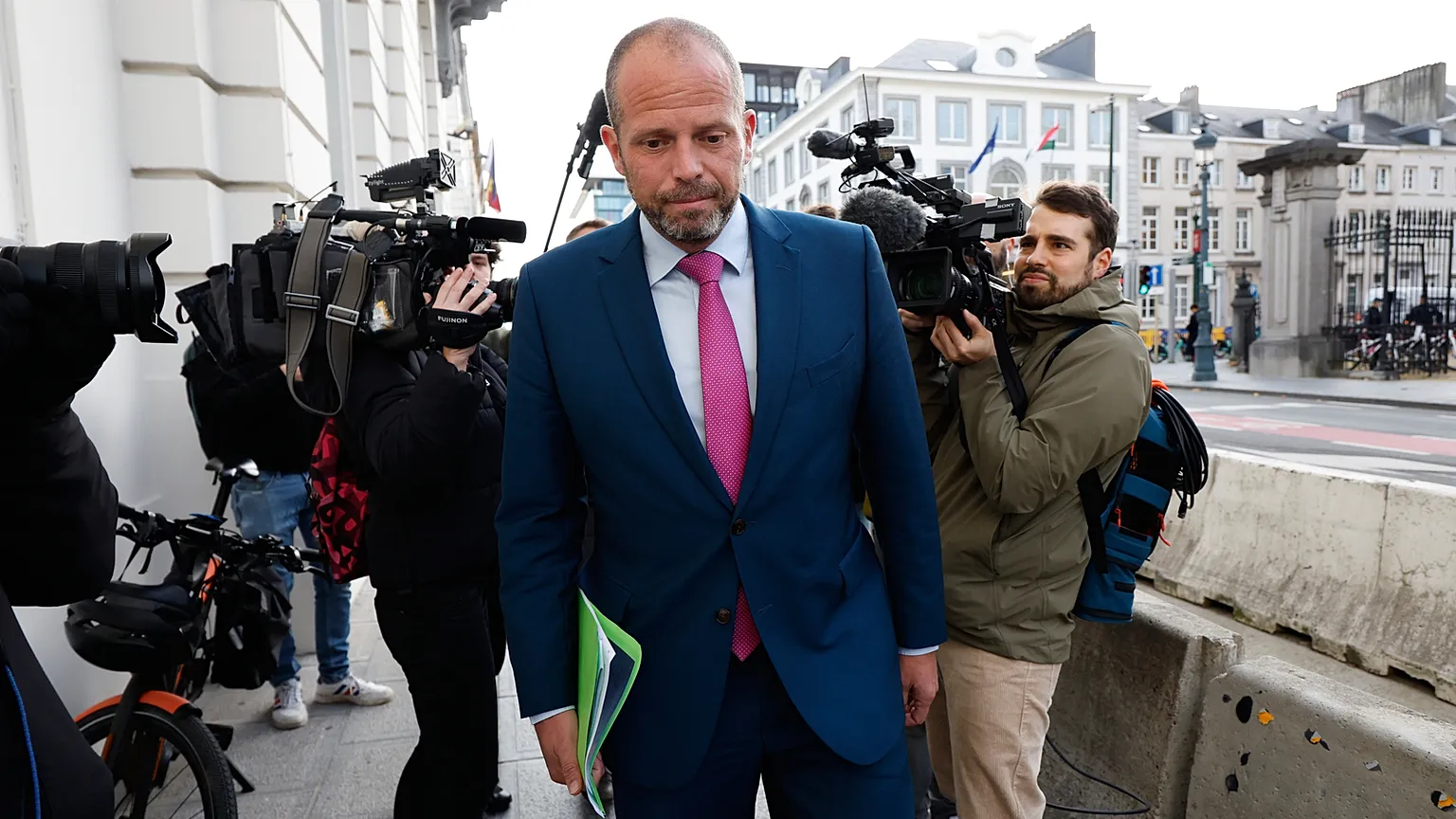
In an interview with Europe Today, Belgium’s Defence Minister Theo Francken questioned the legality of the initial US-Israeli strike but described it as a “just cause to attempt to dismantle the Ayatollah regime.”
“I believe there might be issues under international law, but it could also be justified,” Francken told reporter Lauren Walker. Watch.
Meanwhile, diplomatic tensions between Washington and Madrid — the only EU member state to openly condemn the initial US-Israeli strikes — persisted on Wednesday.
Spanish Foreign Minister José Manuel Albares released a statement rejecting claims that Spain supports Washington’s campaign, shortly after White House press secretary Karoline Leavitt asserted that Madrid had agreed to assist the US.
At the same time, Spanish Prime Minister Pedro Sánchez is leveraging the political climate to revive the “no to war movement,” recalling the painful memories of the 2003 US-led invasion of Iraq during a Wednesday speech.
Our EU editor Maria Tadeo reports that Sánchez aims to consolidate his reputation as the last stronghold of progressive socialism in Europe amid a shift to the right, while also energizing his domestic supporters. Read.
On Wednesday, the EU executive emphasized its readiness to protect EU trade interests after President Trump threatened to halt all trade with Spain over Madrid’s critical stance.
European Commission Vice-President Stéphane Séjourné stated that, regarding trade policy, “any threat directed at a member state is inherently a threat to the EU.”
A reminder: Trade policy is an exclusive competence of the EU, and the EU-US trade agreement finalized last summer remains suspended after MEPs halted implementation following February’s US Supreme Court decision that declared 2025 US tariffs unlawful.
Meanwhile, the dispute involving Hungary and Slovakia with Ukraine over oil supply disruptions via the Soviet-era Druzhba pipeline continues. On Wednesday, Hungary’s energy company MOL and its Slovak subsidiary Slovnaft filed a formal complaint to the European Commission claiming that Croatian crude oil transporter JANAF is misusing its dominant position.
JANAF has become a focal point as Hungary and Slovakia, both granted special exemptions from EU restrictions on Russian oil, face supply interruptions through Druzhba after a pipeline rupture in Ukraine in late January.
MOL, Hungary’s leading energy firm, had previously threatened legal action if JANAF did not “immediately” guarantee access for non-sanctioned Russian crude shipments. Although JANAF expressed willingness to meet both countries’ demands through alternatives to Russian oil, it has yet to confirm whether it will permit Russian oil transit through its Adria pipeline.
JANAF denied accusations from MOL regarding unfair pricing and threats to supply security in an official statement.
Hungary’s Foreign Minister Péter Szijjártó met in Moscow yesterday for talks centered on energy. Szijjártó stated that Russia will “continue to supply natural gas and crude oil to Hungary at unchanged prices despite the global energy crisis.” Additionally, Moscow consented to release two Hungarian-Ukrainian prisoners of war to Hungary. Sándor Zsiros reports.
The Iran conflict resurfaces Europe’s energy crisis fears, heightening economic worry
Trump’s decision to attack Iran, pursue regime change, and alter the Middle East power balance has revived a significant threat the European Union believed it had overcome: an energy crisis.
Jorge Liboreiro reports that the escalating conflict has caused gas prices to surge, stirring panic among investors and unease among governments. On Tuesday, gas prices at the Title Transfer Facility (TTF), Europe’s main trading hub, closed at €54.3 per megawatt-hour (MWh), sharply up from €31.9 per MWh before the strikes.
This sudden price increase stems from a combination of critical developments, notably Qatar’s decision to pause liquefied natural gas (LNG) production after Iran’s retaliatory strikes, alongside the near shutdown of the Strait of Hormuz.
EU leaders remain on alert. Dutch Prime Minister Rob Jetten said his government is prepared to implement additional measures “if necessary.”
“The Iran conflict could heavily impact strategic reserves—not only in Europe but in Asia as well. We must prepare for a prolonged war and its effects on strategic reserves in the Netherlands and beyond,” Jetten remarked Tuesday during his first official visit to Brussels since assuming office.
Brussels officials maintain that the bloc remains well supplied since roughly 58% of LNG imports come from the US, with Qatar supplying only 8%.
Should the Iran conflict persist and Qatari production continue on hold, major LNG consumers like China, South Korea, Japan, and India will need to increasingly depend on US exports.
Heightened demand for US LNG will pit Europe against Asia in fierce competition, potentially driving prices to unpredictable levels.
Jorge has more.
EU pushes back on China through ‘Made in Europe’ initiative
The European Commission revealed a long-anticipated industrial strategy that introduces a “European Preference” policy, effectively barring China from EU public funding and tightening controls on Beijing’s future investments within the European Union, my colleague Peggy Corlin reports.
This plan responds to the loss of 200,000 jobs in energy-intensive sectors and automotive industries since 2024, with an additional 600,000 job cuts projected this decade in car manufacturing alone, as China floods Europe with exports while building plants generating limited local employment.
“Amid unprecedented global uncertainty and unfair competition, the provisions of this act will support demand and ensure resilient supply chains in strategic sectors,” said EU Industry Commissioner Stéphane Séjourné during the presentation of the EU executive’s Industrial Accelerator Act (IAA).
The strategy focuses on three key sectors: clean technologies, automotive manufacturing, and energy-demanding sectors such as aluminium, steel, and cement.
It sets “Made in Europe” content thresholds, including a 70% EU-origin requirement for electric vehicles—excluding most battery parts—along with 25% content minimums for aluminium and cement.
“This initiative will create jobs by channeling taxpayers’ funds to European production, reducing dependencies, and strengthening economic security and sovereignty,” Séjourné added.
Peggy offers the full story.
MORE FROM OUR NEWSROOMS
Is the EU being pulled into war? MEPs debate the Middle East crisis on The Ring. MEPs Hana Jalloul and Reinhold Lopatka confront each other in a debate about the escalating Middle East conflict and its implications for the European Union, in the latest episode of The Ring. Watch.
Macron urges Netanyahu to ‘refrain from a ground offensive’ in Lebanon. In his first discussion with Netanyahu since last year, Macron called on the Israeli Prime Minister to “preserve Lebanon’s territorial integrity and avoid launching a ground offensive.” More.
Also under close watch
- EU foreign ministers convene online to address the Middle East conflict
- EU justice and home affairs ministers gather in Brussels
That concludes today’s briefing. Jorge Liboreiro, Maria Tadeo, Lauren Walker, Sandor Zsiros, and Peggy Corlin. Don’t forget to subscribe to receive Europe Today directly in your inbox every weekday at 08:30 AM.