
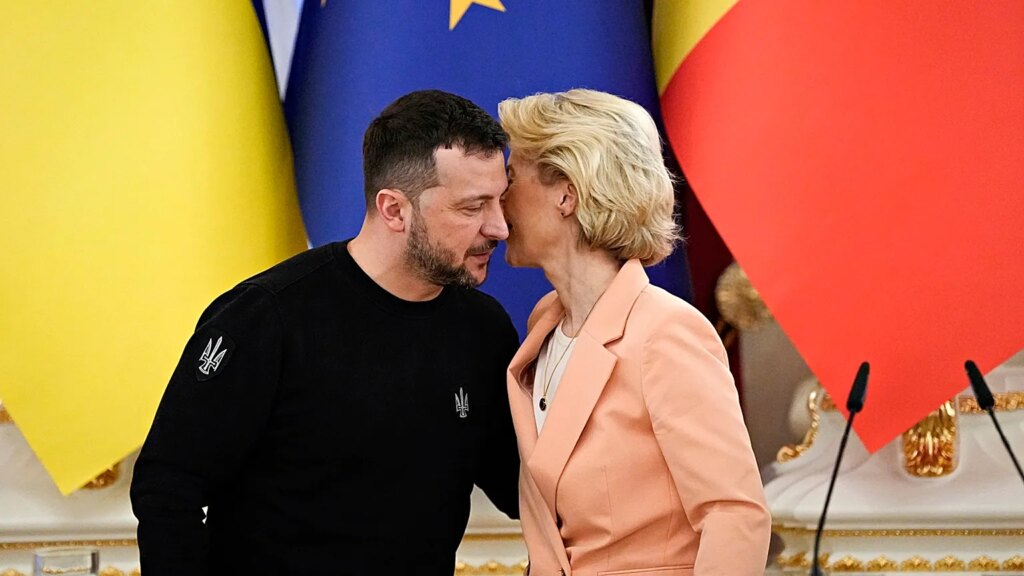
"Such language is unacceptable. Threats against EU member states cannot be tolerated," stated Brussels after Volodymyr Zelenskyy proposed sharing Viktor Orbán's address with Ukrainian troops
The European Commission has publicly called on Hungarian Prime Minister Viktor Orbán and Ukrainian President Volodymyr Zelenskyy to immediately tone down their provocative statements concerning the Druzhba pipeline, a dispute that has escalated into an unprecedented clash between the two leaders.
 ADVERTISEMENT
  ADVERTISEMENT
Following the suspension of oil shipments, Orbán has blocked a €90 billion loan to Ukraine that had been authorized by the 27 EU governments in December.
“Currently, there is a significant amount of provocative and escalative language,” said Olof Gill, the Commission’s deputy chief spokesperson, on Friday afternoon.
“We consider that inflammatory rhetoric from all parties neither assists nor advances the shared objectives we aim to achieve.”
Within the past day, Orbán threatened to “forcefully break the Ukrainian oil blockade.” In retaliation, Zelenskyy suggested distributing Orbán’s personal address to Ukrainian forces to persuade him to revoke the veto—a move Budapest interpreted as a death threat.
On Friday, Hungary seized a bank shipment bound for Ukraine containing $40 million, €35 million, and 9 kilograms of gold in reserves, an act condemned by Kyiv as “state terrorism.”
The dispute has positioned Brussels in the middle of the conflict.
“We are actively engaging with all parties involved,” Gill stated.
“Our mission is to encourage a reduction in tensions, lower the rhetoric, and focus on delivering results: to exert maximum pressure on Russia to cease its aggressive war, approve the loan for Ukraine, and ensure energy security across our member states,” he added.
“The Commission remains committed to working steadily and coherently with all stakeholders to fulfill these goals.”
Responding to Zelenskyy’s proposal to share Orbán’s address with Ukrainian soldiers, the spokesperson expressed clear disapproval—marking one of the rare occasions Brussels has publicly condemned the Ukrainian leader.
“As the European Commission, we are unequivocal that this kind of language is unacceptable. Threats against EU member states must be avoided,” Gill affirmed.
As part of diplomatic efforts to resolve the dispute, the Commission is evaluating “potential financial support” aimed at accelerating repairs to the Druzhba pipeline, Gill noted, without offering additional details.
Von der Leyen’s mediation
The pipeline’s condition has become a major point of disagreement since a Russian drone attack took place on 27 January.
Hungary and Slovakia, benefiting from an indefinite sanctions exemption permitting the receipt of Russian crude, maintain they possess evidence confirming that Druzhba remains operational and is being closed for “political reasons.”
Ukraine presents a contrary claim: its data shows that Druzhba is still damaged and unable to resume oil deliveries. Zelenskyy stated that repairs could take up to six weeks to complete, while highlighting the hazardous conditions in the area.
“Some principles and matters are invaluable and cannot be compromised,” he said during a Thursday briefing with the press.
“They (Russian forces) are killing us, yet we are pressured to supply oil to Orbán because, supposedly, he needs it to win elections. That is my standpoint.”
European Commission President Ursula von der Leyen personally urged Zelenskyy to expedite the restoration work. Earlier this week, she contacted Zelenskyy, urging constructive cooperation to reach a solution acceptable to all sides, according to sources familiar with the discussion.
European Council President António Costa is also involved in efforts aimed at reducing tensions between Orbán and Zelenskyy and ensuring that the sensitive agreement forged by the 27 leaders in December proceeds as planned.
However, the sharp rise in threats between Kyiv and Budapest has disrupted ongoing conciliation attempts. Officials in Brussels privately acknowledge Zelenskyy’s misstep in making veiled remarks about Orbán’s address, which the Hungarian prime minister now leverages in his re-election campaign.
Orbán’s lagging position in opinion polls ahead of the 12 April election further complicates diplomatic efforts. Officials fear that as the dispute drags closer to the election date, resolution will become increasingly difficult.
Originally, Brussels expected Kyiv to require new financial aid in early April, but that schedule may now be delayed.
Von der Leyen mentioned last week that she had “options” available to release the €90 billion loan, but her administration has yet to clarify what those options involve.
Meanwhile, the Commission president has been invited to meet with Slovak Prime Minister Robert Fico, with a date under consideration.
This article has been updated to enhance clarity.