
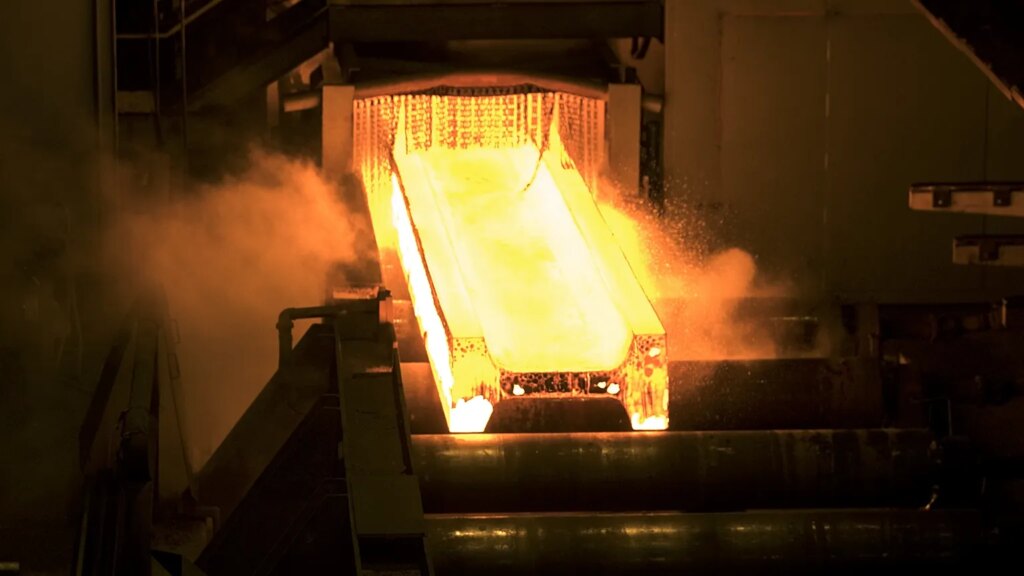
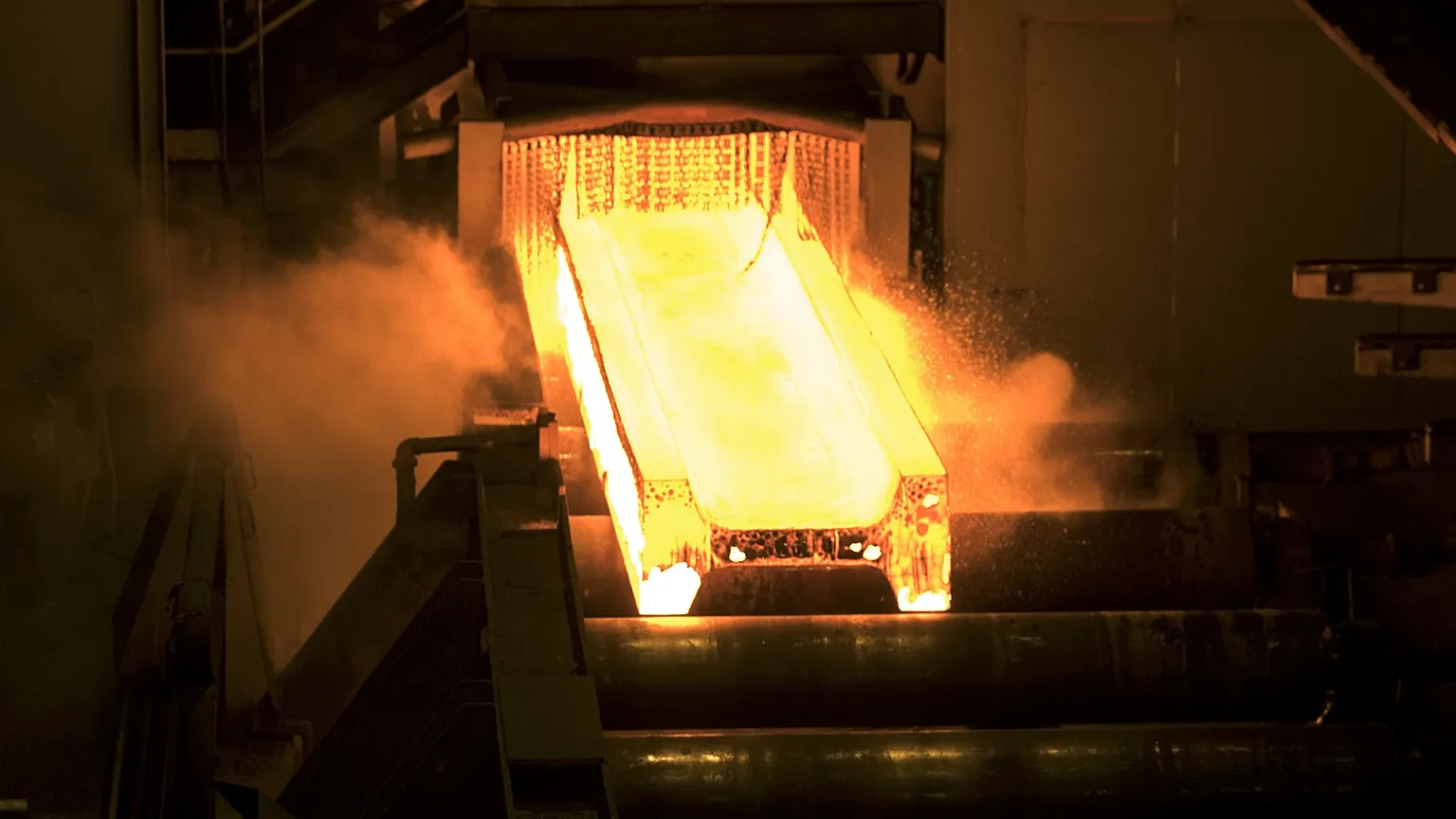
In the presence of French President Emmanuel Macron, the steel company confirmed the erection of its biggest electric furnace in Europe at the Dunkirk plant, located in northern France.
In May 2024, ArcelorMittal revealed plans to invest in an electric arc furnace at its Dunkirk facility and officially validated the investment on 10 February 2026. The announcement, attended by French President Emmanuel Macron, European Commissioner Stéphane Séjourné, and several ministers, involves a total projected investment of €1.3 billion.
The enterprise states that this initiative will enable the establishment of an electric arc furnace capable of producing two million tonnes annually, expected to be operational by 2029. The objective is to manufacture steel without using coal, the combustion of which releases considerable CO₂ emissions and contributes to climate change.
This investment is part of a broader strategy announced by the company to convert several of its European steel plants from coal-based to hydrogen-based operations. The Dunkirk site constitutes a major pollution source, responsible for roughly 15% of CO₂ emissions from French industry.
Up to half of the investment will be financed via the energy savings certificate scheme (CEE), a government-regulated program obliging energy suppliers to support projects that reduce energy consumption.
Investment postponed
Despite early announcements, ArcelorMittal hesitated to finalize its investment commitment. Initially in May 2024, the steelmaker indicated confirmation would arrive «after the summer.»
That confirmation eventually came over eighteen months later. In November 2024, the company explained the delay as a wait for “additional measures to protect European steel prior to committing to any investment.”
Some of these measures have since been implemented, particularly with the Carbon Border Adjustment Mechanism (CBAM) entering its final phase on 1 January 2026.
«The choice to construct an electric arc furnace at ArcelorMittal Dunkerque, enabling large-scale production of low-carbon steel for our customers, became feasible thanks to the current conditions supporting this project’s realization,» stated Geert van Poelvoorde, CEO of ArcelorMittal Europe. «The new tariff quota will mitigate unfair imports into the EU, while the MACF is now active to establish a fairer environment for European producers.»
Long-awaited by Europe’s steel producers, CBAM is designed to impose carbon pricing on goods imported into the EU customs area, matching that faced by European manufacturers.
Backing from the French government
The initiative also secured backing from the French government. In 2023, ArcelorMittal received confirmation of €850 million in subsidies aimed at decarbonizing its Dunkirk and Fos-sur-Mer facilities.
Another plant not forgotten by Emmanuel Macron. During his visit to Dunkirk, the French president urged the company to “complete the journey” and “build the second furnace, continue with hydrogen,” while also offering “a future for Fos-sur-Mer,” ArcelorMittal’s other key French site.
The official greenlight of the €1.3 billion investment appears to have reassured the president that France’s leading steelmaker, and Europe’s largest, plans to stay in the country.
However, this reassurance is not universally shared. Gaétan Lecocq, a CGT union representative from Dunkirk, expressed that he is “waiting for concrete actions” and “a definite timeline” for the electric furnace’s construction. When ArcelorMittal initially announced its investment in 2024, it also confirmed plans to proceed with cuts to 638 jobs in France.