

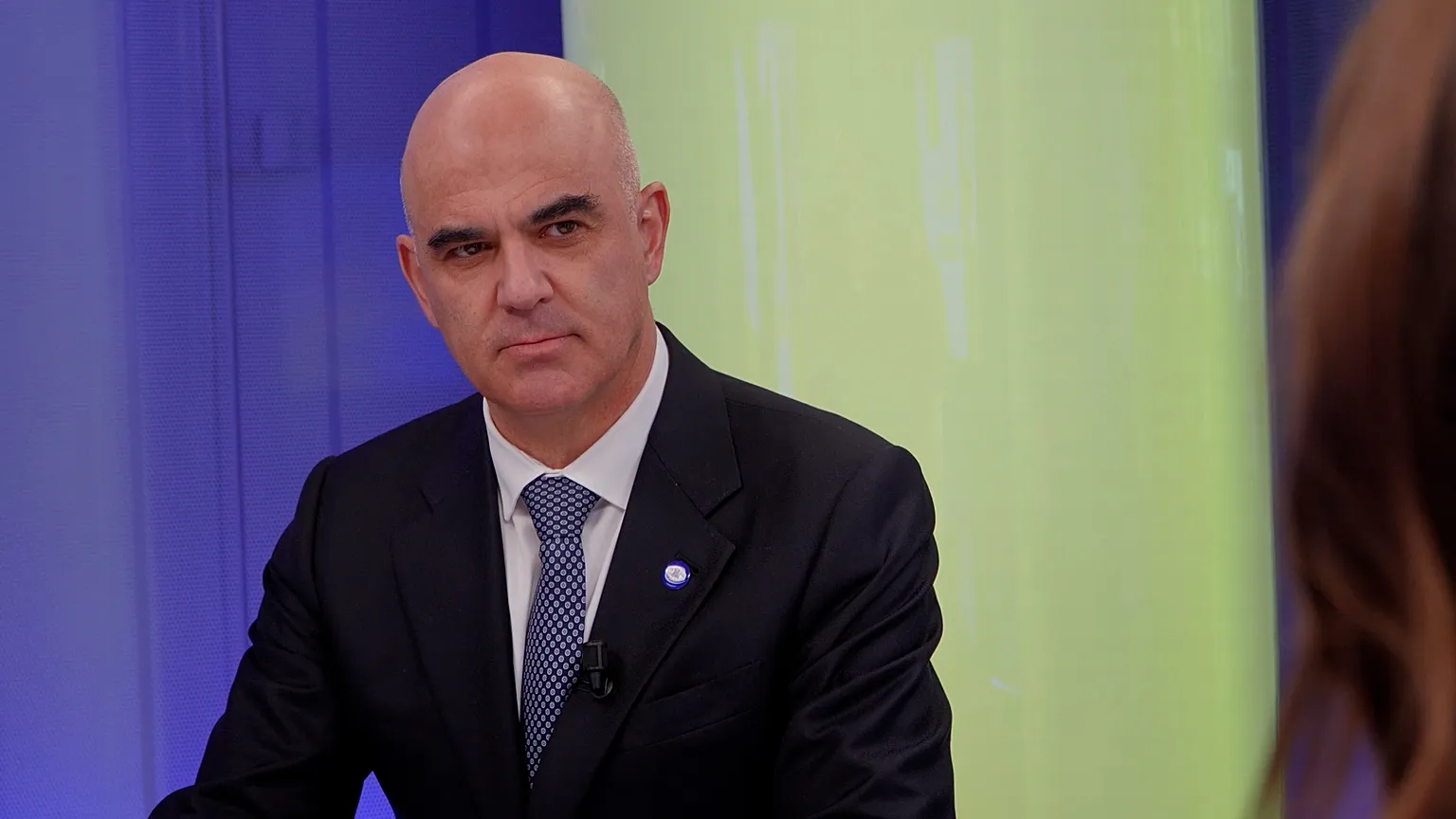
The leader of Europe’s main human rights organisation cautioned that revisiting human rights provisions to address migration issues could open a dangerous Pandora’s box.
Alain Berset, Secretary General of the Council of Europe (CoE), told Euronews that reconsidering the European Convention on Human Rights (ECHR) to modify protections for migrants may encourage governments to diminish human rights in other contexts.
His statements follow appeals from several members of the Strasbourg-based institution — the foremost human rights body on the continent — for increased flexibility in migration management, especially regarding the deportation of foreign offenders and undocumented migrants.
In May 2025, nine EU countries signed an open letter requesting such a review, which garnered wide backing across CoE members.
Nonetheless, Berset warned of the perilous precedent this could create for the rollback of human rights protections.
“The actions taken now will be closely watched,” Berset commented during an interview on Euronews’ programme 12 Minutes With. “What happens with migration could prompt other nations to initiate debates on altering other (human) rights.”
He added that in ongoing talks with proponents of the review, including Belgium, Denmark, and the United Kingdom, he advises proceeding with caution.
“It is essential to be very cautious. Other countries might be ready to launch similar debates concerning (different) rights, and consensus might not be reached,” Berset clarified.
The Convention is an international treaty aimed at protecting human rights across Europe, ratified by all 46 member states, including the 27 EU nations. Individuals whose rights have been infringed upon under the convention by a member state can lodge complaints with the European Court of Human Rights.
Critique of the approach
During the Euronews interview, Berset acknowledged the concerns of CoE members but reiterated his earlier critique regarding the manner in which countries requested the reinterpretation.
Two days after the open letter’s release, he stated, “Debate is important, but politicising the Court is not acceptable.”
“Migration is clearly a significant issue in most member states. If it is an issue, it makes sense to have forums at the political level where this can be addressed,” Berset noted.
More broadly, he described the ECHR as a “living instrument,” asserting that it is natural for the framework to undergo discussions and potential adjustments.
“However, I was clear that the approach they took is incorrect. Applying political pressure on the court is neither possible nor appropriate.” He likened this to a government pressuring national courts when dissatisfied with their decisions.
‘No consensus’
Understanding member states’ concerns, Berset expressed his intent to tackle them constructively and effectively.
To that end, he organised an informal gathering of CoE member states’ justice ministers in December 2025 to discuss migration-related issues and the ECHR.
At this meeting, CoE ministers proposed drafting a political declaration on matters concerning migration and the ECHR. The declaration is slated for adoption at the Committee of Ministers’ next formal session in May 2026.
While support for reform has increased among members, there is still no consensus on what amendments should be implemented or even whether any should be pursued.
“Member states have to make a decision. Currently, there is no agreement whatsoever that further steps are needed,” he stated. “We must, as much as possible, seek consensus and then determine what course to take.”