
Also in this newsletter: EU and Australia close to finalising a free trade agreement, the digital euro faces a stalemate, and the EU and UK appear ready to strengthen their relationship.
Good morning. This is Mared Gwyn reporting from Brussels.
US President Donald Trump stated overnight that negotiations with Iran aimed at reducing tensions in the Gulf are ongoing, despite the US military having shot down an Iranian drone that approached its aircraft carrier in the Arabian Sea. Axios reports today that the talks are scheduled for Friday in Oman after Tehran requested relocating them from Turkey. More.
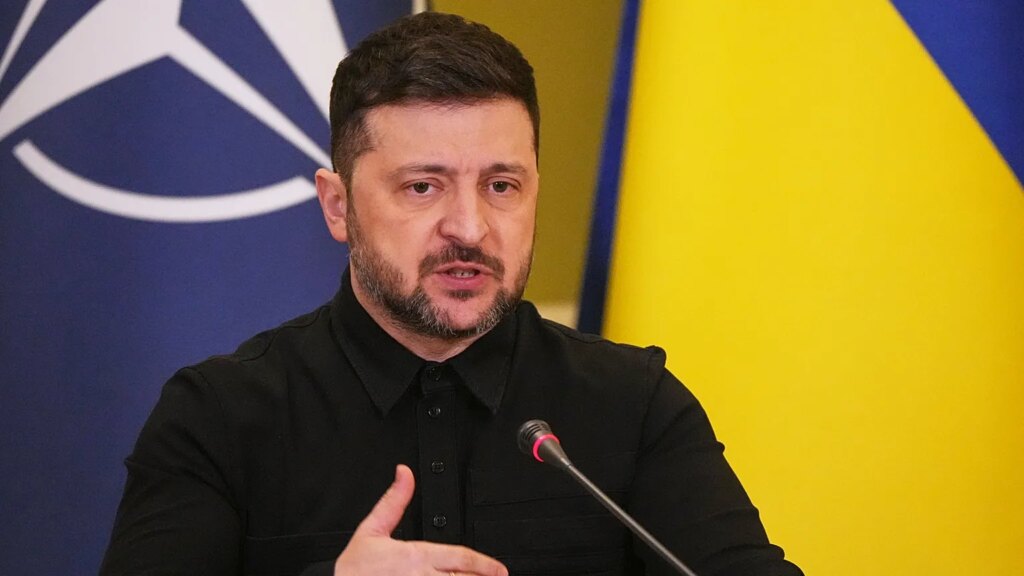
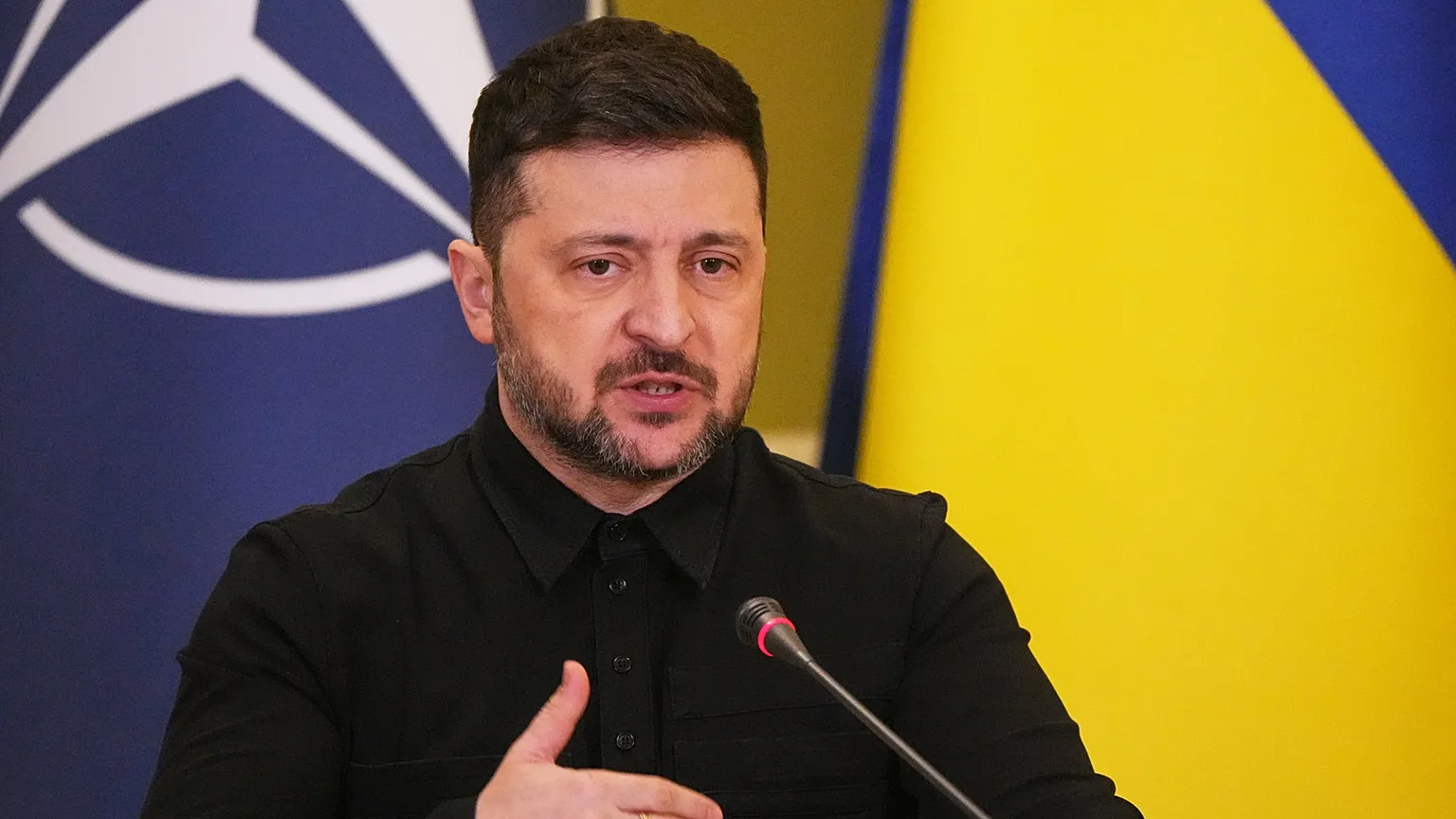
Discussions regarding a peace agreement for Ukraine are also expected to resume later today in Abu Dhabi, with President Zelenskyy indicating last night that his delegation’s mandate has been revised following Russia’s recent intense bombing of Ukrainian cities. Our main story below provides further details.
In other EU news, European Commission President Ursula von der Leyen is anticipated to travel to Australia later this month to finalise a long-delayed trade agreement, according to Australian media reports from overnight.
Sources close to the matter told Euronews that von der Leyen might visit Australia after the Munich Security Conference concludes on February 15, marking another success after her recent signing of deals with Latin America’s Mercosur bloc and India.
Negotiations on a free trade agreement between the two parties collapsed in 2023 after Canberra accused Brussels of failing to offer sufficient access to its beef, sheep, dairy, and sugar markets.
Later today, Von der Leyen will convene with her team of Commissioners in Leuven, Belgium, for a meeting officially focused on competitiveness but also intended to alleviate internal strains within the Commission, several officials told Euronews’ Maria Tadeo and Maīa de la Baume.
According to the Commission’s official schedule, von der Leyen will lead a “college seminar” on enhancing the EU’s lagging competitiveness. However, two officials informed Euronews that the gathering will also discuss the Commission’s “working methods,” with one describing it as a chance to express “frustrations” among Commissioners. A key issue is the frequent belated submission of legislative proposals to senior officials.
Our correspondent Vincenzo Genovese reports this morning that the European Parliament’s international trade committee is set to decide today whether to reintroduce a critical vote on the EU-US trade agreement onto its agenda.
The pact, agreed last summer, was indefinitely postponed by parliamentarians last month amid Donald Trump’s threats concerning Greenland. Following renewed US diplomatic efforts, there are growing calls within parliament to promptly reinstate the agreement.
In other parliamentary news, EU lawmaker and former army general Roberto Vannacci has exited the Italian far-right party The League and, subsequently, the Patriots for Europe (PfE) group in the European Parliament, Vincenzo reports.
“I will continue independently, alongside all who strive to leave their children a country improved beyond what they inherited,” Vannacci posted on social media. Recently, he registered the trademark for National Future («Futuro Nazionale»), a political movement expected to challenge the League and other far-right parties in Italy.
The League’s leader Matteo Salvini expressed feeling «disappointed and embittered» by Vannacci’s choice. No additional MEPs from the League are anticipated to follow.
Ukraine peace negotiations resume as Macron hints at preparing Europe-Russia dialogue
Delegations from Ukraine, Russia, and the US are scheduled to commence a second round of trilateral talks later today in Abu Dhabi, just one day after Russia launched its most extensive missile assault against Ukraine this winter, our correspondent Sasha Vakulina reports.
Volodymyr Zelenskyy stated on Tuesday that the mandate of Ukraine’s delegation will be “adjusted” in reaction to the bombardment, which he said confirmed that “positions in Moscow remain unchanged: they persist in betting on war and the destruction of Ukraine, disregarding diplomacy.”
Although all parties described the earlier round of talks as “constructive,” negotiations remain distant from a concrete agreement, with the future of Ukraine’s territories continuing to be the primary obstacle. Sasha provides more information.
Meanwhile, efforts continue in Brussels to reach a consensus on the EU’s €90 billion loan for Ukraine. The European Commission aims to disburse the first funds by April, but a “Made In Europe” clause mandating that the funds predominantly support Ukraine’s and Europe’s domestic defense sectors has become a contentious point among member states.
EU governments are also awaiting the Commission’s proposal for a fresh set of sanctions against Russia, designed to increase economic pressure and prevent sanctions evasion.
My colleague Jorge Liboreiro reports that Finland and Sweden have advocated banning EU entities from providing maritime services—such as shipping and insurance—to Russian oil tankers, even those complying with the G7 price cap. Brussels aims to have the sanctions approved by 24 February, which marks four years since the conflict began. Both Ursula von der Leyen and António Costa will visit Ukraine on that date to demonstrate their support and solidarity, their offices have confirmed.
Meanwhile, French President Emmanuel Macron indicated on Tuesday that “technical discussions” are underway to facilitate direct negotiations between Europe and Russia regarding the war in Ukraine.
This prospect appears to be causing divisions among EU leaders, with Germany’s Friedrich Merz advocating caution earlier this week, while neighboring Austria supports the approach.
“While Europe’s security matters are discussed, Europe itself is absent from the table. Europe is strongest when it speaks with a unified voice,” Austrian Foreign Minister Beate Meinl-Reisinger told Jorge in a statement. “That is why I call for an EU chief negotiator with a clear mandate to represent Europe’s stance and define red lines. We require a single European approach, not 27 separate national tracks.”
Speaking on our morning show earlier, Moldova’s Deputy Prime Minister and Foreign Minister Mihai Popșoi suggested that talks between Europe and Russia should be contingent upon a ceasefire.
“As a diplomat, it would be unusual for me to oppose dialogue, but under circumstances where rockets continue to fly, children are dying, and people face freezing conditions each morning, a sound basis for dialogue would be to halt these actions,” Minister Popșoi told Europe Today.
Exclusive: Digital euro encounters political impasse in Brussels
Members of the European Parliament are facing difficulties reaching a consensus on the design of the digital euro, threatening the project’s legislative advancement, according to three sources aware of the discussions and documents reviewed by Euronews’ Eleonora Vasques.
During Tuesday’s meeting, MEPs overseeing the dossier highlighted profound disagreements about the fundamental nature of the digital euro, making progress very challenging, according to an email exchange seen by Euronews.
“We agreed to disagree,” a source familiar with the matter told Euronews, summarizing the discussion.
The agenda from Tuesday’s meeting shows that European People’s Party (EPP) rapporteur Fernando Navarrete, leading the file in Parliament, proposed a new concept called “e-cash” for the digital euro.
Conversely, the Socialists and Democrats (S&D) and Renew Europe groups support the European Commission’s proposal, which envisions users holding retail accounts on the ECB’s ledger and utilizing the digital euro both online and offline.
“Europe must control and own its critical infrastructure. At a time of unprecedented geopolitical shifts, as the rules-based international order weakens, payment sovereignty must be grounded in shared infrastructure,” S&D shadow rapporteur Nikos Papandreou told Euronews.
Read Eleonora’s full report.
EU and UK prepare to escalate talks on closer relations 10 years after Brexit vote
Approaching the tenth anniversary of the Brexit referendum, and following years of contentious rhetoric, a rapprochement between London and Brussels appears firmly underway.
Negotiations aimed at reducing trade checks and barriers are expected to accelerate following a meeting between UK Chancellor Rachel Reeves and EU trade and economic chiefs Maroš Šefčovič and Valdis Dombrovskis in Downing Street on Monday.
Dombrovskis told the BBC that the EU is “ready to engage” in talks on reintegrating the UK into its customs union—a concept initially dismissed by UK Prime Minister Keir Starmer, but which he now faces increasing internal pressure to reconsider from cabinet colleagues.
Since his 2024 re-election, Starmer has balanced pursuing a “reset” with the EU to expand trading and economic opportunities while avoiding overturning Brexit. This balancing act is now more complex, with the right-wing populist Reform UK, led by prominent Brexiteer Nigel Farage, leading opinion polls.
Brussels and London are also aiming for an agreement to deepen defence cooperation and to allow Ukraine to purchase necessary military equipment using the EU’s recently agreed €90 billion loan, two-thirds of which is designated for military aid—including British-manufactured systems.
Negotiations to enable the UK’s full participation in the EU’s €150-billion defence loan scheme (SAFE) collapsed last November due to disagreements over London’s required financial contribution.
Euronews understands these talks failed over a significant difference: while the EU’s final offer was about €2 billion, the UK estimated its contribution should be just over €100 million.
Alice Tidey and I have the full details.
Additional updates from our newsrooms
Paraguay’s President urges Euronews that ‘Mercosur implementation must proceed without delay’. In an interview, Santiago Peña warned that postponing the enactment of the negotiated trade deal would constitute a “mistake.” More from Maria Tadeo.
Spain to ban social media platforms for children under 16. Prime Minister Pedro Sánchez announced on Tuesday, at the World Governments Summit in Dubai, plans to prohibit social media use by children under 16, describing these platforms as a “failed state.” Pascale Davies provides the details.
Portugal braces for a second significant storm as authorities advise preparing emergency supplies. Less than a week after Depression Kristin caused six fatalities and widespread damage, Portugal is preparing for another powerful storm, with officials urging residents to stockpile provisions sufficient for at least 72 hours. Inês dos Santos Cardoso has more.
Seif al-Islam Gadhafi killed in home in western Libya. The son of former Libyan ruler Moammar Gadhafi was assassinated Tuesday at his residence in the western town of Zintan. Sources close to the family report four masked gunmen raided the home to commit the “heinous act.” More.
Also on our radar
- European Commission President Ursula von der Leyen meets Kristalina Georgieva, Managing Director of the International Monetary Fund (IMF)
- European Council President António Costa meets UNRWA High Commissioner Philippe Lazzarini
That concludes today’s update. Maria Tadeo, Jorge Liboreiro, Sasha Vakulina, Vincenzo Genovese, Eleonora Vasques, and Alice Tidey. Remember to sign up to receive Europe Today in your inbox every weekday at 08:30.