
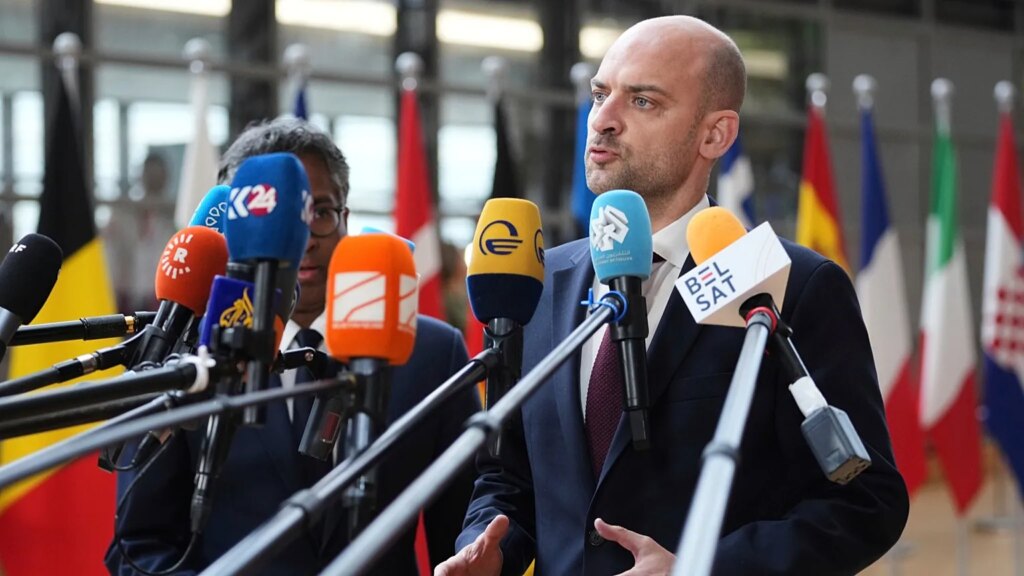
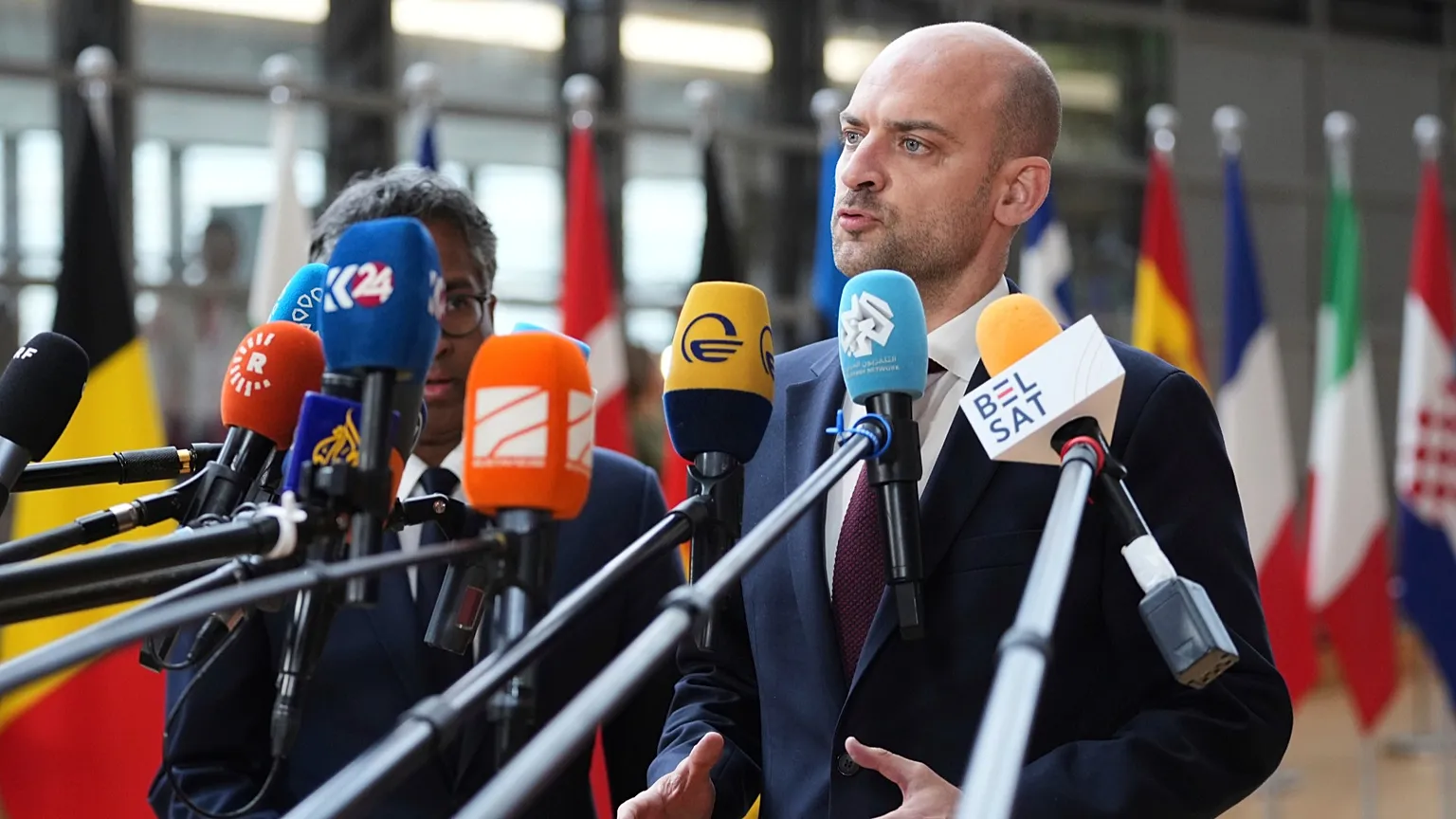
Although reports indicate large-scale casualties amid Iran’s suppression of recent protests, France remains cautious about including the Islamic Revolutionary Guard Corps on the EU’s terror list, arguing that such a move would have minimal impact given the sanctions already in place.
Support is growing across the EU to classify Iran’s Islamic Revolutionary Guard Corps (IRGC) as a terrorist entity, particularly after Italy reversed its position on Monday and committed to championing the designation.
Diplomatic sources reveal that Rome was previously hesitant to endorse the classification but shifted its stance upon receiving updated information revealing the extent of Iran’s forceful response to protests.
Foreign Minister Antonio Tajani stated on X Monday that he intends to propose the measure «in coordination with other partners,» emphasizing that “the sudden civilian casualties during the protests necessitate a firm reaction.”
On Tuesday, the US-based Human Rights Activists News Agency, which confirms each fatality through a network of activists inside Iran, reported that at least 5,777 demonstrators have been killed.
However, Time magazine cited two senior officials from Iran’s health ministry on Sunday, who claimed that over 30,000 people died in street conflicts throughout Iranian cities. The Guardian, on 7 January, reported a similar figure of 30,000 deaths, referencing its sources, and noted a significant number of individuals had disappeared.
Facing the rising civilian death toll, the majority of the EU’s 27 foreign ministers are anticipated to endorse the proposal, alongside a fresh set of sanctions against Iran, during the Foreign Affairs Council meeting in Brussels on Thursday.
«Primarily symbolic»
The IRGC is accused of leading Iran’s brutal crackdown on protests, providing arms to Russia, firing ballistic missiles at Israel, and maintaining alliances with armed groups like Hezbollah, Hamas, and Yemen’s Houthi rebels.
The United States, Canada, and Australia have already designated the IRGC as a terrorist group. Various EU lawmakers and governments, including the Netherlands, have repeatedly called on the bloc to adopt the same stance.
Despite increasing support, unanimous agreement is required to add an organisation to the EU terror list, and diplomats identify France as the chief impediment.
French authorities contend that severing diplomatic relations with Iran’s regime entails considerable risks and that listing the IRGC would be mostly symbolic since many of its members are already under EU sanctions for human rights violations, nuclear proliferation, and military assistance to Russia’s war in Ukraine.
“We are not excluding the possibility,” Pascal Confavreux, spokesman for France’s foreign affairs ministry, recently told reporters. “This matter requires discussions among Europeans, and experts need to assess it.”
He also highlighted that although the current sanctions might be deemed insufficient, they already target key IRGC leaders.
For example, the EU has sanctioned Mohammad Pakpour, commander of the IRGC Ground Forces, for his participation in the suppression of the November 2019 protests, during which security forces killed over 100 protesters following weeks of demonstrations over fuel price hikes.
Diplomats also underline France’s cautious approach after the recent release of two French nationals, Cécile Kohler and Jacques Paris, who had been imprisoned in Iran for more than three years. Though freed, they remain at the French embassy in Tehran and have not yet returned to France.
In contrast, Italian journalist Cecilia Sala was freed by Iran a year ago and has since returned home.
Preserving diplomatic avenues
A senior official from the EU’s diplomatic service, the European External Action Service (EEAS), informed MEPs this week that cutting ties with Iran’s current leadership—including the IRGC—could cause more harm than benefit.
“Keeping communication channels and diplomatic engagement with Iran open must remain part of our strategy,” the EEAS official said. “This is crucial to protect our interests and to facilitate dialogue, especially regarding European citizens arbitrarily detained in Iran, as well as numerous political activists relying on our support.”
“This does not imply normal diplomatic relations with Iran,” added the EEAS official, “yet it has never stopped us from applying significant pressure, including through stringent sanctions aimed at influencing Iran’s conduct and policies.”
Legal limitations also influence the decision: EU regulations mandate that an entity can only be added to the terror list after a prior ruling from a competent authority in an EU member state or a third country.
Prospects of surpassing this obstacle improved in March 2024, when Germany’s Düsseldorf Higher Regional Court found that a 2022 synagogue attack in Bochum was orchestrated by an Iranian state agency. This ruling raised hopes that the EU might now have adequate legal grounds to proceed cautiously.