
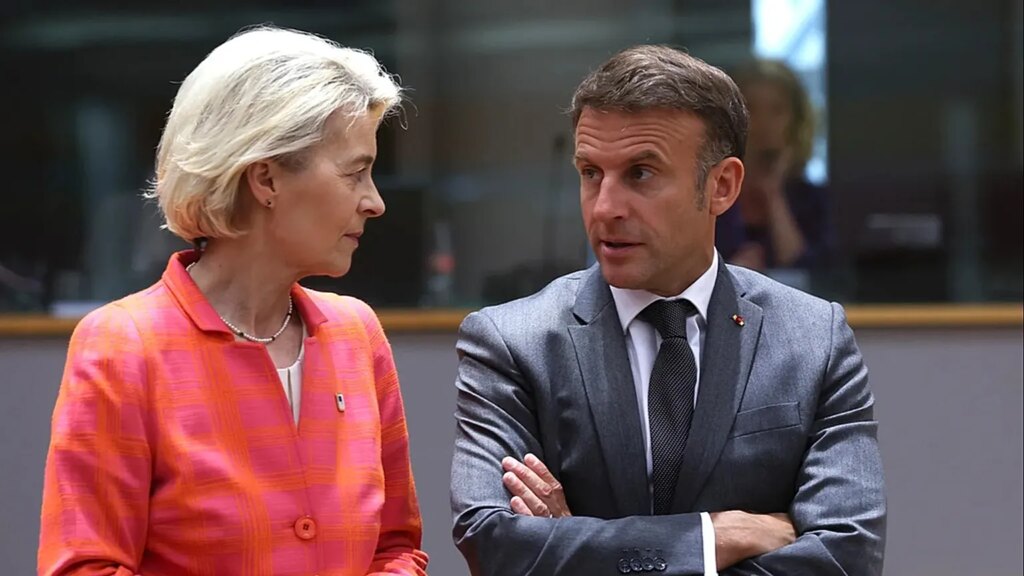
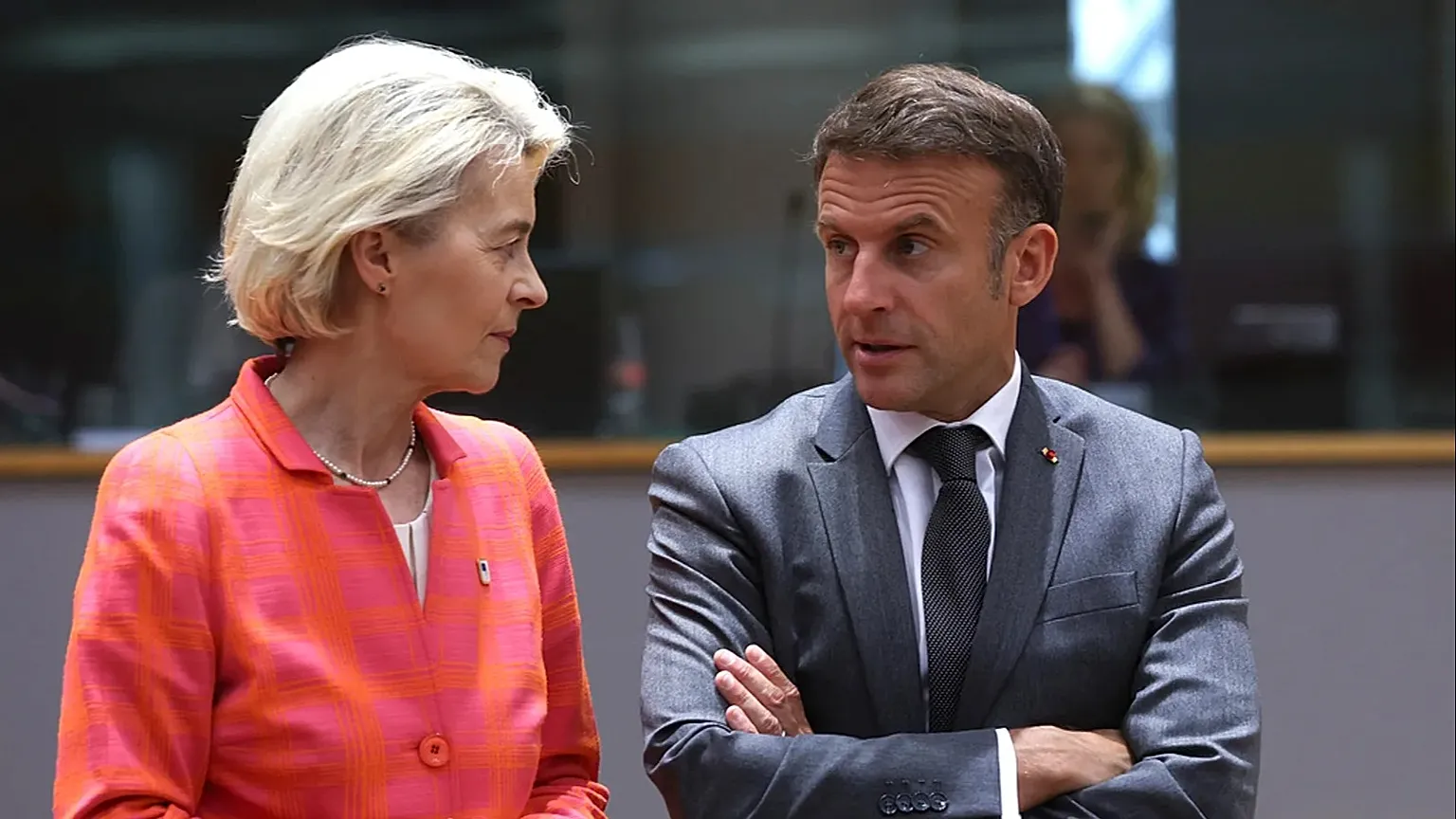
The inability of the French president to form a blocking minority against the Mercosur deal highlights how his internal political struggles are diminishing his influence in Brussels. Conversely, European Commission President Ursula von der Leyen and Germany have achieved a key success.
France has been engulfed in political instability since Macron dissolved the National Assembly in June 2024 – and on Friday, Paris was effectively marginalized at a pivotal moment for the European Union, as it failed to prevent the Mercosur agreement.
Following weeks of farmers’ demonstrations and facing the threat of a no-confidence motion domestically, Macron decided to oppose a pact brokered by the European Commission after 25 years of negotiations with Mercosur countries Argentina, Brazil, Paraguay, and Uruguay.
Should it be enacted, this accord would establish a free-trade area encompassing 700 million people, opening additional markets for EU companies at a time when the bloc’s largest trading partner, the US, adopts a more inward-focused stance.
The countries supporting the pact, spearheaded by Germany, Spain, and the Commission itself, demonstrated determination to address rising global economic pressures by broadening trade relations beyond the US and China despite protests from farmers, who for years have cautioned that the deal could expose them to unfair competition from Latin American imports.
France, in particular, intensified these concerns, exerting pressure on the Commission, which holds exclusive authority over EU trade policy.
According to an EU diplomat who spoke to Euronews under anonymity, France on Friday expressed gratitude to the Commission for concessions made to farmers in the past year but ultimately justified its ongoing opposition to the pact citing political motivations.
The signing ceremony between the EU and the Mercosur nations is scheduled for January 17 in Asunción, Paraguay, sources familiar with the issue told Euronews.
As anticipated, Italy – whose support France needed in order to form a blocking minority of at least four member states representing 35% of the EU population – endorsed the agreement.
However, Italy also secured concrete benefits for its farmers, obtaining all the guarantees France had sought, such as early access to €45 billion from the Common Agricultural Policy and a retroactive suspension of the EU carbon border tax on fertilizers.
For von der Leyen, the result represents a clear victory as well.
The Commission championed the deal for a year, overcoming obstacles to reach both technical and political consensus. Von der Leyen was persistent despite opposition from Paris, which previously would have been sufficient to compel the Commission to retreat in the face of French government backlash.
Former Commission President Jean-Claude Juncker famously remarked, «La France…C’est la France!», referencing Paris’ past ability to impose its will under EU indulgence. Those times appear to be fading.
Von der Leyen capitalizes on Macron’s vulnerability
Macron’s unexpected move to dissolve the National Assembly in June 2024 surprised European allies and shifted the power dynamic in Brussels. Von der Leyen, now starting her second term leading the EU executive, has moved to marginalize the French president despite his strong support for her appointment in 2019.
Only three months after the dissolution, she leveraged Macron’s weakened state to remove Thierry Breton, a prominent French commissioner considered overly influential.
Breton was the mastermind behind two significant EU digital regulations, the Digital Markets Act and the Digital Services Act, and a steadfast advocate for French interests in Brussels as well as a critical voice within von der Leyen’s College of Commissioners, where dissent is rarely tolerated.
Nonetheless, Macron agreed to replace him with one of his closest allies, Stéphane Séjourné, a former Renew leader in the European Parliament who served as the French foreign minister from January to September 2024.
In Brussels, Séjourné is seen as less influential compared to his predecessor. While Breton’s portfolio included digital policy, defense, and space, Séjourné now manages a more limited portfolio focused on industrial strategy and the single market.
France’s declining influence has not gone unnoticed by diplomats from other countries, who have grown accustomed to witnessing the bloc’s second-largest member paralyzed by political fragmentation and internal conflicts.
The government’s difficult efforts to curb rising debt and deficits have led diplomats to joke that France has become “the most frugal member state” – a sharp departure from its previous tradition of substantial public spending.
Good ideas, unfortunate timing for Emmanuel Macron
The French president now occupies a challenging position.
Paris retains sufficient influence to affect major discussions, especially regarding the “Made In Europe” preference, long promoted by Macron and now broadly supported by other leaders as a counterbalance to foreign competition.
In foreign policy, Macron has continued to influence Europe’s major debates. He attracted attention as the first European leader to propose deploying national forces to Ukraine; initially considered unrealistic, the idea gained renewed momentum after Donald Trump’s return to the White House altered US policy toward Russia.
The concept of ground deployment was soon embraced by British Prime Minister Keir Starmer, and since then the two leaders have jointly led the “Coalition of the Willing” to develop security guarantees for Ukraine.
Earlier this week, both Starmer and Macron signed a declaration of intent with Ukrainian President Volodymyr Zelenskyy to create a multinational force should a ceasefire occur.
Still, the Mercosur agreement highlights his vulnerabilities where it affects him most – domestically.
Jorge Liboreiro contributed reporting.