
In a daring initiative, the EU resolved to indefinitely freeze Russian sovereign assets, resisting external demands to release funds before Moscow consents to pay war reparations to Ukraine.
During the very week when Donald Trump dismissed European nations as «decaying» and their leaders as «weak,» the EU responded with decisive strength.
The European Union, in a bold step on Thursday, chose to invoke an emergency clause within its treaties to indefinitely freeze the Russian Central Bank’s assets, which amount to a substantial €210 billion throughout the bloc.
This action has simultaneously reinforced the EU’s strongest bargaining power, thwarted outside interference, and safeguarded the funds from being exploited by the Kremlin’s war efforts.
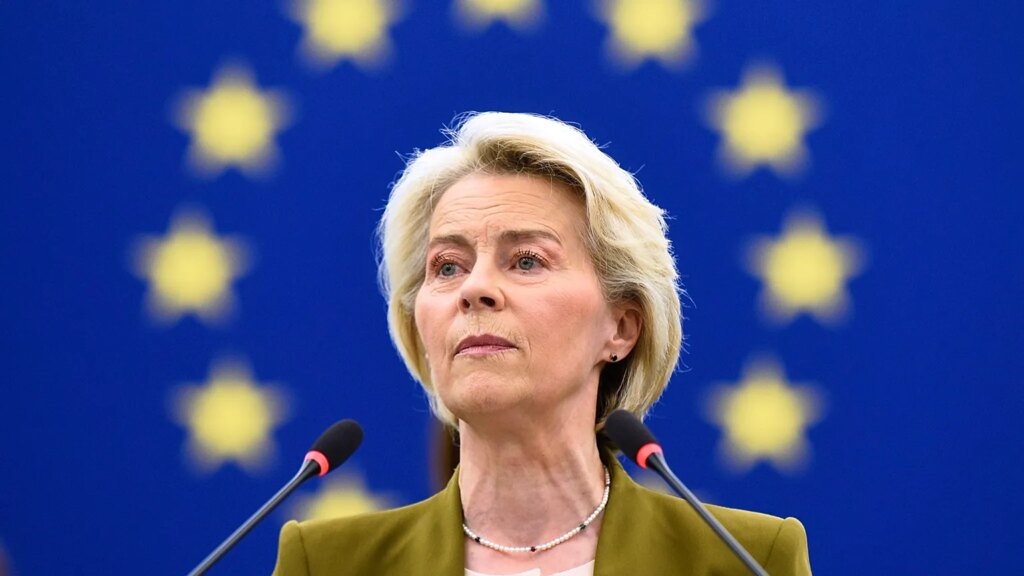
«We are transmitting a firm message to Russia that as long as its brutal war of aggression endures, its financial burden will only increase,» declared Ursula von der Leyen. «This sends a resolute signal to Ukraine: Our courageous neighbour will be even stronger both on the battlefield and in negotiations.»
The largest portion, €185 billion, is held by Euroclear, a central securities depository located in Brussels, while the remaining €25 billion is distributed among banks in five member countries.
Previously, these funds were frozen under the conventional sanctions framework, which required renewal every six months through unanimous consent among member states.
Although all sanction packages against Russia have been renewed to date, the process has grown increasingly precarious. Earlier this year, Hungary threatened twice to veto the renewal, sparking urgent diplomatic efforts to prevent the collapse of sanctions painstakingly enforced since February 2022.
This challenging experience lingered in memory when, months later, the European Commission introduced an ambitious plan to reroute Russian assets into a zero-interest reparations loan for Ukraine.
Among many uncertainties about this unprecedented loan was the crucial question of how to shield the €210 billion fund from unwanted vetoes or accidental releases. The paramount concern was that freeing these assets suddenly could trigger a liquidity crisis at Euroclear and destabilize the eurozone.
A clever adjustment
Initially, the Commission proposed activating Article 31.2 of the treaties to change the sanction renewal mechanism from unanimity to qualified majority voting. This article focuses on «strategic interests and objectives», so officials believed this rationale was defensible.
Nevertheless, Article 31.2, also known as the «passerelle clause,» carries a paradoxical condition: any member state can oppose the change citing «vital and declared reasons of national policy.» In other words, unanimity remains necessary to bypass unanimity.
This proposal, introduced in September, was quietly dropped, and attention shifted to another clause: Article 122, which permits member states to act «in a spirit of solidarity» with measures deemed «appropriate to the economic situation».
Article 122 offers two key practical benefits: it bypasses the European Parliament’s consent and requires only a qualified majority, enabling faster response times and avoiding disruptive vetoes. Prior to this, Article 122 had mainly been applied to economic crises, especially during the COVID-19 pandemic and the 2022 energy crisis.
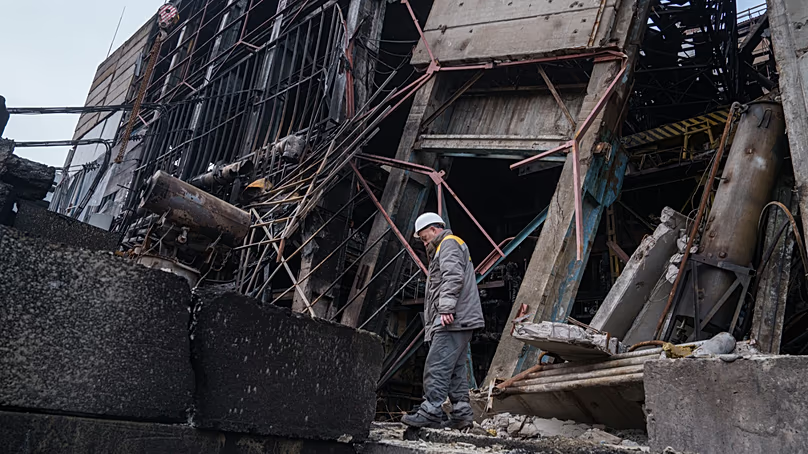
In March, the Commission broadened the understanding of economic emergencies by invoking Article 122 to implement a €150 billion loan-for-loan defence scheme, citing an «unprecedented security threat» to the EU. (This move sparked intense backlash from Parliament and ultimately triggered a lawsuit.)
Last month, the Commission extended this logic to argue that Russia’s ongoing war has caused a «serious economic impact» demonstrated by supply chain disruptions, increased uncertainties, elevated risk premiums, reduced investments and consumer spending, alongside numerous hybrid assaults including drone attacks, sabotage, and disinformation campaigns.
Some legal scholars criticized this stance, pointing out that the comprehensive invasion is approaching its fourth year. Belgian Prime Minister Bart De Wever, who opposes the reparations loan, also questioned whether a genuine EU-wide emergency exists.
Nonetheless, Europe’s clear economic difficulties combined with the broad language of Article 122 and its limited case law granted the Commission sufficient margin to proceed.
«We are confident the criteria regarding economic harm needed to justify this treaty provision have been fulfilled well beyond the threshold,» stated Valdis Dombrovskis, European Commissioner for the Economy, responding to critics.
High geopolitical stakes
Following the approval of this decision, which garnered wide backing, member nations are strictly forbidden from returning any confiscated assets to the Russian Central Bank.
This €210 billion sum will be released only if Russia halts its war of aggression against Ukraine, agrees to pay reparations (which Moscow has categorically rejected), and ceases actions that threaten Europe’s overall economy.
Releasing the funds will require a qualified majority vote.
Practically, this sets an exceptionally high threshold unlikely to be met anytime soon, if ever, effectively freezing the assets indefinitely.
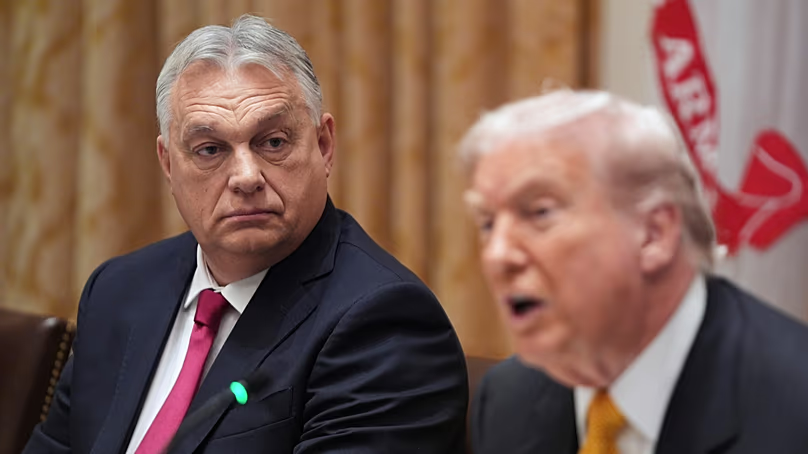
Hungary’s Viktor Orbán, known for wielding veto power, swiftly condemned invoking Article 122 as «Brusselian dictatorship» and pledged that Hungary would do «everything possible to reinstate lawful order,» hinting at legal challenges.
Meanwhile, officials and diplomats welcomed the outcome. For many, it provides a promising example of EU foreign policy functioning without the paralysis of unanimity, which frequently hampers coordinated action and renders the bloc a laggard on the global stage.
«It is positive that a legal mechanism was found to end the six-months’ drama over whether sanctions and asset freezes can be extended,» commented a senior diplomat, «because previously we faced blackmail risk owing to one party’s whims in Budapest. Now, the assets can be securely immobilised.»
This legal path allows the EU to block any attempts to prematurely free the sovereign assets, as proposed in the leaked 28-point peace plan by the US and Russia.
The plan controversially proposed splitting the assets into two distinct investment funds to benefit both Washington and Moscow commercially, which contradicts the accountability approach Western allies have supported so far.
The revelation of the 28-point plan shocked EU leaders, prompting a rush to unite and openly criticize the White House for seeking to make European decisions without European involvement.
Initially, leaders held summits and issued statements but achieved no concrete results. German Chancellor Friedrich Merz wrote an op-ed urging Europe to maintain its stance.
«If we take this seriously, we must not allow non-European states to decide the fate of an aggressor’s frozen financial resources within our legal jurisdiction and currency,» he stated.
«The current decisions will shape Europe’s destiny.»
By securing the Russian assets, Europe is now prepared to assert its position.