
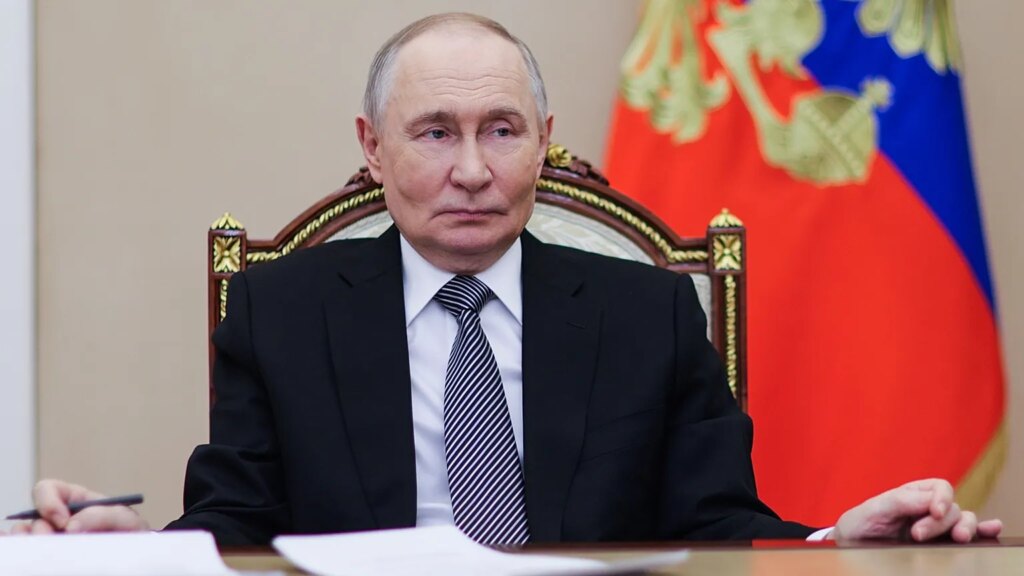
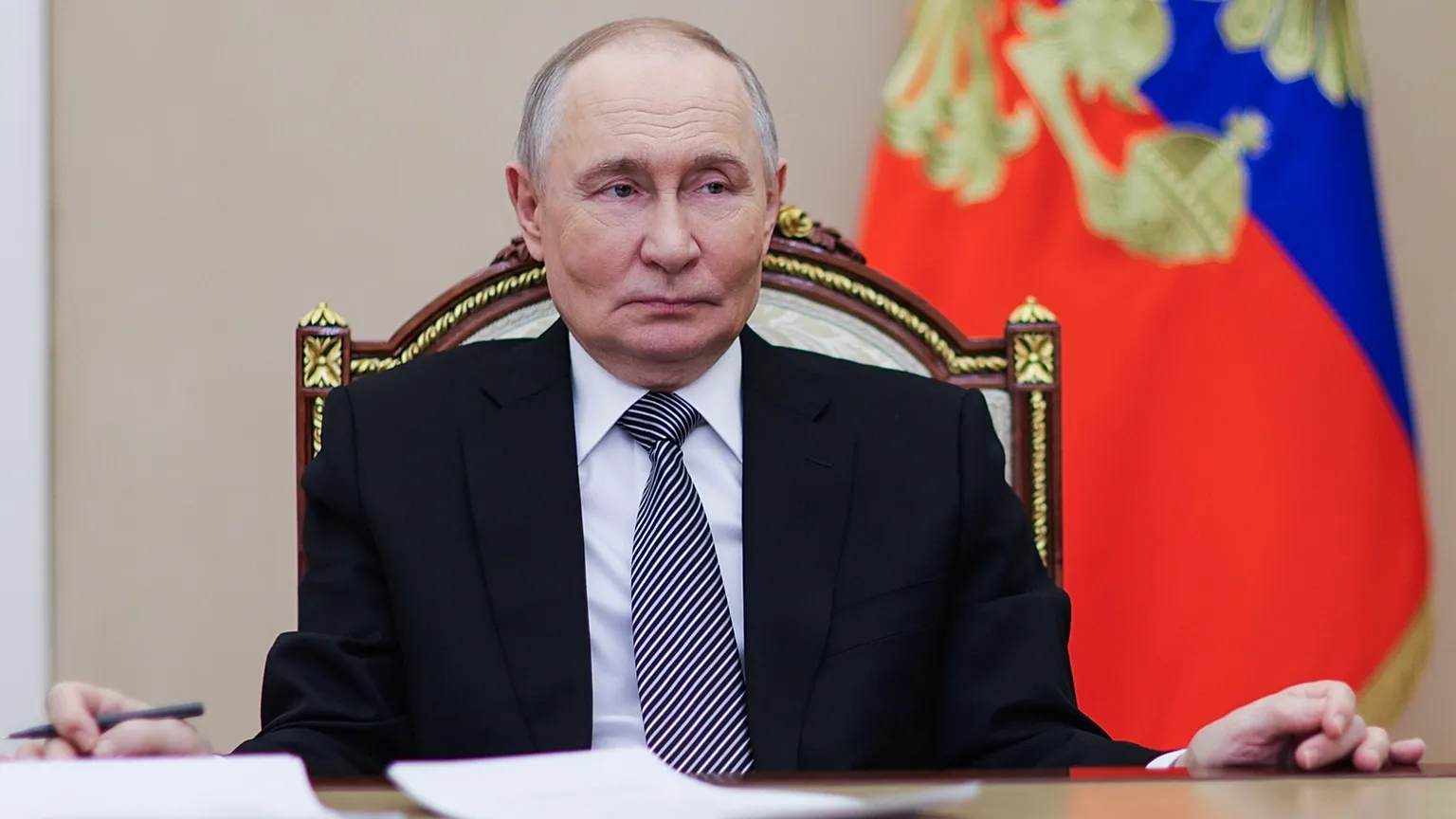
The European Union has resolved to maintain the Russian Central Bank’s assets frozen for an extended period. This prohibition, grounded in economic emergency provisions, counters external attempts to access the €210 billion before compensations to Ukraine are settled.
The European Union has consented to an indefinite freeze on the assets of the Russian Central Bank, a critical component of the reparations loan to Ukraine, which remains under intense negotiations ahead of a decisive summit scheduled for next week.
By adopting this measure, the EU retains control over the assets within its jurisdiction amid concerns that the United States might seek possession of these Russian funds for possible future negotiations with Moscow aimed at concluding the conflict.
The prolonged immobilisation was endorsed by ambassadors on Thursday afternoon under Article 122 of the EU treaties, which requires only a qualified majority among member states, bypassing the need for European Parliament approval.
This legislation forbids the €210 billion in assets from being returned to the Russian Central Bank. The majority, €185 billion, is secured at Euroclear, a central securities depository located in Brussels, with the remaining €25 billion held within private banking institutions.
Until now, the funds have been frozen under a conventional sanctions framework reliant on unanimous consent among all 27 members, rendering it vulnerable to single-country vetoes.
Last week, however, the European Commission proposed invoking Article 122 to ensure the assets remain inaccessible to Russia for the foreseeable future. Previously, Article 122 has been employed to respond to economic emergencies including the COVID-19 pandemic and the energy crisis.
The Commission presented an innovative interpretation, arguing that the profound disruption caused by Russia’s full-scale invasion of Ukraine has inflicted a «serious economic impact» across the EU, including «significant supply interruptions, heightened uncertainty, increased risk premiums, decreased investment, and lower consumer expenditure,» along with multiple hybrid assaults such as drone incursions, sabotage, and disinformation campaigns.
«It is crucial to prevent the transfer of these funds to Russia to mitigate harm to the Union’s economy,» the proposal stated.
The €210 billion will only be released when Russia’s conduct «no longer objectively presents substantial risks» to the European economy and once Moscow has compensated Ukraine «without adverse economic and financial consequences» for the EU.
The release will require approval by a new qualified majority.
«Article 122 essentially establishes a more permanent basis for immobilising the assets, avoiding the need to renew the freeze every six months,» explained a senior diplomat on Thursday, speaking anonymously.
«The European Council has already determined that immobilisation should remain until Russia pays war reparations — so this Article 122 decision enacts that policy.»
Resisting Trump, supporting Kyiv
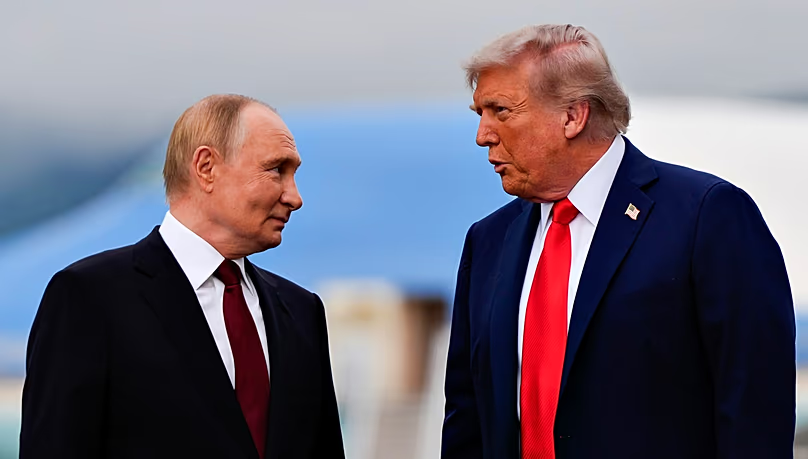
Last month, media reports revealed a 28-point peace plan formulated by the Trump administration and the Kremlin to end the Ukrainian conflict. Notably, point 14 suggested that Russian assets be exploited for the commercial benefit of both Washington and Moscow — an idea swiftly rejected by Western allies.
By securing the asset freeze through a qualified majority, the EU gains a stronger position to withstand external pressure and avoid unwanted vetoes. (The US has remained ambiguous about whether it encourages the EU to advance the reparations loan.)
This long-term freeze forms a formal pillar of the Commission’s plan to channel Russian assets into a zero-interest reparations loan supporting Ukraine, although Belgium, as the primary custodian of these funds, continues to oppose it strongly.
Ambassadors are scrutinising the legal texts in detail, with discussions scheduled for Thursday, Friday, and Sunday to resolve outstanding issues.
The objective is to settle as many uncertainties as possible prior to the EU leaders’ crucial summit on 18 December, during which they will decide on raising €90 billion to fulfill Ukraine’s budgetary and military requirements for 2026 and 2027.
Belgium has submitted dozens of pages of amendments to the legislative drafts, according to diplomats familiar with the process. These unpublished amendments add further complexity to an already intricate and delicate matter.
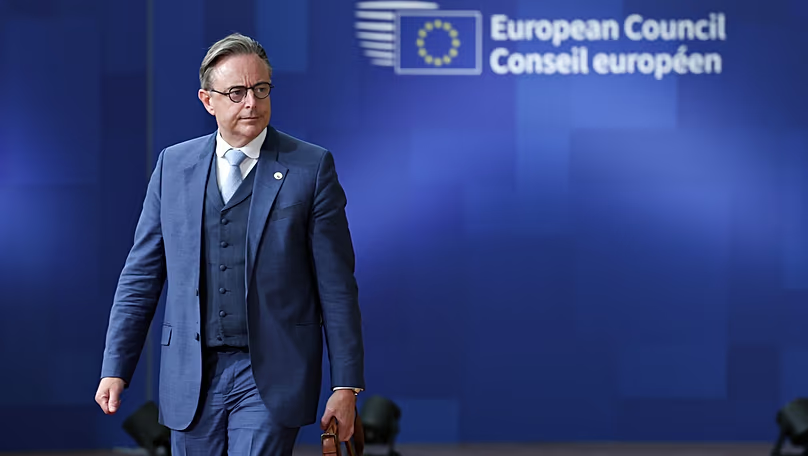
On Wednesday, Belgian Prime Minister Bart De Wever questioned the appropriateness of Article 122 and whether an economic emergency exists to justify its deployment.
«This money belongs to a country we are not at war with,» De Wever told reporters at the Belgian parliament. «It would be akin to breaking into an embassy, removing all furnishings, and selling them.»
Responding to these critiques, a Commission spokesperson maintained that it is «reasonable» to state that Russia’s war poses grave risks to the European economy overall, rendering Article 122 a fitting legal foundation.
«Without the war, the European economic outlook would undoubtedly be much stronger,» the spokesperson added.
The three conditions
Although Belgium openly opposes the reparations loan, it has indicated willingness to approve the measure if three critical conditions are fulfilled, De Wever stated on Wednesday.
The first requirement demands full mutualisation of risk among all member states.
The Commission has suggested dividing guarantees into two portions of €105 billion each to cover the €210 billion in Russian assets held in the EU. However, Belgium seeks a broader guarantee that covers possible risks, including judicial claims.
Diplomats privately note the total coverage might surpass €210 billion and be combined into a single tranche to address Belgian concerns. Nonetheless, granting open-ended guarantees, which De Wever seems to support, is widely regarded as unfeasible.
The second condition involves ensuring liquidity protections for Euroclear, the Brussels-based entity holding €185 billion of the frozen Russian assets. Belgium fears that if the assets are released prematurely, Euroclear might fail to meet its legal obligations with the Russian Central Bank and face liability.
The Article 122 freeze currently makes early release nearly impossible.
Additionally, the Commission has agreed to provide loans to member states struggling to secure funds quickly for their guarantees if these are called upon. (The European Central Bank has firmly declined to offer this liquidity backstop.)
The third requirement from Belgium involves full burden-sharing, meaning that all €210 billion — including €185 billion at Euroclear and €25 billion residing in private banks across France, Germany, Sweden, Cyprus, and Belgium itself — must be pooled collectively.
While the Commission aims to mobilise all €210 billion, the extent of France’s willingness—holding approximately €18 billion—to participate remains unclear, given the strict confidentiality norms in banking.
The Élysée has not responded to Euronews’ request for comment.
De Wever warned that if these three stipulations are unmet and the EU proceeds with the reparations loan, Belgium will initiate legal action.
«If a decision is made that I believe blatantly conflicts with legality, lacks common sense, and entails significant risks for our country, then all options remain open,» the prime minister stated.
On Thursday, Belgium’s budget minister, Vincent Van Peteghem, remarked that the country would engage «constructively» in negotiations but would reject any «reckless compromises.»
Diplomats concede that overruling Belgium to approve the loan by a qualified majority would be politically untenable. If Belgian objections cannot be resolved at the forthcoming summit, the EU will seek to issue €90 billion in joint debt as a fallback, a plan likely to be blocked by Hungary.
This article has been updated.