
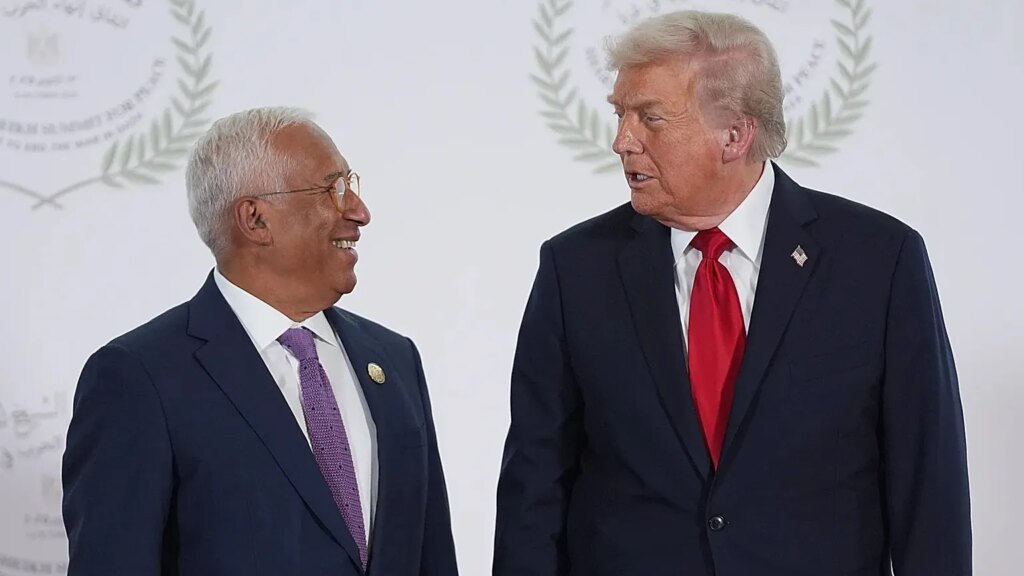
The President of the Council declared that the EU will not accept political intervention following a contentious US government document warning of «civilisational erasure» as a consequence of the bloc’s policies, while affirming that Washington remains an ally and partner.
António Costa, President of the European Council, dismissed any efforts at «political interference» after a controversial US government report released last week urged Europe to alter its path or risk «civilisational erasure».
Speaking at a conference in Paris on Monday, Costa asserted that Washington has no authority to decide which policies suit European citizens or dictate their electoral choices, marking the strongest rejection yet from a current EU official towards the Trump administration.
This statement follows the US update to its National Security Strategy, which called for Europe to reverse its course and praised «patriotic European parties» resisting the policies of Brussels.
The 33-page report claimed that a mix of poorly crafted economic policies, illegal immigration, and overregulation may threaten Europe’s survival as a civilisation.
The US declared its aim is to «assist Europe in changing its current trajectory.»
Costa countered by emphasizing that «allies do not threaten to interfere in the political life or internal democratic decisions of other allies» and defended Europe’s independence in defining its policy directions.
«The United States cannot substitute Europe in defining its vision or determine what freedom of expression entails,» Costa stated.
US as ally and partner
The Council President reiterated that the US continues to be an ally and partner, but stressed the necessity for Europe to enhance its strength and sovereignty. «To wield influence internationally, one must be robust domestically,» Costa remarked.
He added that Europe ought to place greater confidence in its own capabilities and influence on the global stage.
Political friction between the US and the EU intensified over the weekend.
On Friday, the European Commission fined tech billionaire Elon Musk’s social media network X, formerly Twitter, €120 million for violating transparency regulations under EU law.
Musk reacted by suggesting that the 27-member bloc should be dissolved and that countries should revert to sovereignty individually, expressing his frustration toward the EU through a series of posts.
The fine, which the Commission stands by as legally justified and which Musk may contest in court, added fuel to US criticism alleging the EU disproportionately penalizes US Big Tech and enforces online censorship.
This viewpoint was reiterated by US Vice President JD Vance at the Munich Security Conference earlier this year, where he likened European Commissioners to Soviet-style commissars; similar thoughts were reflected in the National Security Strategy update.
The document accused Europe of «subversion of democratic processes» and described the bloc as an international entity undermining political freedom and sovereignty.
The EU has consistently defended its digital regulations as protective measures for consumers and denied censorship allegations.