
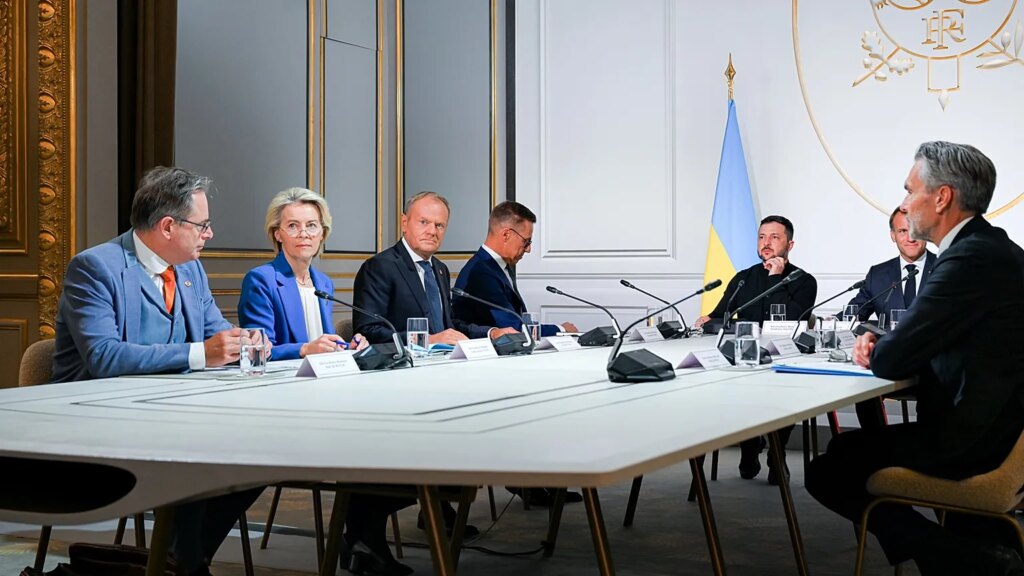
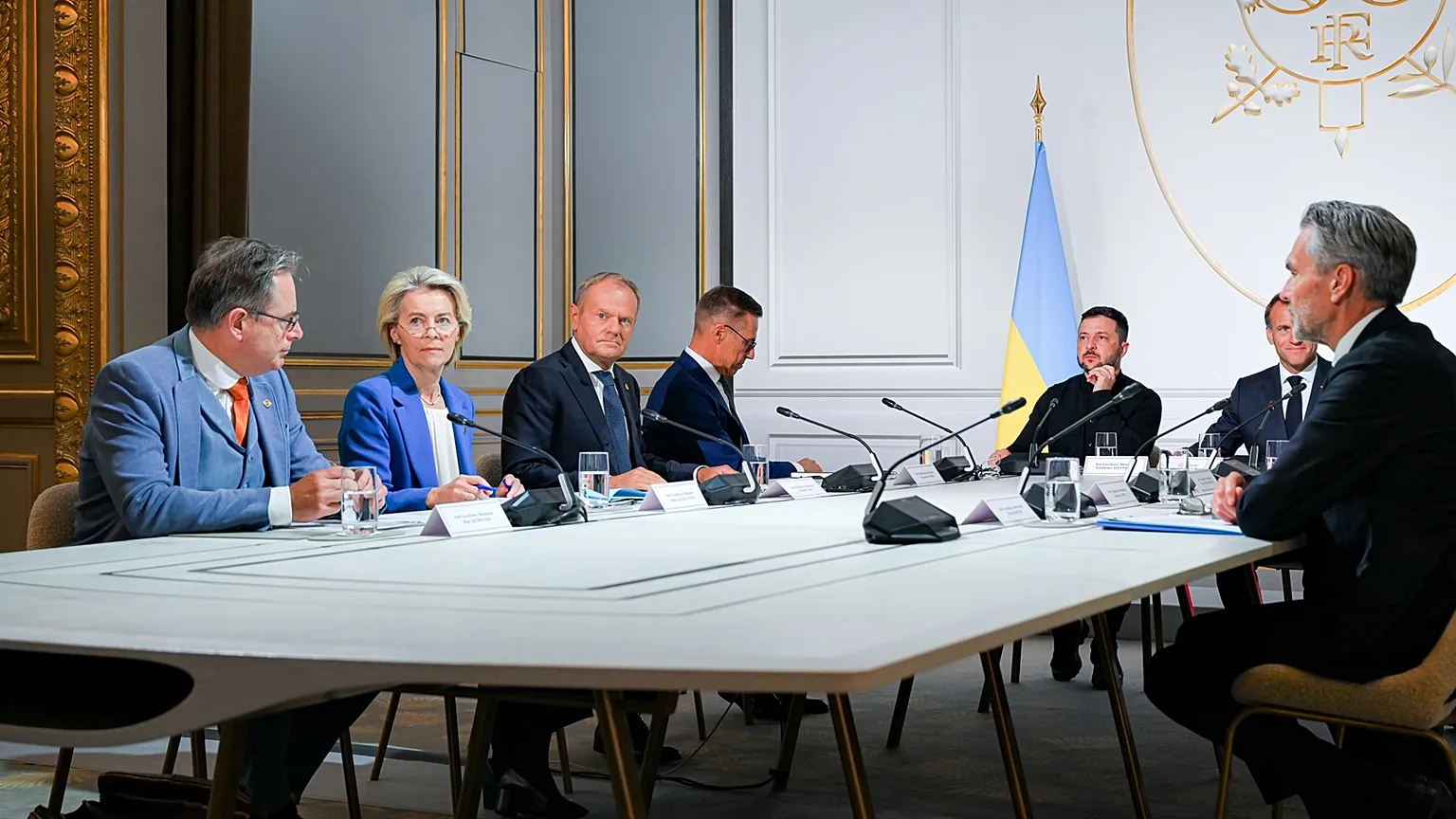
The effort to finalize approval for the reparations loan to Ukraine is approaching its critical phase ahead of the EU leaders’ summit scheduled for 18 December. Belgium remains opposed, while Hungary rejects Plan B involving joint debt. Ursula von der Leyen has cautioned that «no easy options» exist.
Uncertainty is mounting about the European Union’s ability to convert Russia’s frozen assets into a reparations loan for Ukraine—an initiative that has encountered multiple setbacks and resistance on various fronts.
Time is running out: the 27 EU leaders are set to convene on 18 December to finalize decisions on how to support Ukraine’s financial and military requirements over the next two years, aiming to mobilize at least €90 billion in funding.
Belgium, serving as the main guardian of the Russian assets, continues to oppose the reparations loan over concerns about potential repercussions. The country remains firm in its stance despite numerous appeals to address its worries.
If the initial plan fails, the EU will have to turn to joint debt issuance, which requires unanimous consent; however, Hungary has already announced it will not agree.
Such collective borrowing would also directly affect national budgets—a consequence most capitals, wary of taxpayer backlash, would rather avoid.
Meanwhile, the US is pressing for a rapid peace agreement between Ukraine and Russia. European officials fear that Washington and Moscow might negotiate the release of the frozen assets to pursue profitable interests.
Amid this uncertainty, the leaders of Estonia, Finland, Ireland, Latvia, Lithuania, Poland, and Sweden united to advocate for a prompt endorsement of the reparations loan.
«Besides being the most financially viable and politically practical solution, it upholds the core principle of Ukraine’s right to reparations for damages caused by aggression,» they stated in a letter published Monday morning.
«The timing is critical. By deciding on the reparations loan at the December European Council, there is an opportunity to better position Ukraine to defend itself and negotiate a fair and lasting peace.»
Germany, France, the Netherlands, and Denmark also back the reparations loan, which has been under development since September and was formally introduced last week.
According to the proposal, the European Commission would allocate the frozen Russian Central Bank assets toward a zero-interest credit line for Ukraine.
Kyiv would be required to reimburse the loan only after Moscow consents to compensate for the damage caused by its full-scale war, now extending into its fourth year.
The majority of these assets, roughly €185 billion, are held at Euroclear, a central securities depository in Brussels, with an additional €25 billion located elsewhere in the EU.
This has positioned Belgium as the main opponent.
Persuading Belgium
Over the past two months, Belgian Prime Minister Bart De Wever has led a public campaign against the reparations loan, describing it as «fundamentally flawed» and warning of «multiple risks» that could result in multi-billion euro losses for Belgium, which maintains a bilateral investment treaty with Russia.
His opposition enjoys cross-party backing within the Belgian parliament, a rare consensus in an otherwise often divided body.
«Belgium fully supports Ukraine,» De Wever said last week, «and stands ready to make sacrifices. Nevertheless, the country should not be expected to do the impossible.»
The European Commission has sought to alleviate De Wever’s concerns by providing substantial guarantees to safeguard the value of the Russian assets and impose legal barriers limiting Moscow’s ability to retaliate. Despite this, De Wever’s position remains unchanged.
His resistance prompted German Chancellor Friedrich Merz to cancel a Norway visit and instead travel to Brussels on Friday to meet De Wever and Commission President Ursula von der Leyen for a private dinner, which ended without a clear resolution.
«Our decisions now will shape Europe’s future,» Merz stated following the meeting.
«Belgium’s exceptional exposure to risks connected with utilizing the frozen Russian assets is undeniable and must be addressed so that all European nations share the risk equally,» he added.
While De Wever met with Merz and von der Leyen, Euroclear issued a new warning against the reparations loan, cautioning that its untested nature could deter investors, heighten financial instability, and increase borrowing costs for member states.
Euroclear’s critique closely mirrors Belgium’s objections.
«This proposal appears to involve significant legal innovation,» a Euroclear representative told Euronews. «Such innovation raises numerous questions, and the structure currently seems quite fragile.»
When asked about Euroclear’s remarks, a Commission spokesperson replied: «A clear proposal is now on the table and discussions are ongoing.»