
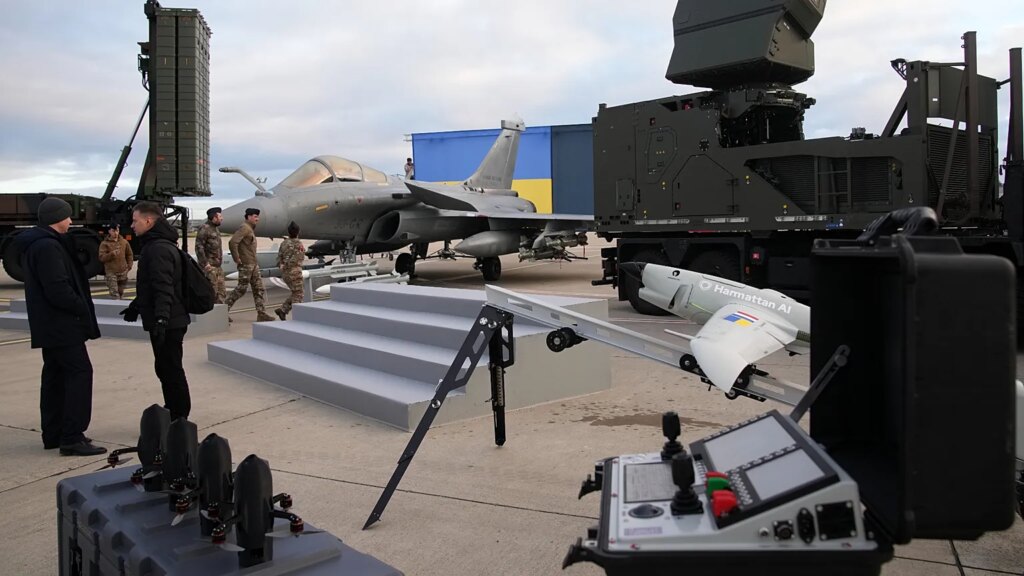
The European sector is expanding rapidly, yet the industry urges member states to focus on domestically produced equipment rather than ready-made foreign options, emphasizing that this concerns strategic independence and «supply chain sovereignty.»
The revenue of European defence firms increased by 13.8% year-on-year in 2024, while direct employment in the industry reached its highest figure to date, as Europe accelerates its rearmament to confront an aggressive Russia, according to a recent report.
The total turnover of the 4,000 companies represented by the Aerospace, Security and Defence Industries Association of Europe (ASD) climbed by 10.1% to €325.7 billion, as detailed in its freshly published annual report.
Growth was led by the defence segment, which saw a 13.8% annual increase, surpassing the 6% rise recorded in civil aviation, culminating in a turnover of €183.4 billion.
Meanwhile, direct employment grew by 6.9% to 1,103,000 employees, marking a record high. Defence accounted for the bulk of this expansion, with 633,000 direct jobs, an 8.6% increase over the previous year.
«These sectors are crucial not just to Europe’s economy but primarily to its security, connectivity, and sustainability goals — fundamentally to its sovereignty and its global position amid a rapidly changing and unpredictable geopolitical and technological environment,» stated Micael Johansson, ASD president and Saab CEO.
«Investing in these industries equals investing in Europe’s competitiveness, resilience, sustainability, and sovereignty. The forthcoming EU multiannual budget must prioritize this,» he added.
Defence sector drives the rise in European military manufacturing
Since Russia’s full-scale invasion of Ukraine in early 2022, EU member countries have significantly ramped up defence expenditures, with intelligence suggesting Moscow might target another European nation before this decade concludes.
Consequently, defence spending by member states reached €343 billion last year, a sharp increase from €251 billion in 2021.
The European Commission is promoting further investments through initiatives that, for example, grant member states greater fiscal flexibility for defence budgets and reduce red tape for defence companies to foster faster and larger-scale production.
The upcoming seven-year EU budget proposal aligns with this trend, allocating €131 billion for defence — a substantial increase from approximately €10 billion in the 2021-2027 budget.
However, differences remain among member states regarding whether priority should be placed on Europe-made equipment, which may have longer production times as manufacturing adapts to wartime conditions, or on procuring ready-made foreign systems, as well as on which capabilities warrant urgent investment.
EU leaders are anticipated to back a defence readiness plan presented by the Commission in October, which features four priority projects, including a drone barrier as part of the Eastern Flank Watch, at an upcoming summit.
The EU executive is simultaneously reviewing submissions from 19 states requesting funds from the €150 billion SAFE defence loan scheme, aiming to disburse financing by the end of the first quarter next year.
«Growing defence budgets and enhanced industrial collaboration send clear signals,» noted ASD Secretary General Camille Grand.
«Nevertheless, sustained investment over an extended period is essential to avoid repeating past errors,» he emphasized.
«Moreover, a considerable portion of defence procurement continues to be directed to suppliers outside Europe, underscoring the urgent necessity to reinforce supply chain sovereignty and ensure that European investments bolster the continent’s industrial capacity,» Grand concluded.