
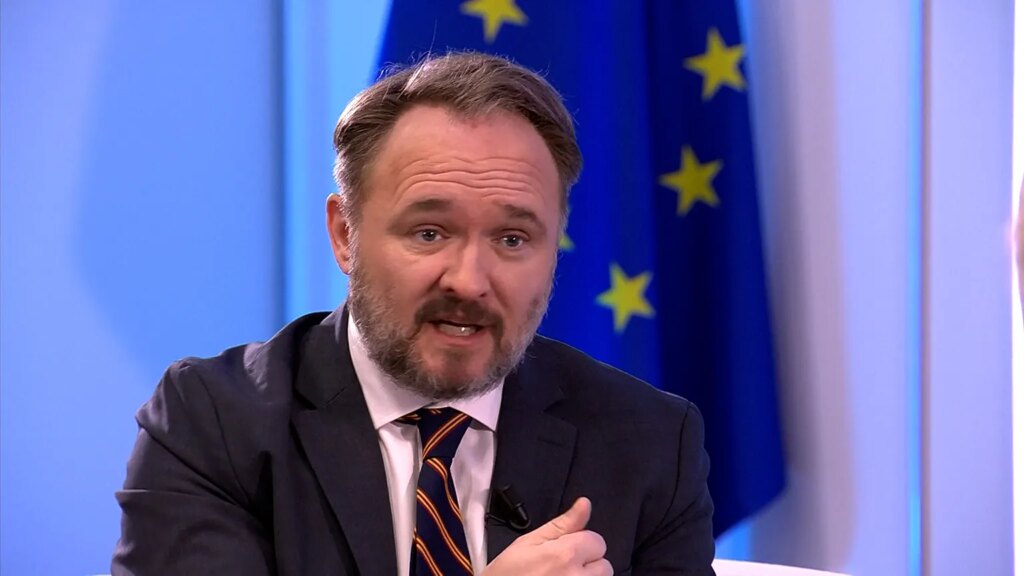
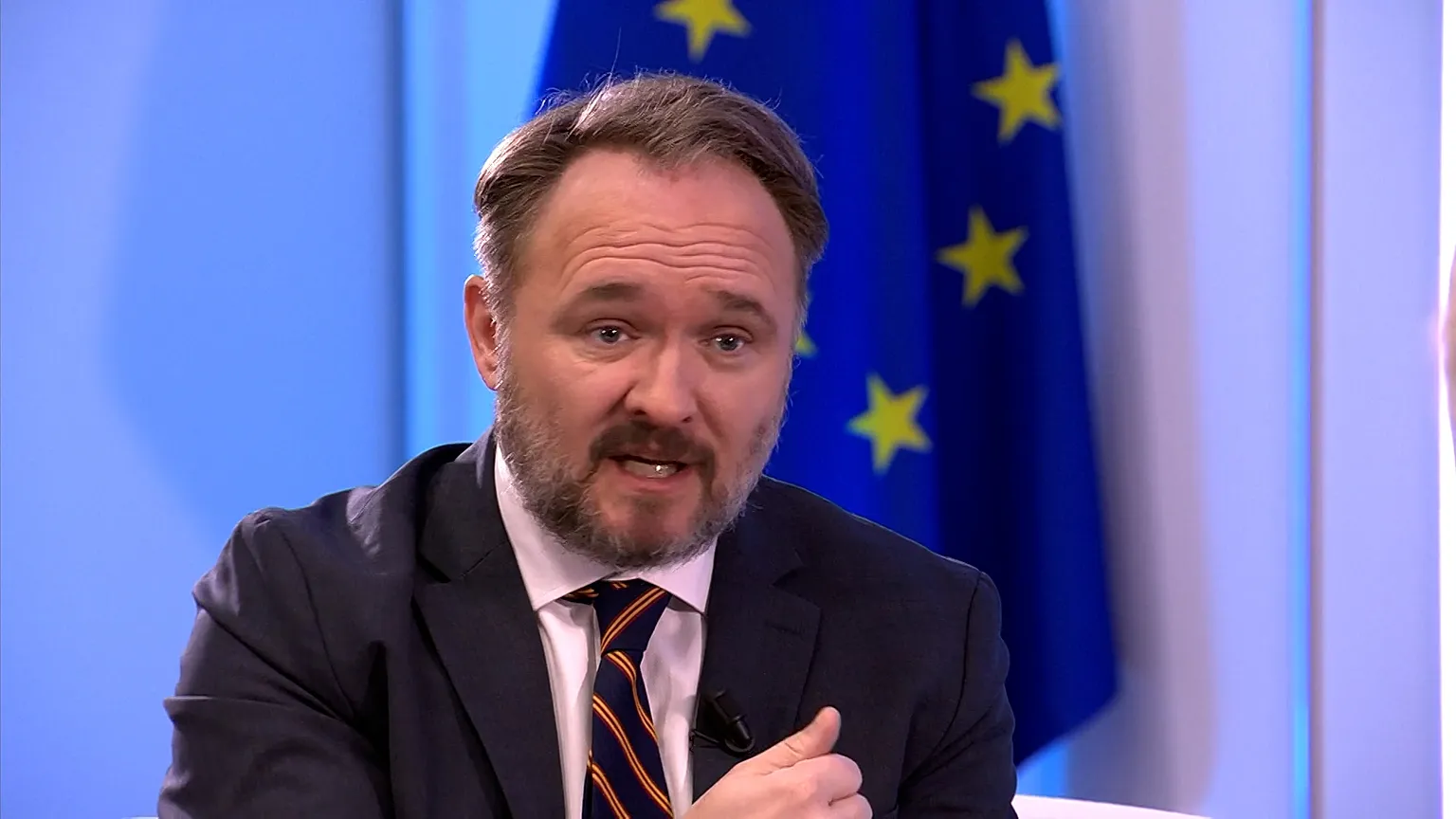
In an interview with Euronews, EU Housing Commissioner Dan Jørgensen urges investors, authorities, and market participants to collaborate in addressing an urgent situation impacting an increasing number of EU residents.
To address the housing crisis, the European Commission is developing proposals aimed at accelerating the construction of new homes, easing state aid regulations, and eliminating administrative obstacles.
“Our objective is to adopt a holistic approach,” stated European Commissioner for Energy and Housing Dan Jørgensen during Euronews’ primary interview programme The Europe Conversation.
“It is essential to enable member states to effectively support affordable housing,” he added.
Jørgensen and his team are crafting a series of measures, known as the EU Affordable Housing Plan, which he intends to unveil before the Christmas period.
The designation of the Danish social democrat as the inaugural Commissioner for Housing was a response to a crisis that has intensified sharply in recent years.
This crisis—described by some experts as an emergency—is marked by rapidly rising house prices and rents, which have significantly reduced affordability, especially among young people and households with limited incomes.
The situation is worsened by a lack of sufficient new housing developments, a high proportion of people living in crowded conditions, and many struggling to manage housing expenses.
Inflation and historically low interest rates also contribute to the crisis, with effects that include homelessness and barriers for first-time buyers: low interest rates in previous years made mortgages more accessible, which increased demand and subsequently drove prices upward.
Negative impact on society
Jørgensen particularly emphasized the crisis’s disproportionate impact on younger generations.
Many face difficulties affording rent or mortgage payments, with a notable share allocating more than 40% of their income to housing costs, and a rising number living in overcrowded dwellings.
Additionally, obtaining entry-level employment remains a challenge for many, preventing them from leaving their parents’ homes.
“This situation affects many aspects. It might delay starting a family, restrict access to education, or block opportunities for employment or training,” the Commissioner explained.
“On a personal level, it’s quite damaging. For society, it hinders labour market mobility, limits educational attainment needed by the workforce, and ultimately has negative consequences.”
Although housing policy is primarily under member states’ jurisdiction rather than Brussels, Jørgensen views his role as facilitating cooperation among stakeholders and interest groups to improve real estate and rental market conditions.
“What actions can be taken at the European level to attract more investments? It’s paradoxical that capital exists and is ready to be invested,” he remarked.
“Institutional investors seek long-term projects offering steady returns.”
“We aim to bridge the gap between investors and those requiring funding through initiatives like the pan-European investment platform, developed in partnership with the European Investment Bank.”
The European Commission also plans to introduce measures targeting the rise of short-term rentals on platforms like Airbnb and Booking.com.
“Tourism has its benefits, but it becomes problematic when it negatively impacts residents’ quality of life,” Jørgensen highlighted, referring to how the surge in short-term rental platforms has contributed to significant housing price increases.
The phenomenon termed the “financialisation of the sector” will be central to Brussels’ strategy in addressing the housing crisis, the Commissioner noted. “There is widespread speculation, and many investors treat housing primarily as a commodity.”
“While profit-making is understandable, it’s important to recognize that such investments may not always yield the best outcomes for society overall,” Jørgensen concluded.