
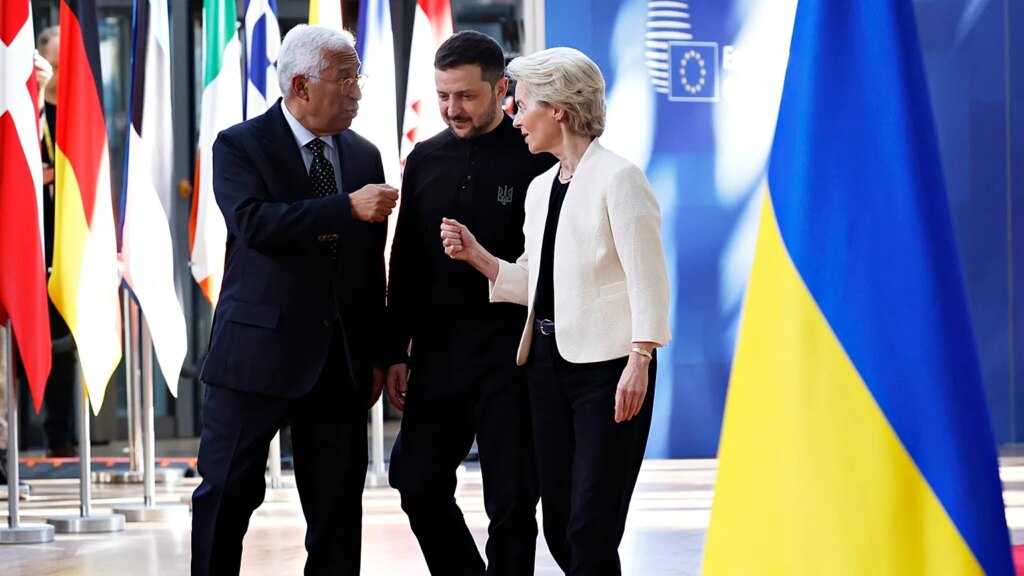
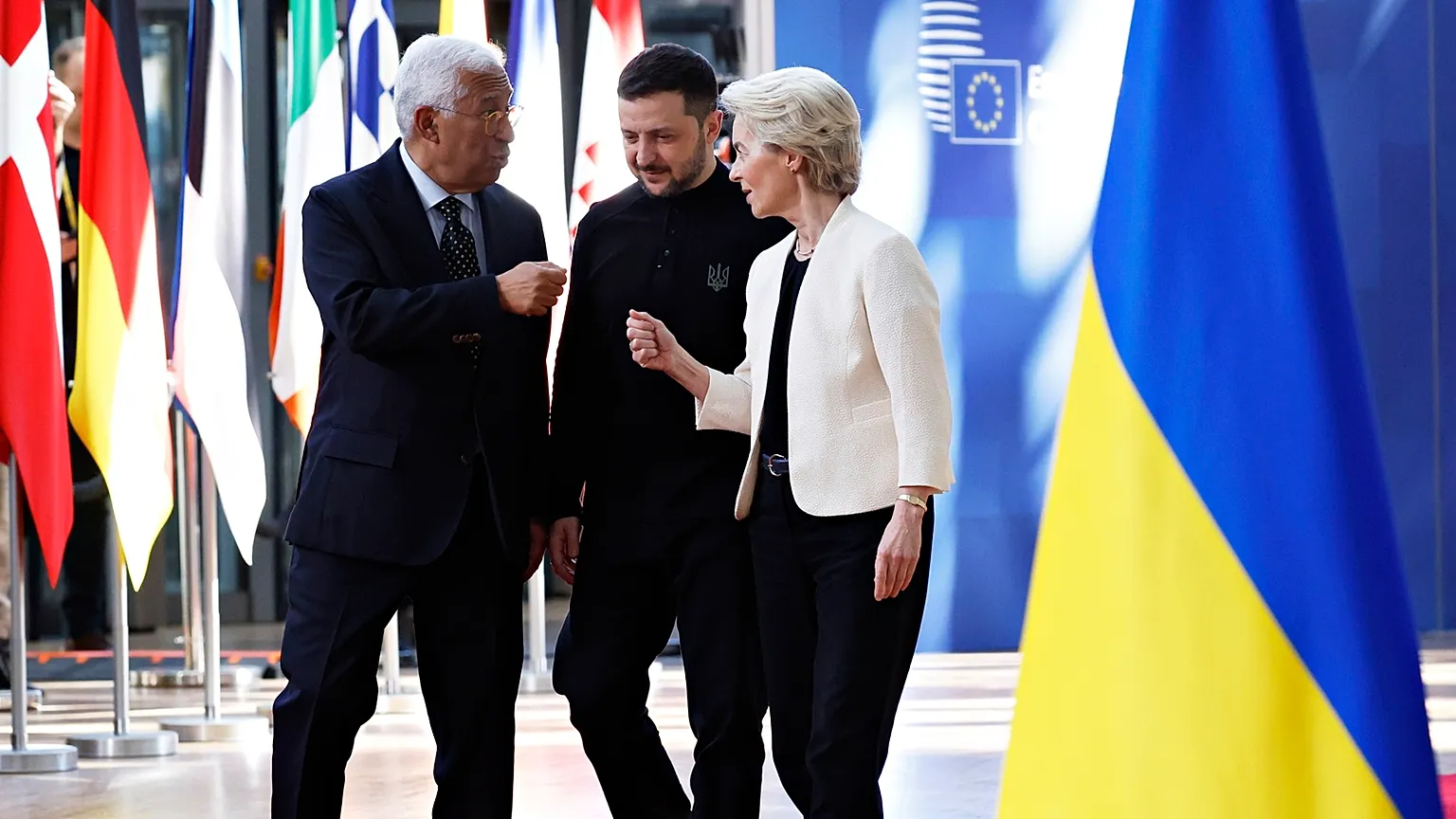
Initially overlooked, Europeans seek to regain influence in the peace negotiations between Ukraine and Russia by emphasizing key issues that require their approval. But what are these issues? Analysis:
The 28-point peace proposal developed by the US and Russia to conclude the conflict in Ukraine surprised Europeans with its expansive clauses seen as overly favourable toward Russia.
The conditions also hinted at a diminished European control over their own security framework and would lead to the loss of crucial leverage over Moscow.
The EU and its partners are now pressing to have a voice in subsequent decisions, especially on topics necessitating their involvement – including sanctions and defence.
Below are the central matters in the dialogue that directly impact Europeans:
Ukraine’s NATO membership under scrutiny
For a long time, Ukraine has aimed to become a NATO member, the transatlantic alliance that guarantees collective defence to its members. After suffering Russia’s invasion, Ukraine views Article 5 as the strongest safeguard against future attacks.
Earlier this year, Secretary General Mark Rutte referred to an «irreversible trajectory of Ukraine joining NATO,» yet the path remains uncertain due to a lack of consensus among allies. For Moscow, Kyiv’s entry represents a red line.
The leaked draft plan released last week contained a broad provision to exclude Ukraine from NATO – permanently.
«Ukraine consents to embed in its constitution that it will not join NATO, and NATO commits to amend its statutes to bar Ukraine’s future admission,» it stated.
This phrasing was poorly received by Europeans, as it would essentially grant Russia a veto over the alliance, potentially setting a troubling precedent.
Europeans maintain that any decisions regarding NATO must be made exclusively by NATO members.
The same reasoning applies to another element of the peace plan: the possible stationing of NATO forces on Ukrainian territory. This concept was initially proposed by the «Coalition of the Willing,» led by France and the United Kingdom.
In September, French President Emmanuel Macron announced 26 countries had agreed to deploy troops to Ukraine as part of a «reassurance force» or to offer support on land, at sea, or in the air within future security guarantees.
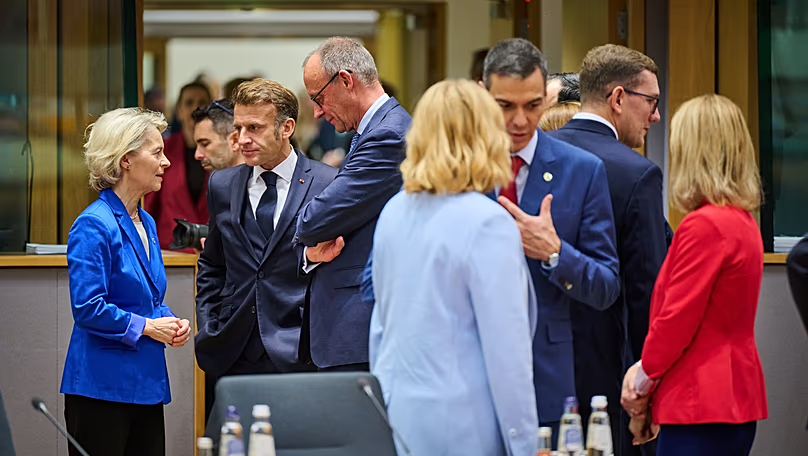
Sanctions easing for Russia’s damaged economy
The European Union has enacted 19 sanction packages against Russia to severely restrict its capacity to finance the war.
The sanctions are extensive and multifaceted, covering imports, exports, banking, energy, transport, defence, services, and media, along with a blacklist of over 2,700 individuals and entities accused of supporting the Russian war effort.
Sanctions relief has consistently topped the Kremlin’s agenda.
An initial request in March was firmly rejected by Brussels. However, they are making renewed efforts: the 28-point plan mentions lifting sanctions «gradually and on a case-by-case basis.»
Whether this economic relief materializes depends largely on the EU, which manages the most comprehensive sanctions framework among Western partners.
Officials and diplomats remain cautious about reversing sanctions too swiftly without firm assurances that Russia will halt aggression against Ukraine.
As negotiations progress, the EU is expected to advocate for a prolonged, carefully structured timeline that allows reinstating strict sanctions at any time.
Even if sanctions are eased, some crucial elements extend beyond sanctions. The EU is currently implementing an irreversible phase-out of all Russian energy imports by 2028, cutting off a significant revenue source for Moscow.
Frozen assets of the Russian Central Bank
No sanction grants the EU greater leverage than freezing assets of the Russian Central Bank, amounting to an impressive €210 billion within EU borders.
These assets are central to an ambitious proposal to issue a reparations loan covering Ukraine’s financial and military expenses for 2026 and 2027. With US assistance to Kyiv waning, the EU bears the primary responsibility.
The reparations loan would utilize funds from the frozen Russian assets and would be reimbursed only if Moscow agrees to compensate for war damages.
However, the 28-point plan unveiled last week drastically reverses this approach by outlining a split of the assets into two distinct investment funds, allowing both the US and Russia to obtain commercial benefits.
This provision has provoked anger among Europeans, who consider these assets their strongest leverage to compel Russia to pay for the destruction caused.
With the talks moving swiftly, Europeans demand that the assets remain frozen and that Russia provides compensation through reparations. An official described last week’s plan as «economic cruelty» to Euronews.
António Costa, president of the European Council, indicated that a decision on closing Ukraine’s funding shortfall would come in mid-December.
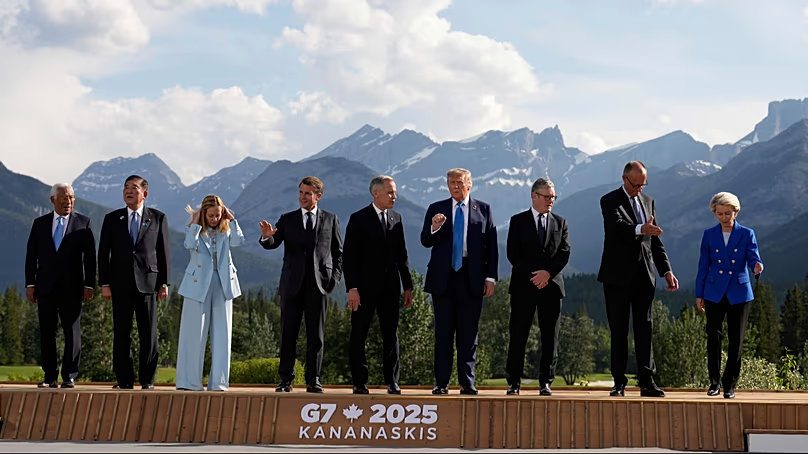
Russia’s global reintegration into the G8
The 28-point plan also proposes that Russia should be readmitted to the G8, effectively ending Putin’s isolation from the international community and leading global powers. President Trump has openly supported Russia’s return.
Russia was suspended indefinitely from the G8 in 2014 after annexing Crimea. The group has since continued as the G7.
«Putin talks with me; he doesn’t engage with others because he felt insulted when excluded from the G8,» Trump said in June, labeling the suspension a «major error.»
As a consensus-driven institution, Russia’s return would require approval from all seated members, including Germany, the UK, France, Italy, Canada, Japan, and the EU. Such a step would mark a failure of their policy of isolating Russia as punishment for its invasion of Ukraine.
Experts contend that this move would amount to political pardon for Putin.
Ukraine’s EU membership prospects
While Moscow firmly opposes Ukraine joining NATO, it has been less vocal regarding Ukraine’s potential EU accession. Washington also supports this as a form of compensation for Kyiv.
«Ukraine qualifies for EU membership and will receive short-term preferential access to the European market during the discussions,» states the 28-point plan.
Brussels insists accession depends solely on «merit,» not on political deals or external pressures. Similarly to sanctions, accession needs unanimous approval.
Despite Ukraine’s technical reforms, Hungary’s veto has halted any progress this year.
Ursula von der Leyen, president of the European Commission, recently stated that Kyiv should decide its own future alliances free from external influence.
«Ukraine must have the freedom and sovereign right to determine its own destiny,» von der Leyen affirmed. «They have chosen a European path.»