
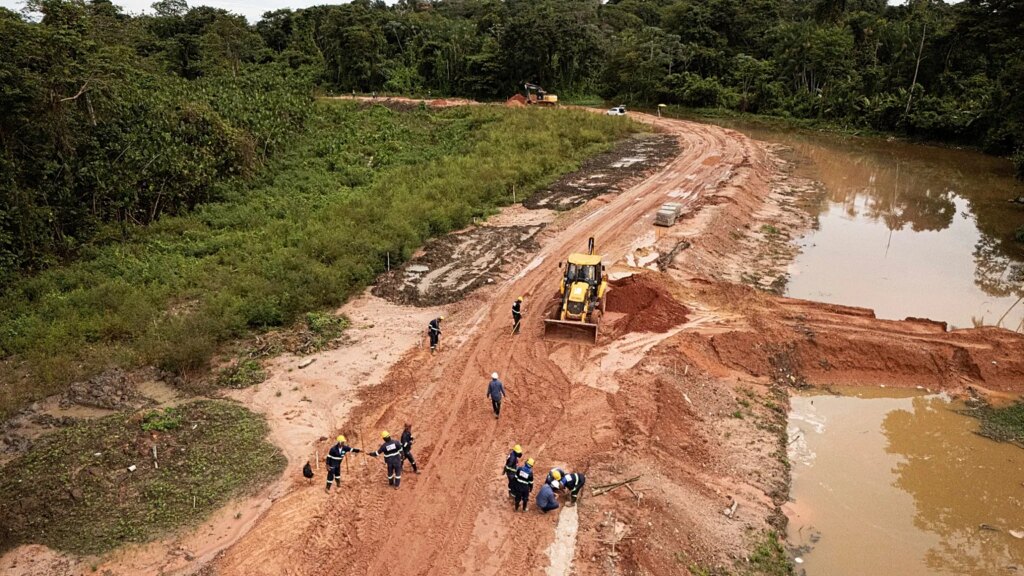
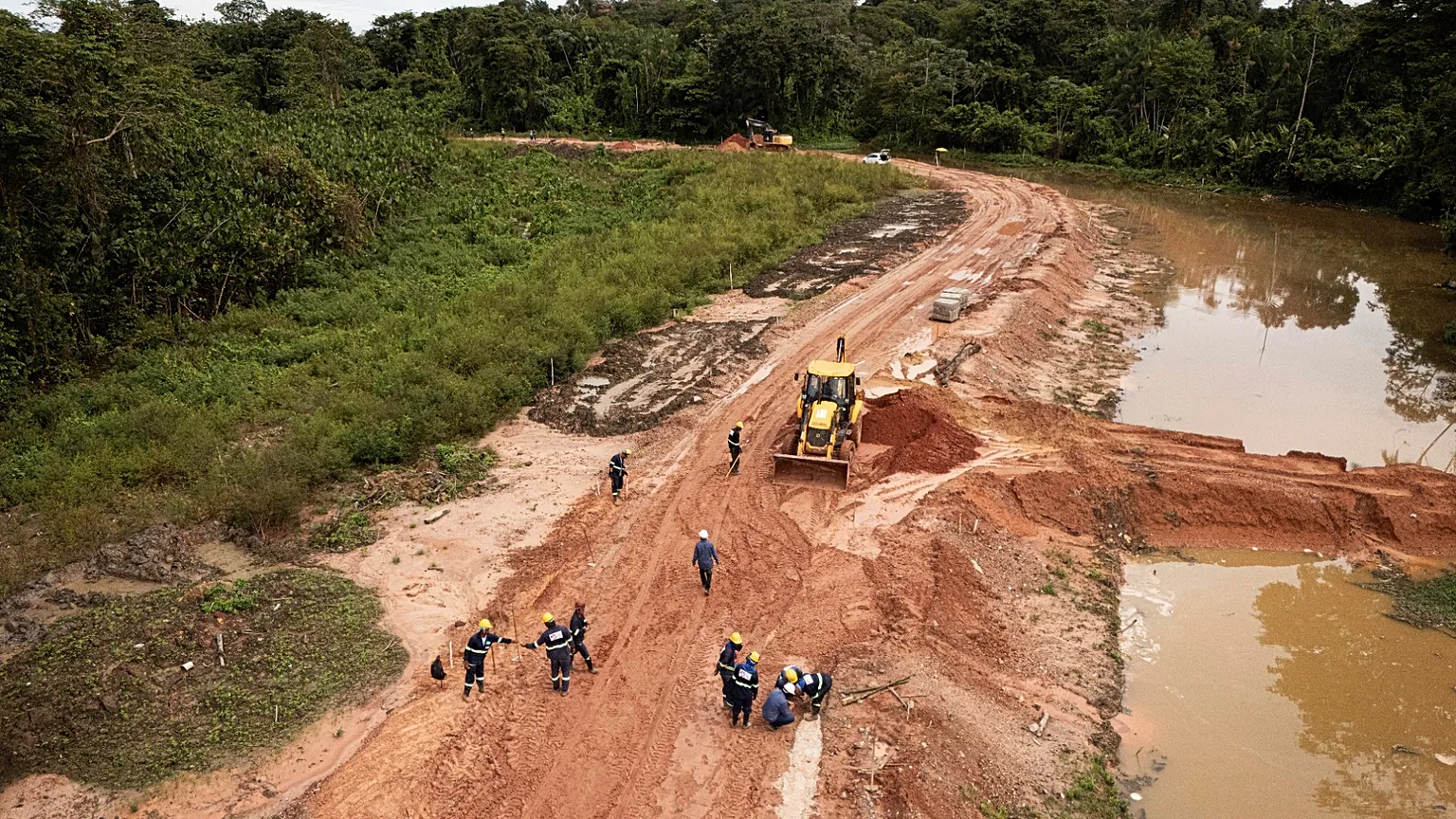
As European leaders participate in COP30, rumors have circulated online claiming that the disputed Avenida Liberdade — a 13-kilometre four-lane highway traversing the Amazon — was built specifically for the climate summit.
The government of Brazil faces accusations of deliberately clearing 100,000 trees in the Amazon rainforest within the northern Pará state as part of plans to construct a four-lane road near Belém city, aiming to improve access to the United Nations’ Climate Conference, COP30.
Even though the United States’ exit from the Paris Agreement has dampened joint efforts, the European Union continues to be the largest global contributor to climate financing. EU leaders and representatives from the climate sector are attending this event, scheduled from November 6 to 21.
US President Donald Trump responded to these claims on his Truth Social platform, alleging that Brazil’s rainforest was devastated to enable «environmentalists to travel».
Simultaneously, some social media users reacted to European Commission President Ursula von der Leyen’s post on X about COP30’s significance by underlining the supposed «contradiction of destroying a symbolically important rainforest to host a climate summit!»
In truth, however, these allegations are deceptive, the situation proves to be more intricate, and numerous online participants deliberately spread these assertions to undermine the conference and propagate climate-related misinformation.
The explanation
The debated Avenida Liberdade, a 13-kilometre four-lane highway crossing the Amazon, has been under development since 2012 and was officially revealed in 2020 — well before Brazil’s 2023 announcement of hosting the UN Climate Conference.
The purpose was to link Marituba — a city adjacent to Belém — with the state capital, aiming to reduce traffic congestion on major existing roads.
Construction started in June 2024 but has been halted several times due to protests and local dissatisfaction stemming from a perceived lack of community involvement.
In March 2025, the BBC released an article regarding the highway, which intensified the debate.
The article quoted the state’s infrastructure secretary, Adler Silveira, who said the road was included among 30 initiatives being developed in Belém to «prepare» and «modernize» the city, ensuring a «lasting benefit for residents and, more importantly, to serve attendees of COP30 in the best possible manner».
That said, COP organizers responded to the BBC piece titled «Amazon forest felled to build road for climate summit,» clarifying that construction of this road was not the «responsibility of the federal government» nor part of the «33 infrastructure projects planned for COP30.»
While the 13km highway is excluded from the official COP30 project list issued by Brazil’s federal authorities, reports from local media indicate that efforts to advance the road’s construction increased prior to the event, aimed at enhancing infrastructure.
An article by local news outlet Pará Terra Boa presented several projects intended to boost mobility in Pará state, including Avenida Liberdade, with Silveira commenting that «COP is an event that will precisely accelerate all this progress in terms of infrastructure.»
Nonetheless, Rafael de Pino, a journalist based in Brazil specializing in climate misinformation, told Euronews’ verification team, The Cube, that «if the governor of Pará announces a road project tied to COP30 preparations, this does not make it an official COP30 project, much less ‘a four-lane highway for environmentalists to drive on’.»
Ultimately, the road remains unfinished, with local officials aiming to complete it by early 2026.
Ongoing controversy
Several indigenous groups residing near Avenida Liberdade criticize the absence of involvement in the planning process, feelings of encirclement by increasing infrastructure, and express worries about food security, since many depend on subsistence farming.
Since 2016, Pará has recorded the highest annual deforestation rate in Brazil.
«In 2024 alone, 1,260 square kilometres of Amazon rainforest were lost,» de Pino remarked. «This destruction is primarily driven by agribusiness, accounting for over 90% according to MapBiomas, which clears areas to create new pastureland. Some actors within this sector also finance climate disinformation efforts, as reported by Agência Pública.»
«The persistent silence about these figures, even while COP30 is held in Belém, is profoundly troubling,» he added.
Brazil’s agenda for hosting COP30 includes a focus on Indigenous peoples, whose livelihoods are closely connected to the Amazon rainforest.
On Saturday, activists and Indigenous communities marched through Belém, staging the largest protest at a COP event since COP26 four years ago in Glasgow.
In the previous week, Indigenous demonstrators also disrupted access to the conference venue.