
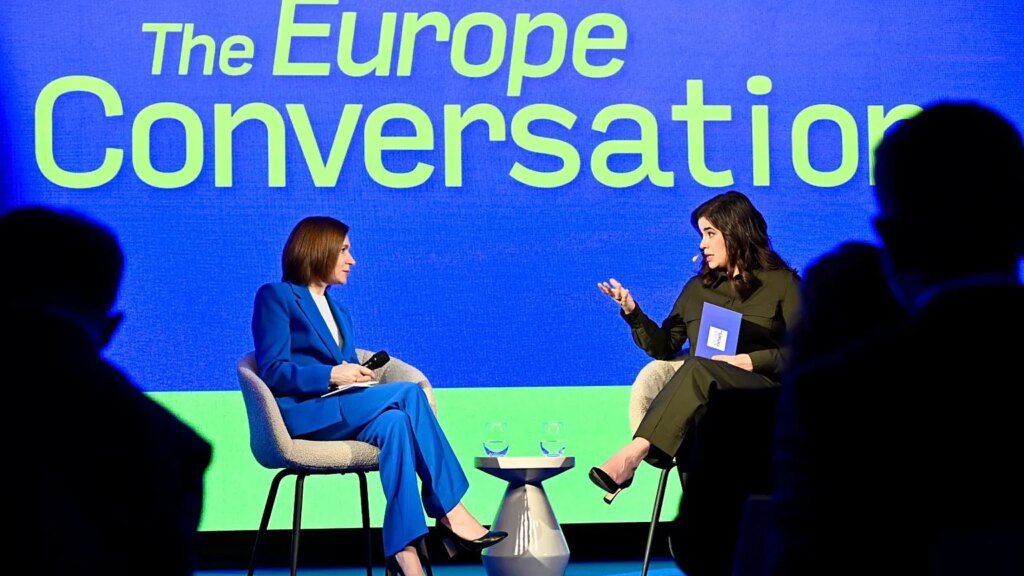
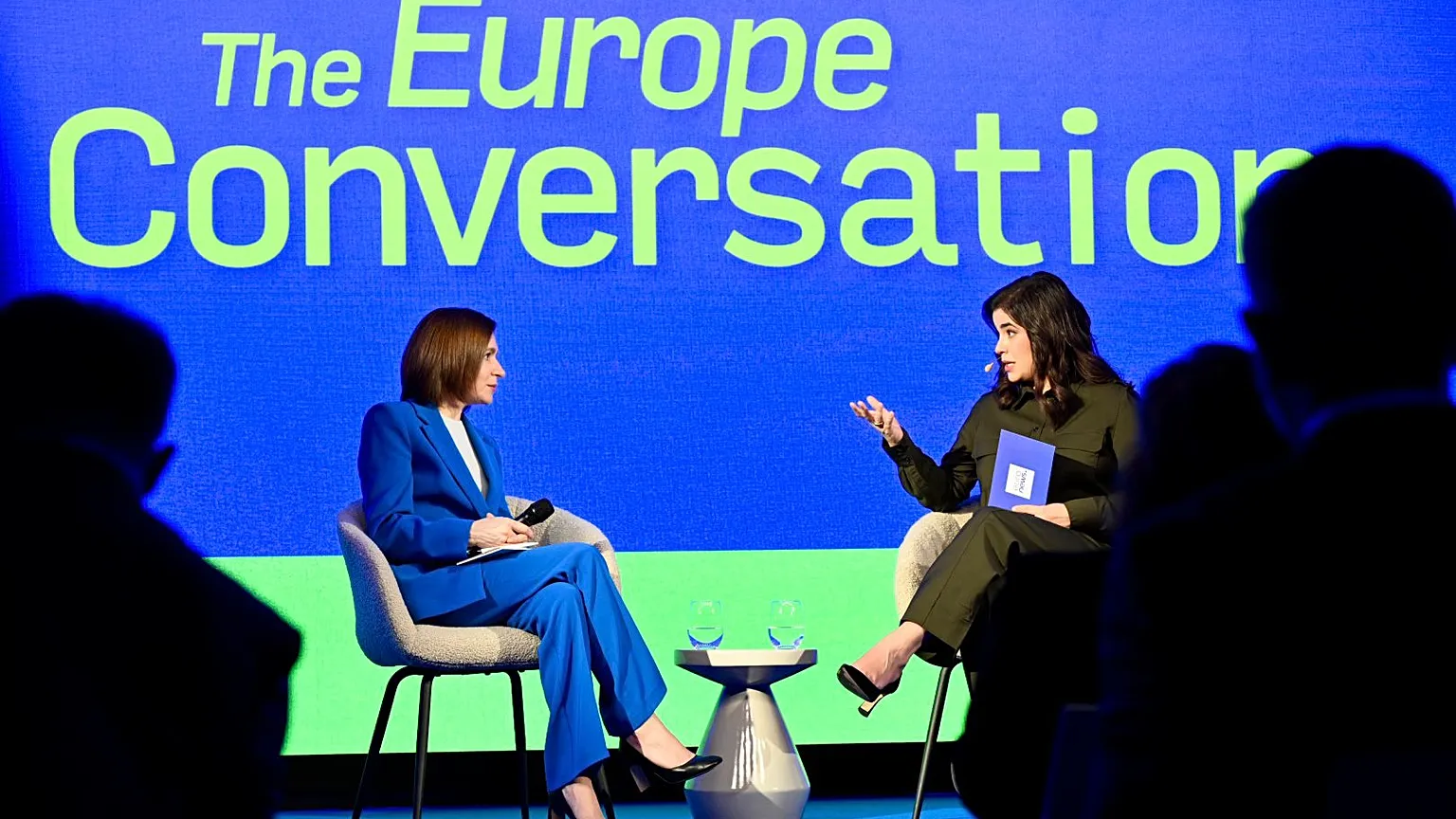
The candidate nations aspiring to join the European Union expressed optimism at the Euronews Enlargement Summit held in Brussels on Tuesday, as fresh progress reports indicated advances towards membership. Montenegro, Albania, and Moldova are all targeting accession within the upcoming five years.
Following prolonged stagnation in the EU enlargement process, several countries have regained momentum and aim to integrate within the coming years.
EU hopeful leaders convened in Brussels for the Euronews Enlargement Summit on Tuesday, coinciding with the European Commission’s release of its latest progress report.
«Regrettably, it took military aggression on European soil to awaken Brussels,» stated Albania’s Prime Minister Edi Rama during his summit address, highlighting the acceleration of accession negotiations since Russia’s full-scale war against Ukraine began.
Rama conveyed optimism that this renewed energy would persist and that Albania will soon secure its position within the EU.
He shares this ambition with others, as Montenegro and Albania are projected to become the EU’s newest members by 2028 and 2030, respectively.
The annual report from Tuesday asserts that the Commission views Montenegro as “on track” to complete all negotiation clusters for EU accession by the close of 2026, aligning with its targeted timeline.
Filip Ivanović, Montenegro’s Deputy Prime Minister for Foreign and European Affairs, attributed his country’s advancements to “diligent effort and political commitment” during the summit.
«The report we received reaffirms our government’s strategic plan. We consistently aim for each report to surpass the last, and this one is the most favorable to date,» he remarked.
Ivanović also commended the EU’s revitalized enlargement objectives, describing them as the bloc’s «most crucial policy» and emphasizing that expanding membership would enhance its geopolitical stance.
Moldova’s President Maia Sandu likewise anticipates Moldova joining the EU by 2030.
During her speech, Sandu cautioned against the dangers of failing to achieve measurable progress within the next three years, prior to Moldova’s upcoming elections.
«Without a clear integration perspective, we risk being exploited against the EU,» she warned at the summit.
Conversely, Serbia has experienced a slowdown in its accession progress in recent times.
Serbian President Aleksandar Vučić reaffirmed the nation’s dedication to reform in his Tuesday interview.
“Serbia remains firmly committed to its EU path and approaches it with seriousness and responsibility,» he affirmed.
Lingering accession fatigue
For many, particularly in the Western Balkans, the EU accession journey has extended over more than a decade.
North Macedonia applied for membership in 2004, over twenty years ago, followed by Montenegro in 2008, and Albania and Serbia in 2009. Moldova’s candidacy is relatively recent, having declared its bid in 2022.
Hristijan Mickoski, Prime Minister of North Macedonia, highlighted the minimal progress achieved over twenty-five years.
“Sadly, we remain where we were 25 years ago due to a series of artificial obstacles,” Mickoski commented at the summit, alluding to the longstanding Greek veto that compelled the country to change its name, as well as the ongoing Bulgarian veto concerning minority rights, historical interpretations, and language issues.
“Despite these humiliations, setbacks, and current public frustration, we maintain shared values,” he added.
Rama of Albania also reflected on what he termed “years of humiliation” marked by stalled negotiations.
After prolonged discussions, the EU candidates share a unanimous objective: full membership, without compromises such as provisional status or restricted voting rights.
“For the past 15 years, we have been under scrutiny and will remain so until all negotiation chapters are closed. To me, the process ends once all chapters are completed,” Montenegro’s Ivanović concluded.