
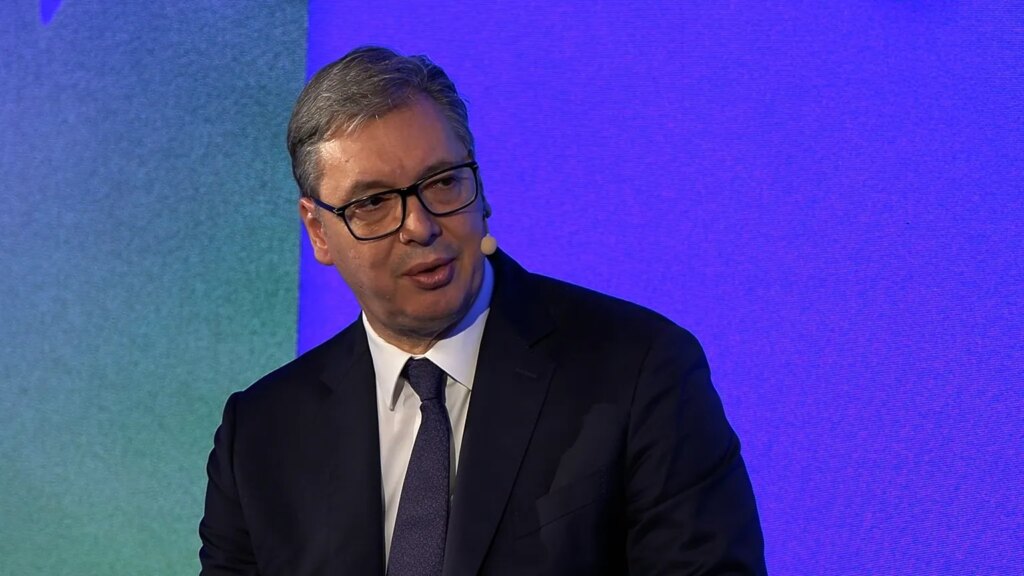
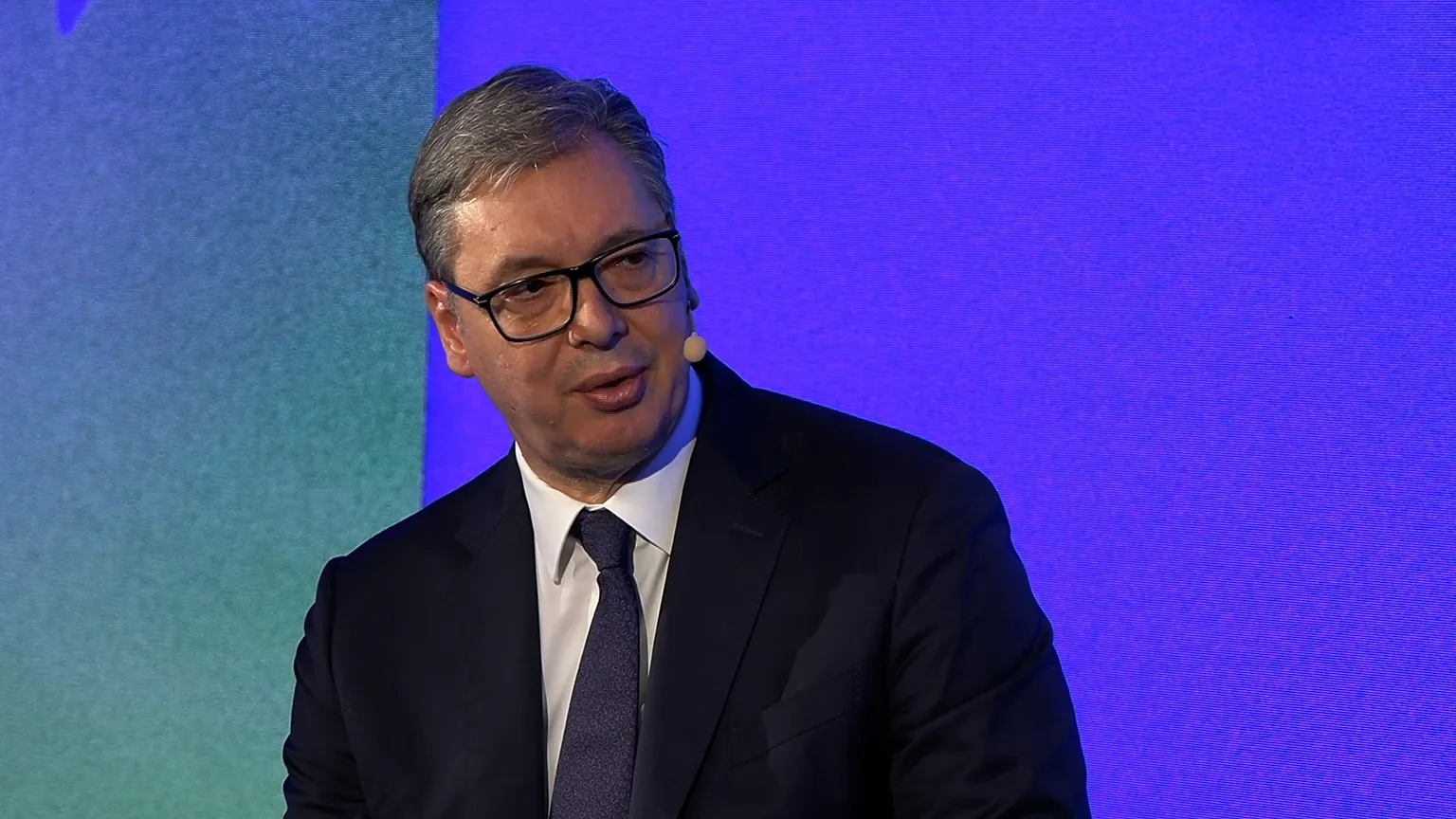
In an extensive conversation with Euronews, Serbian President Vučić confirmed readiness to sell ammunition to EU nations, even if it ends up in Ukraine. He also justified his refusal to support EU sanctions against Russia, complicating Serbia’s EU accession process.
Aleksandar Vučić, the Serbian president, has affirmed that the country is prepared to supply ammunition to the EU, regardless of whether it eventually reaches Ukrainian forces engaged in the conflict with Russia.
“We have to sell somewhere, and we will sell to anyone we can to generate revenue, while trying to prevent that ammunition from reaching active battlefields. Yet, at times, that does happen,” Vučić declared on Euronews’ main interview program The Europe Conversation.
“Ultimately, we must compensate our workforce,” he added.
“Is there anything irrational about that?” Vučić questioned.
According to the Serbian president, the nation manufactures up to 160,000 various shells and calibres—comparable to or exceeding France’s output—by 30,000 employees reliant on successful ammunition sales.
Vučić appears to signal a shift in Serbia’s stance on arms exports.
In June last year, he suspended all ammunition exports following Moscow’s objection to some ammunition being employed against Russian forces in Ukraine.
He reiterated his consistent support for maintaining Ukraine’s territorial integrity but refrained from endorsing EU sanctions on Russia.
“Since we are not EU members, I have no authority to act or influence this matter,” he explained.
Nonetheless, drawing on previous sanctions imposed on Serbia, Vučić questioned the effectiveness of such measures, stating they predominantly impact ordinary citizens negatively.
EU criticism of protests
Regarding EU enlargement, the Serbian leader defended his administration against critiques outlined in a recent EU Commission report on countries aspiring to join the bloc.
The Enlargement report, published Tuesday, highlighted increasing societal polarization in Serbia amid widespread protests, illustrating citizen dissatisfaction fueled by issues including corruption.
Brussels also condemned Serbia for its “excessive force against demonstrators” and noted regression in free expression and academic independence.
This weekend, Serbia witnessed mass protests marking the first anniversary of a fatal train station collapse in Novi Sad, which claimed 16 lives.
The disaster sparked a youth-led movement demanding political reforms.
Vučić dismissed both Brussels’ criticisms and domestic protests by emphasizing Serbia’s economic advancements.
“Demonstrations have occurred since my term as prime minister began in 2014,” Vučić remarked. “Nevertheless, we continue to achieve strong economic growth.”
“Additionally, public debt decreased upon my assuming office due to fiscal discipline; public debt-to-GDP stands at 43%, half the EU average,” he noted.
Highlighting further economic indicators, Vučić mentioned Serbia’s upgraded credit ratings.
In 2024, Standard & Poor’s elevated Serbia to its first investment-grade rating, from BB+ to BBB- with a stable outlook, lifting its foreign-currency bonds out of junk status.
This upgrade factors in the country’s “Expo 2027” initiative, aimed at drawing foreign investments, accompanied by numerous infrastructure and development projects.
“We already have confirmation from 127 countries potentially participating in this expo,” Vučić stated.