
A shadow of the Cold War re-emerges among the global superpowers just as Halloween approaches.
Following Russian President Vladimir Putin’s boasts about his nation testing a nuclear-powered torpedo alongside a new cruise missile, U.S. President Donald Trump responded sharply. In an extensive message on his Truth Social platform, Trump declared, “Due to testing programs by other countries, I have directed the Department of War to commence testing our Nuclear Weapons on an equivalent basis. This process will start promptly.”
Currently, nuclear monitoring organizations worldwide question the implications of Trump’s statement — and what exactly he means, considering the U.S. has not carried out nuclear weapons tests for many years.
“First and foremost, every claim in that post is incorrect,” stated Matthew Bunn, a nuclear weapons specialist at Harvard University. “It’s false that the United States possesses the highest number of nuclear weapons globally. It’s also untrue that other nations are conducting nuclear tests. (Trump) appears to believe it is the Department of Defense that performs nuclear tests. It is not; that responsibility lies with the Department of Energy.”
Trump’s nominee for leading the US Strategic Command seemed uncertain about the president’s intentions during a Senate Armed Service Committee confirmation hearing last Thursday. “Neither China nor Russia has conducted a nuclear explosive test,” said Navy Vice Adm. Richard Correll, “therefore, I am not interpreting anything from it or dismissing anything.”
The Center for Arms Control and Non-Proliferation defines nuclear tests as “typically controlled detonations of nuclear devices, including bombs or warheads,” and Russia’s recent missile and torpedo trials do not fit within that strict meaning.
Additionally, Jon Wolfsthal, who has advised both Joe Biden and Barack Obama on nuclear issues, points out that several countries, including the U.S., are already conducting related tests. “Russia, the United States, and China are investing tens of billions of dollars into new nuclear delivery systems – such as missiles, bombers, and submarines,” Wolfsthal explained. “The arms race dynamics of the Cold War have returned, with each side valuing nuclear weapons highly.”
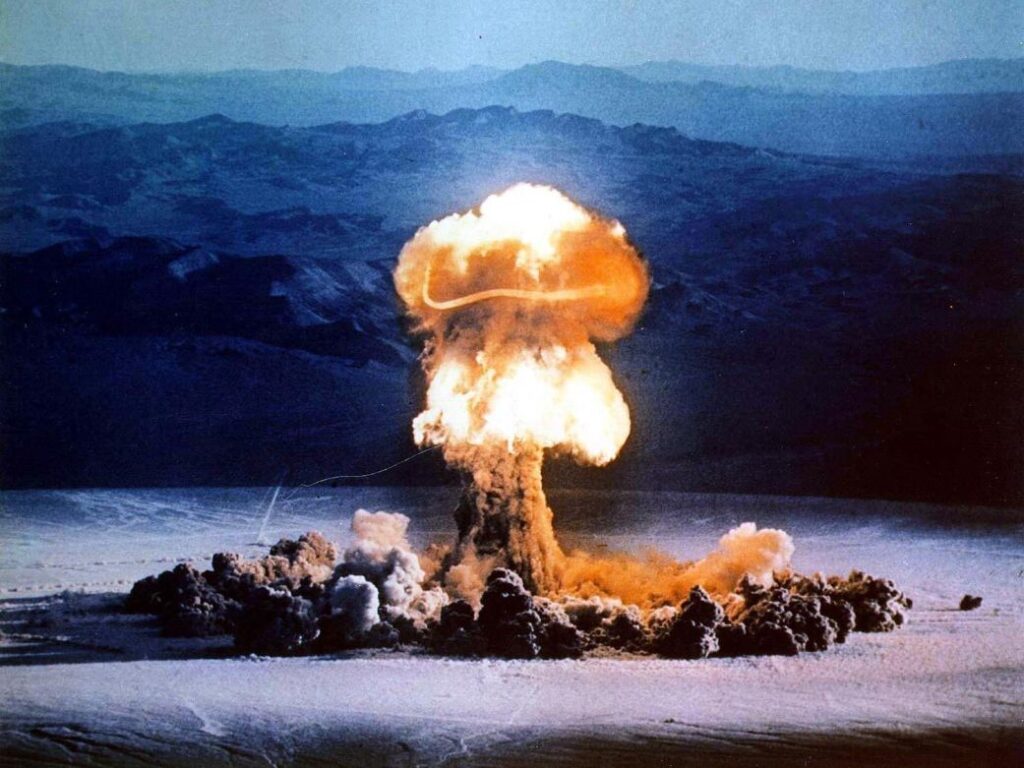
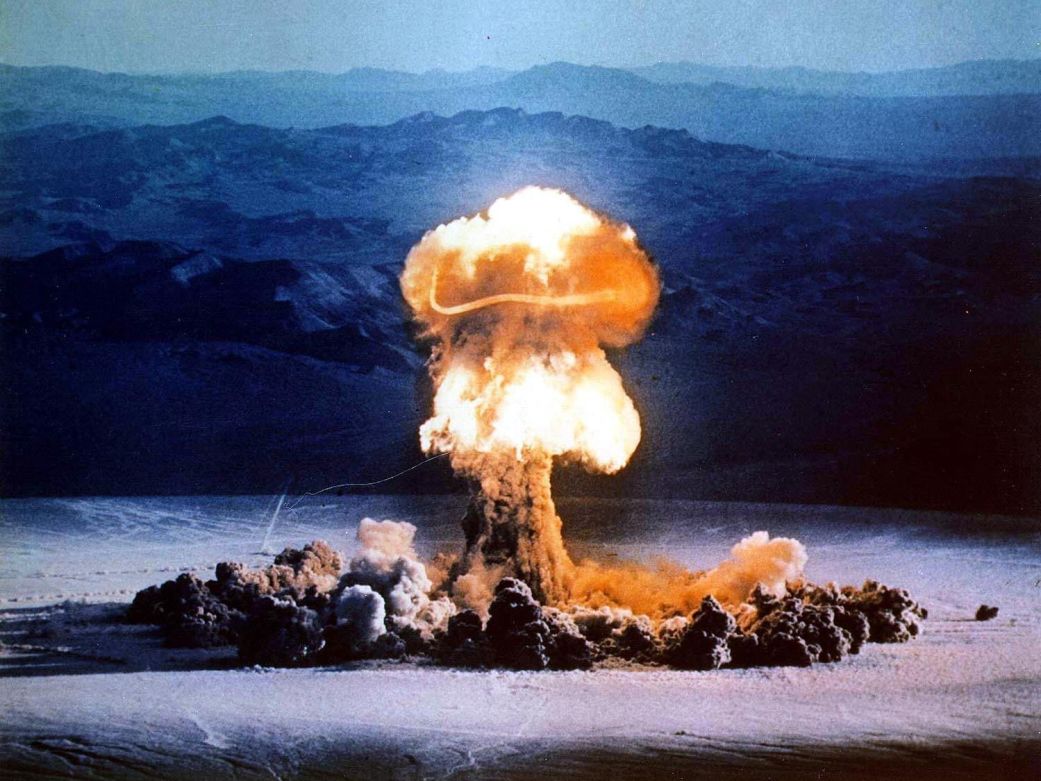
Nevertheless, should Trump pursue the reinstatement of nuclear weapons testing, experts say the hurdles are substantial and multifaceted. For one, nearly every nuclear-armed state globally has agreed voluntarily to refrain from such tests for many years. Russia’s last test occurred in 1990, the U.S.’s in 1992, and China’s in 1996. North Korea remains the sole country to conduct nuclear explosions this century, leading to its isolation internationally.
Beyond the diplomatic consequences of reinitiating testing in the U.S., there are also significant technical obstacles. Government research indicates that safely organizing such a test would likely require multiple years of preparation, and even then, it might produce minimal valuable insights. The U.S. routinely and rigorously tests nuclear weapon components, resulting in a comprehensive nuclear knowledge base unmatched by other nations.
Critics argue that if Trump begins a new era of testing, it could encourage other countries with nuclear ambitions to accelerate their own programs.
“China would be the primary beneficiary,” Bunn stated.
“Strategically, it makes no sense for the United States,” commented former Democratic congressman John Tierney, who now leads the Center for Arms Control and Non-Proliferation.
Nuclear experts observe that Russia and China have already increased their nuclear ambitions. Some political analysts speculate that Trump might be aiming to use tough rhetoric to deter them, a position he appears to reflect. “I would like to see denuclearization,” the president remarked. “We are actually discussing that with Russia, and China would be included if we proceed.”
Neither the Department of Defense nor the White House has provided a detailed explanation of the plan so far.
However, Tierney finds the president’s inconsistent statements troubling, to say the least. He warns that in an already fragile international context, Trump might be adding further instability — a situation potentially dangerous in itself.
“One day he advocates for the elimination of all nuclear weapons,” Tierney explains. “The next day, he wants to restart testing? This is perilous.”