
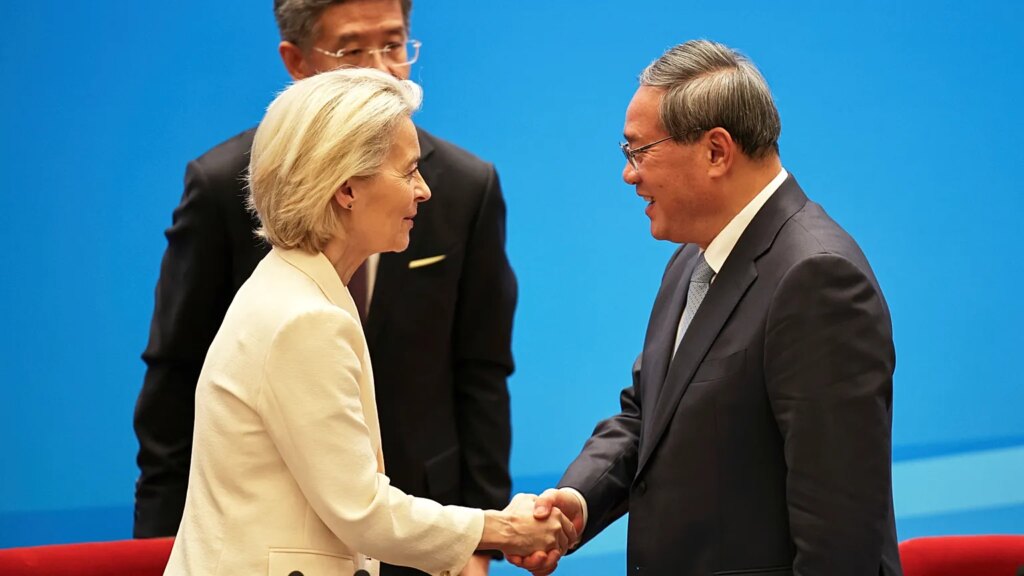
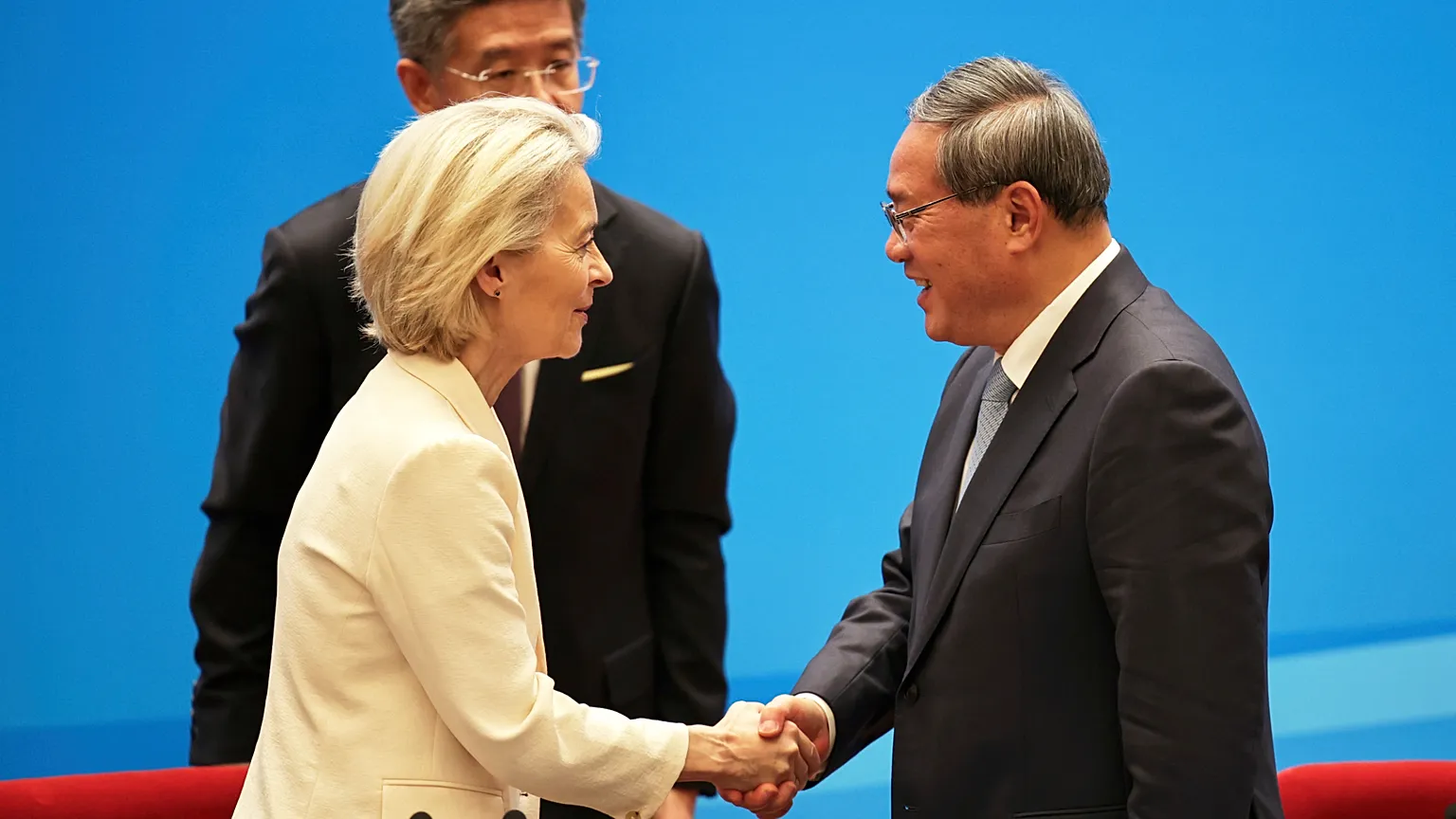
In recent weeks, trade relations between the two large economic powers have worsened, as Beijing criticized EU initiatives aimed at reducing dependence on China for essential goods, services, and resources.
The European Union’s commercial relationship with China has weakened lately, as the EU strives to manage its growing trade imbalance with Beijing and lessen its reliance on critical goods and services. European policymakers are also troubled by what they perceive as unfair competition from China, which they associate with industrial setbacks and job cuts across Europe.
 ADVERTISEMENT
  ADVERTISEMENT
One of the EU’s strategies to face these issues is the Industrial Accelerator Act, introduced by the European Commission in March, aiming to “boost EU industrial competitiveness” through various measures, including a procurement process labeled ‘Made in Europe’ that prioritizes European suppliers over foreign ones.
It additionally aims to “accelerate the decarbonisation of energy-intensive sectors, net-zero technologies, and the automotive industry”.
This initiative drew sharp criticism from China last month, with Beijing asserting that any policies favoring European firms would result in investment obstacles and discriminatory practices — and warned of potential retaliatory actions.
EU Trade Commissioner Maroš Šefčovič responded to these warnings by telling Euronews last week that the EU is committed to defending its plans to reinforce the bloc’s industrial agenda.
He further stated that the EU will vigorously protect its industries and “fight tooth and nail for every European job, every European business, and every open sector should unfair treatment occur”.
As one of the globe’s pivotal trade partnerships deteriorates, the pressing question remains: which economic superpower will concede first in this conflict?
A trade relationship like no other
The commercial exchange between these two giants is substantial: the EU stands as China’s largest trading partner, while China ranks third for the EU, following the US and UK.
By 2026, China (19-20%) and the EU (14-15%) together account for around one-third of the world’s gross domestic product (33-35%) and represent 30% of international trade.
In 2025, EU exports to China totaled €199.6 billion, while imports reached €559.4 billion, resulting in a trade deficit of €359.9 billion according to Eurostat data.
The EU’s exports to China primarily consist of machinery, appliances, vehicles, and chemicals; imports include electrical machinery, electric vehicles, high-tech components, and manufactured products—especially equipment and materials vital for Europe’s green and digital shift, such as solar panels, lithium-ion batteries, and magnesium.
Comparing to 2024, EU exports to China declined by 6.5%, whereas imports increased by 6.4%. Over the longer term, from 2015, EU exports to China have risen by 37.1%, while imports surged by 89%.
What can the EU do?
Despite longstanding criticism of Beijing’s state-driven economic system—highlighting issues like industrial overcapacity and subsidies—EU member states have struggled to unify behind a common strategy for retaliation.
To diversify supply chains and lessen dependence on China and the US while preserving strategic relationships, Brussels has secured trade agreements with Mercosur (January), India (January), and Indonesia (September 2025).
However, the Trump administration’s tariff conflicts led many European leaders to reconsider their trade policies, aiming to reduce reliance on resources from particular foreign nations while fostering greater self-sufficiency.
Many have sought trade and investment opportunities with China to compensate for losses from the US trade disputes and to maintain cooperation with what they consider a dependable partner in upholding the international order.
In the past year, notable EU figures visiting China have included France’s President Emmanuel Macron, Irish Prime Minister Micheál Martin, Finnish Prime Minister Petteri Orpo, Portuguese Prime Minister Luís Montenegro, German Chancellor Friedrich Merz, alongside European Commission President Ursula von der Leyen and European Council President António Costa.
The EU has pursued a trade deal with Beijing building on the 2020 framework arrangement, which enhanced market access for European investors, introduced regulations on state-owned enterprises, increased subsidy transparency, and banned forced technology transfers.
Nevertheless, as the trade deficit expands—China registered a record $1.2 trillion surplus with the world at the close of 2025—Brussels is accelerating discussions on risk mitigation or decoupling strategies regarding China.
Consultations with EU industry groups are underway to evaluate whether the European Commission should deploy the ‘trade bazooka’—the Anti-Coercion Instrument—to counter Beijing’s pressure for further market opening to Chinese firms and to address China’s production excess.
Final decisions on these measures are anticipated later this month during the European Commission’s China debate scheduled for 29 May.
Should the European Union adopt a stricter trade policy toward China? Watch the latest episode of The Ring, Euronews’ weekly discussion show featuring MEPs Sakis Arnaoutoglou and Nicolás Pascual de la Parte.