
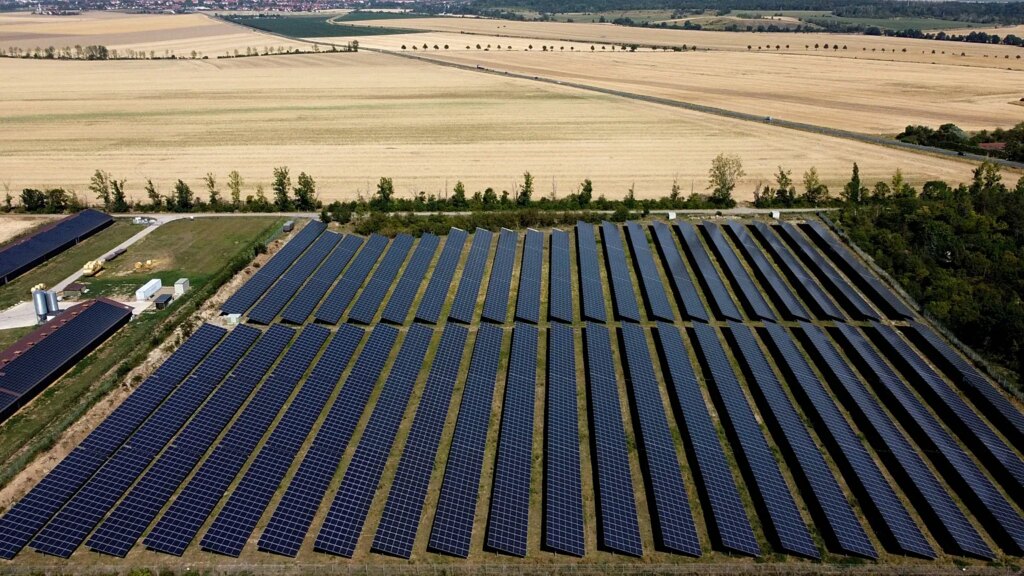
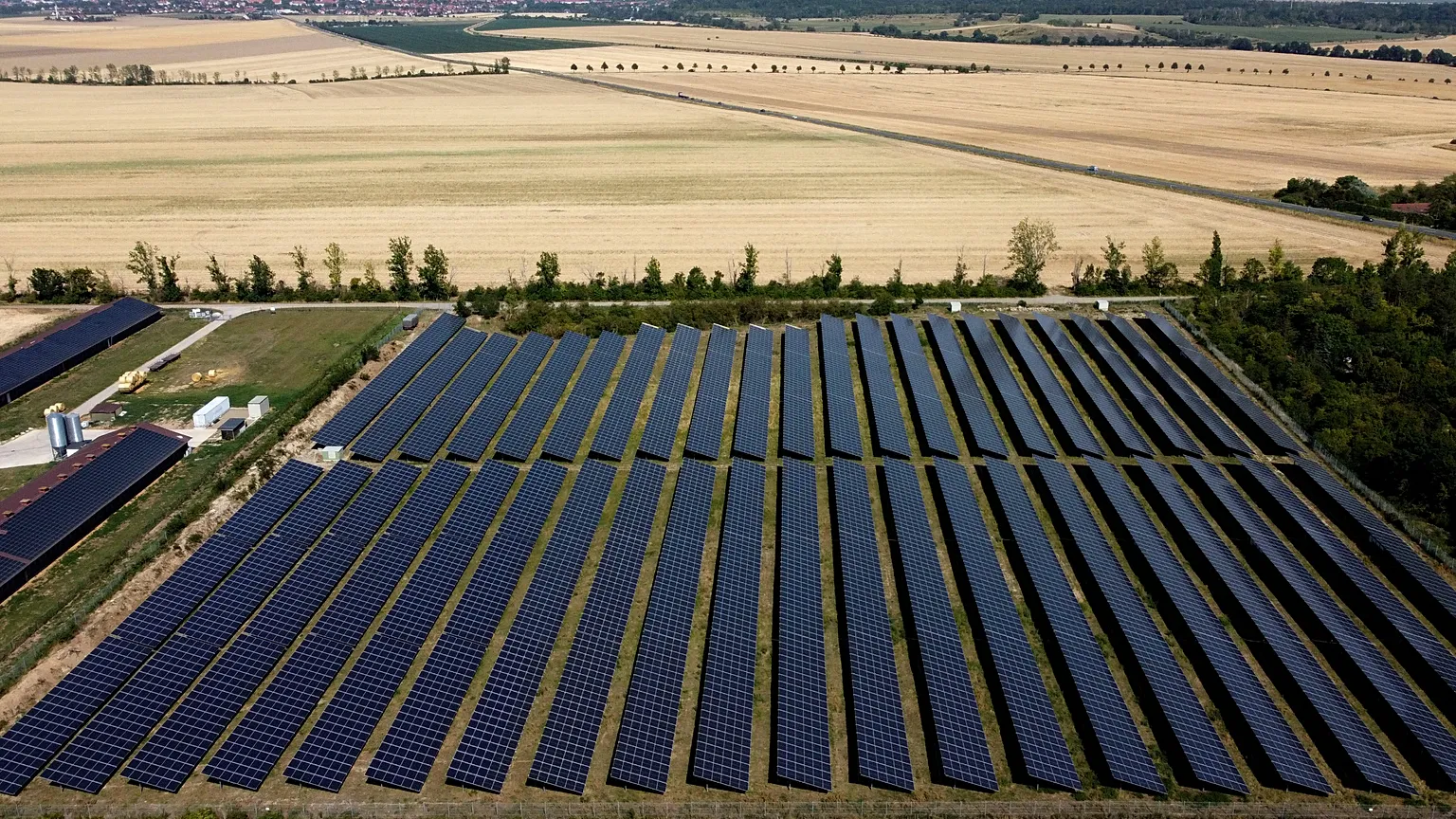
An EU representative reported the identification of ‘serious’ economic and cybersecurity risks, highlighting that the Commission’s review incorporated both classified and publicly accessible data supplied by several member countries.
The European Commission plans to phase out the use of Chinese-manufactured inverters in energy projects financed by the EU, marking a key move to safeguard critical energy infrastructure from potential cyber threats that could lead to power disruptions.
 ADVERTISEMENT
  ADVERTISEMENT
This action follows expert alerts that Europe’s significant dependence on Chinese-made solar inverters — supplied by companies such as Huawei and Sungrow — may endanger the stability of Europe’s power grid, especially as the continent increasingly depends on renewable sources like solar and wind energy.
“We have uncovered substantial economic and cybersecurity threats,” an anonymous EU official informed reporters on Monday, emphasizing that the Commission’s evaluation was based on both confidential and open sources submitted by multiple member states.
The investigation revealed that some nations might, in the worst case, compromise European energy infrastructure and possibly cause blackout events, the official added, specifically mentioning China, Iran, North Korea, and Russia.
Inverters, though small, serve a vital function within modern energy networks. Often referred to as the “brain” of power systems, they are essential in converting and managing power flows from renewable energy sources like wind and solar, alongside storage units.
The pivotal role of inverters in the EU’s shift to renewable energy has raised worries about potential weaknesses if these devices are supplied by firms connected to governments perceived as adversarial to EU interests.
In November of last year, 30 Members of the European Parliament with expertise in energy urged the Commission to block “risky” tech providers from accessing European infrastructure.
Priority on economic security over industrial policy
The EU’s announcement frames this action primarily as an economic security measure rather than industrial policy; consequently, companies from reliable partners such as Japan and South Korea remain eligible for participation in EU-funded projects, according to the EU official.
The Commission also anticipates that this approach will inspire EU countries and global allies to adopt comparable measures. Lithuania has already enacted restrictions targeting high-risk energy technologies.
This decision builds on a strategy first introduced in December 2025, when the EU executive indicated it would use EU funding regulations to lessen dependence on suppliers considered security threats.
As Europe speeds up its shift to renewable energy, the Commission’s move highlights the increasing importance of ensuring that supporting technologies are both sustainable and secure.
Banning EU funding for high-risk providers
The updated guidelines cover all EU funding mechanisms—both direct and indirect—including financing from the European Investment Bank and the European Bank for Reconstruction and Development.
Instead of creating new laws, the Commission will apply these restrictions through existing frameworks, such as project-level checks and provisions within the EU’s financial regulations that allow security-related conditions on funding.
All EU-supported projects must now meet the revised cybersecurity standards. A transitional phase will apply over the coming months for projects already advanced in development.
By 1 November 2026, these projects will be reviewed under prior rules but might be required to implement extra cybersecurity safeguards or exclude suppliers considered high-risk, the Commission stated.
From April 2027, a more rigorous enforcement will be implemented as new contracts and agreements fully incorporate these restrictions, although limited exceptions may be granted on political or security grounds, the EU official noted.
The Commission established an ambitious rollout schedule. By 1 July 2026, all services must assess ongoing activities and propose ways to integrate the new restrictions. A follow-up evaluation, scheduled for 15 July, will examine whether alternative suppliers can meet demand and guarantee sufficient production capacity.
On Monday, the China Chamber of Commerce to the EU (CCCEU) refuted claims that Beijing might weaponize energy technologies, emphasizing that Chinese firms have long contributed to the EU’s energy transition “through reliable, competitive, and widely deployed inverter and grid technologies.”
“We expect the EU to adhere to principles of technology neutrality and non-discrimination, avoid creating non-market barriers within green finance and infrastructure cooperation, and continue fostering an open, predictable environment that supports global cooperation on the energy transition,” a CCCEU spokesperson told Euronews.
The CCCEU representative warned that framing inverters within geopolitical conflicts risks unnecessarily securitizing standard commercial technologies, which could harm fair competition, investor confidence, and the reliable functioning of global clean energy supply chains.
Available alternative suppliers
Despite concerns about possible supply disruptions, officials remain confident that the market will adapt. Although Chinese manufacturers currently account for roughly 80% of the global inverter market, the Commission believes there is ample alternative production capacity among manufacturers based in countries including Japan, South Korea, Switzerland, and the United States.
“Industry has given clear signals they could rapidly increase capacity,” the EU official stated.
The projected impact on prices is moderate. According to the Commission, inverters represent approximately 5% of the expense of large-scale solar projects, and switching to suppliers not classified as high-risk is estimated to raise total project costs by less than 2%.
Nonetheless, questions remain about existing infrastructure dependent on equipment from high-risk suppliers. Officials acknowledged this concern but described the current decision as a “first step” that will be supported by further cybersecurity measures over time.