
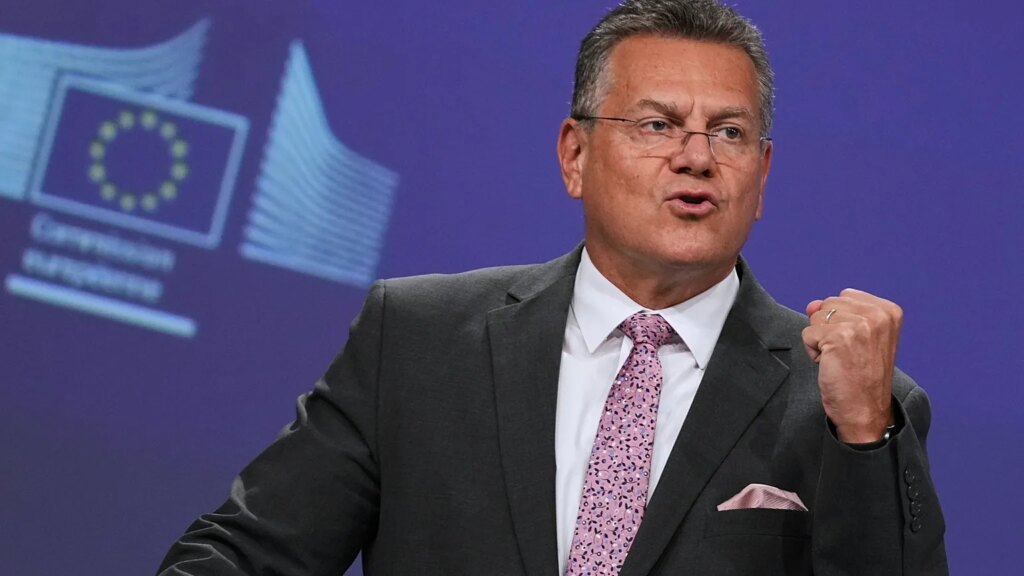
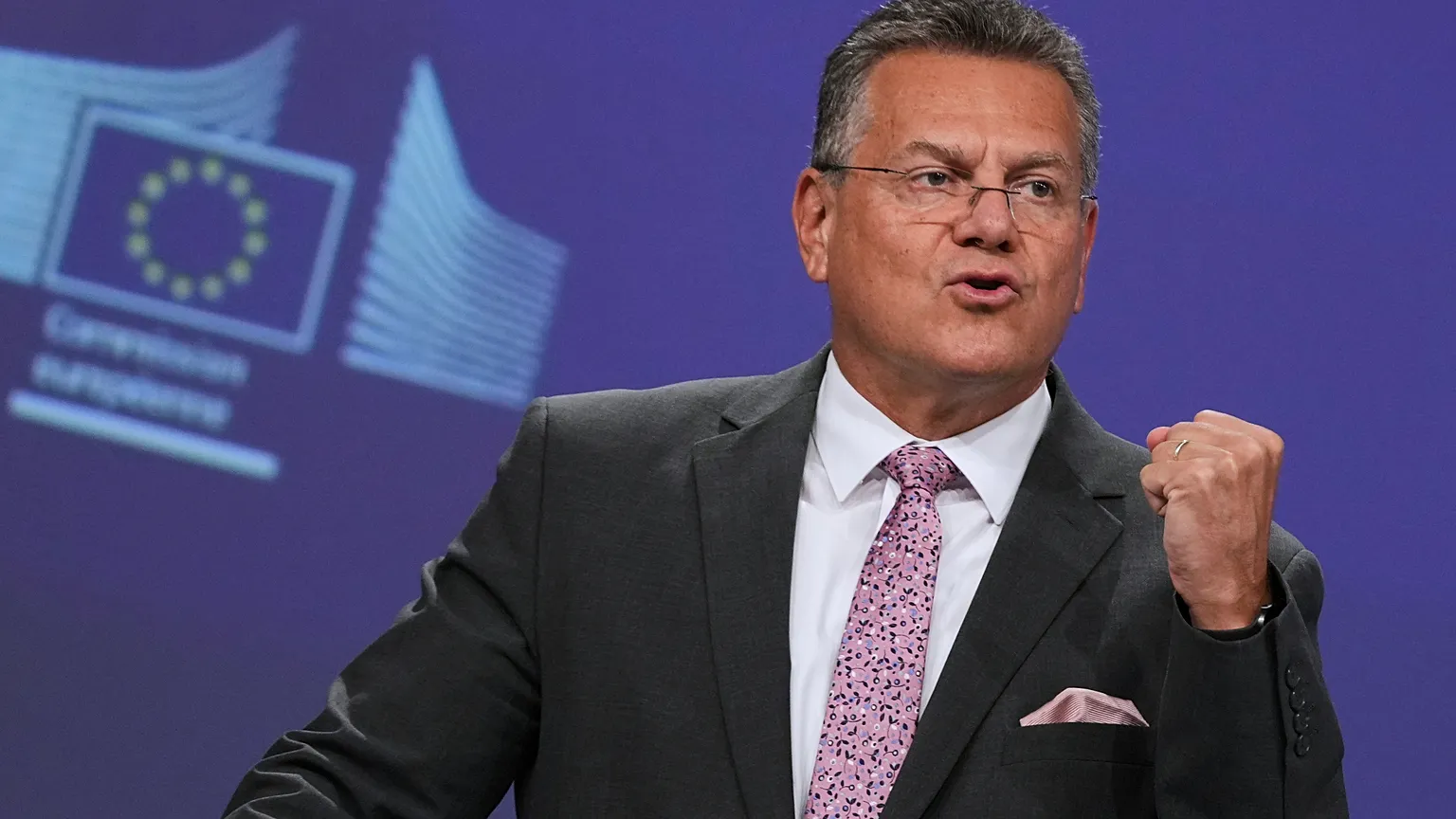
In a conversation with Euronews, EU Trade Commissioner Maroš Šefčovič affirmed that the European Union intends to uphold its stance despite China’s threats of retaliatory actions in response to initiatives aimed at reinforcing the bloc’s industrial strategy.
EU Trade Commissioner Maroš Šefčovič delivered a clear statement stressing that the European Union is prepared to protect its industries vigorously after Beijing indicated possible reprisals against new EU efforts to strengthen its industrial foundation and reduce external dependencies.
 ADVERTISEMENT
  ADVERTISEMENT
This week, China intensified its pressure on Brussels by threatening retaliatory measures unless the EU retracts key aspects of its “Made in Europe” initiative—intended to tighten foreign companies’ market access—and its Cybersecurity Act, which might limit Chinese telecommunications firms’ operations within the bloc.
When queried about China’s opposition to what the EU considers essential actions to enhance its sovereignty and establish a fair competitive environment, Šefčovič assured Euronews that the EU will «always» protect the interests of its businesses.
“We will vigorously defend each European job, every European enterprise, and all open sectors whenever we detect unjust treatment,” Šefčovič stated in an exclusive Euronews interview on Friday.
Rising trade deficit posing challenges for the EU
Over the last year, relations between Brussels and Beijing have sharply worsened, with China imposing stricter export controls on rare earth elements critical to Europe’s clean-tech and defense sectors, as well as limiting chip supplies indispensable to the automotive industry, thereby exacerbating pressure on the bloc’s already vulnerable supply chains.
In response, the EU proposed legislation targeting cybersecurity and market regulations for corporations, prompting a strong backlash from China, which accused the EU of implementing unfair policies. Earlier this week, Beijing warned that the EU should not underestimate China’s resolute commitment to defending its interests.
Šefčovič dismissed the notion that these tensions point to an imminent trade war, emphasizing that the EU does not yield to pressure and expects mutual respect. “We never intimidate our partners, much less through public channels,” he remarked. «What is necessary is strategic patience combined with considerable bravery.»
He noted that while initiating a «war» is often straightforward, finding an exit is far more complicated. A Chinese official conveyed to Euronews that Beijing does not aim for escalation in trade disputes but remains serious about what it views as discriminatory measures. The EU disputes these claims of discrimination.
The EU’s trade chief highlighted the expanding trade deficit between the two entities as a significant concern. The trade imbalance with China reached €359.3 billion in 2025, a figure Šefčovič described as “clearly unsustainable» and showing no indication of improvement.
He added that EU lawmakers, the European Parliament, and economic stakeholders have issued «a forceful economic and political response» to address this deficit.
So far, Brussels has not secured substantive commitments from Beijing to recalibrate trade relations. Concurrently, EU officials express growing worry that Chinese exports, barred from the US market due to elevated tariffs, are instead being redirected to Europe. Brussels also cites China’s industrial overcapacity as a troubling factor.
The EU is now urging Beijing to engage in serious negotiations and produce tangible outcomes.
“I extended an invitation to the Chinese foreign minister to visit Brussels because a comprehensive evaluation of the current situation is necessary,” Šefčovič told Euronews. “My goal is constructive dialogue.”
Faced with a surge of low-priced Chinese imports, the EU relies on trade defense tools to combat what it considers dumped and heavily subsidized products, while monitoring attempts by Chinese companies to circumvent restrictions by moving production outside China. Šefčovič affirmed that the EU will not back down on these matters.
“China implements strong industrial policies, as do the US, Canada, Japan, and South Korea. Therefore, it should not surprise anyone if the European Union responds similarly—particularly regarding the use of public funding.”